

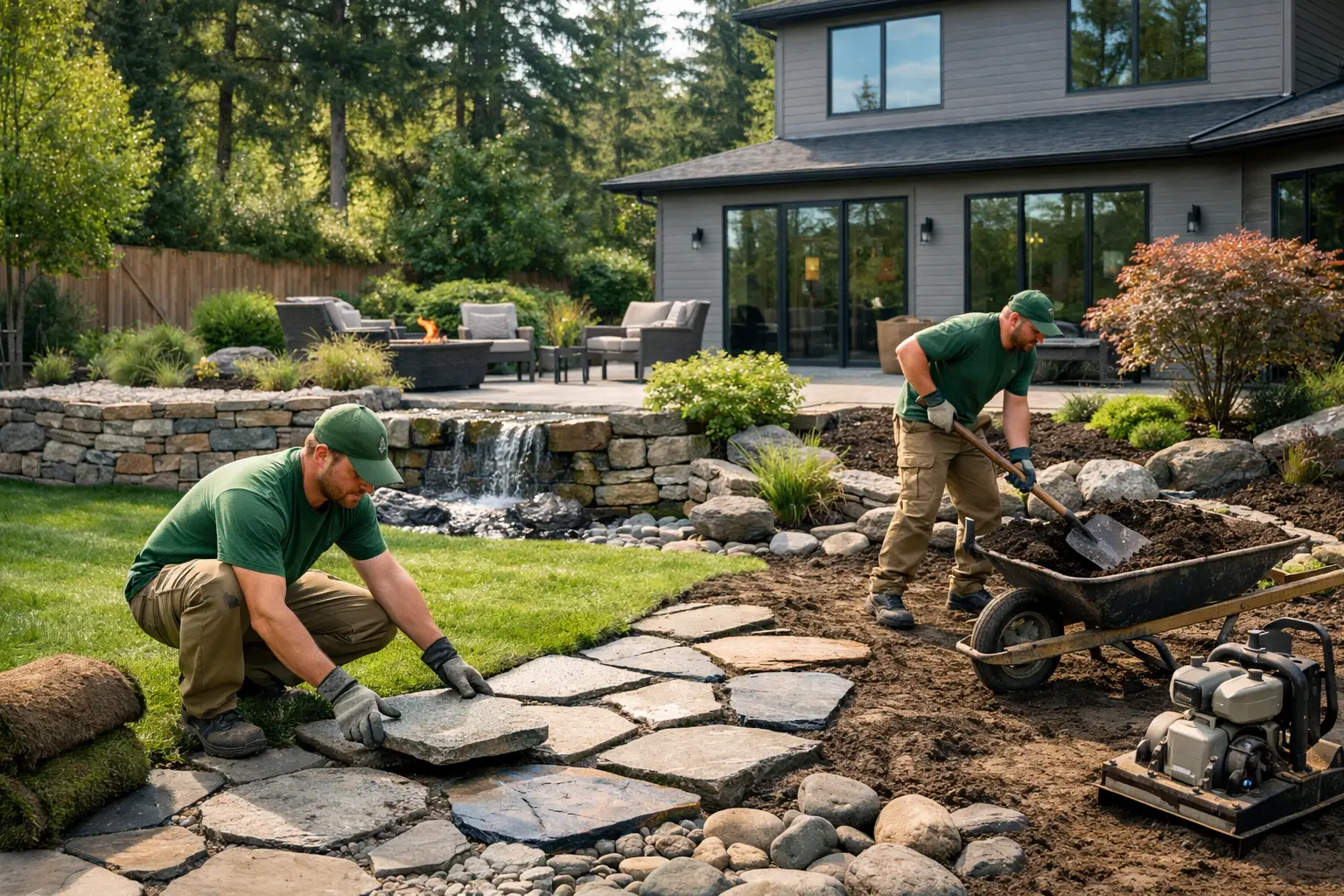
A backyard can look tired for more than one reason. Water may collect beside the foundation, an old patio may be too small to use comfortably, or a steep slope may limit how the space can be enjoyed. Landscape construction addresses those connected problems as one complete project, combining the site preparation, structural work, drainage, hardscape, and finishing details that turn a yard into a dependable outdoor living area.
For homeowners in the Portland metro area, the order of work matters just as much as the finished appearance. Our wet winters, varied soil conditions, and sloped properties can expose shortcuts quickly. A well-built patio, retaining wall, walkway, or lawn starts below the surface with proper grading, base preparation, and water management.
What Landscape Construction Includes
Landscape construction is the hands-on building phase of an outdoor improvement project. It goes beyond planting shrubs or spreading mulch. Depending on the property and the homeowner’s goals, it may include excavation, grading, drainage installation, retaining walls, paver patios, concrete flatwork, masonry, fencing, irrigation, sod, and outdoor structures such as pergolas.
The advantage of approaching these elements together is coordination. A patio needs a stable base and a planned slope for runoff. A retaining wall may need drainage behind it and a safe transition to stairs or a walkway. New planting beds need soil and irrigation decisions that work with the final grade, not against it.
When separate trades are brought in without an overall plan, one finished item can create problems for the next. For example, installing a fence before final grading can leave awkward gaps at the bottom. Building a patio before resolving drainage can direct water toward the house. A full-service contractor can sequence the work correctly and keep the project moving from site preparation through final cleanup.
Start With How You Want to Use the Yard
The best landscape construction projects begin with practical questions, not material samples. How many people should the patio accommodate? Is the yard meant for quiet evenings, outdoor dining, children, pets, gardening, or all of the above? Are there areas that stay muddy through winter? Does the property need more privacy, safer access, or a clearer separation between lawn and planting areas?
A homeowner who wants a simple dining space may need a well-proportioned paver patio, a short walkway, and planting around the edges. A family with a steep backyard may need excavation, retaining walls, stairs, drainage, and a level lawn before the space becomes usable. Both projects can be attractive, but their construction needs and budgets are very different.
It also helps to think ahead. If a pergola, outdoor kitchen, hot tub, or fire feature may be added later, the initial layout should leave room for it. Planning utility routes, structural support, and access during the first phase can prevent expensive rework later.
Build the Foundation Before the Finish
The visible surface receives the attention, but the work underneath determines how well it performs. Portland-area properties often require careful consideration of water movement, soil stability, and elevation changes. Good construction begins by identifying where water enters the property, where it naturally travels, and where it should be directed.
Drainage and grading protect the investment
Water should move away from the home and away from hardscape surfaces in a controlled manner. That may involve regrading soil, installing catch basins or channel drains, adding drain rock and pipe behind a retaining wall, or tying roof runoff into an appropriate drainage plan. The right solution depends on the property, existing utilities, soil, and the source of the water.
Drainage is not an optional add-on when the site calls for it. It is part of responsible construction. A patio that holds water, a wall without proper drainage, or soil that slopes toward the foundation can create maintenance issues and shorten the life of the project.
Base preparation prevents movement
Pavers, concrete, and natural stone all need stable preparation, though the details vary by material. For a paver patio or walkway, the crew excavates to the correct depth, installs and compacts a suitable aggregate base, establishes the required pitch, and sets edge restraints before placing the surface. Skipping compaction or using an inadequate base can lead to settling, uneven joints, and standing water.
Concrete requires the same attention to subgrade, forms, reinforcement where appropriate, drainage, and finishing. Stamped concrete can provide a decorative surface with a more continuous appearance, while pavers offer individual units that can be repaired or adjusted if future access is needed. Neither is automatically better. The right choice depends on the desired look, the site, maintenance expectations, and the intended use of the space.
Choose Materials That Fit the Home and Site
Material selection should support the architecture of the home and the demands of the property. A natural stone walkway can add character to a traditional home, while clean-lined concrete may suit a more contemporary setting. Segmental retaining wall block, natural stone, and masonry each create a different look and have different structural requirements.
Durability should guide the decision as much as appearance. Outdoor materials are exposed to rain, freeze-thaw cycles, soil movement, foot traffic, and seasonal debris. Quality products installed on a properly prepared base typically offer better long-term value than a lower-cost surface installed without the necessary sitework.
Maintenance is another realistic consideration. Pavers may need periodic joint sand and cleaning. Wood fencing and pergolas benefit from protection and occasional refinishing. Plants need establishment care, especially during dry summer periods. A professional contractor should explain these expectations before construction begins, so the finished yard remains manageable for the homeowner.
Retaining Walls Need More Than a Finished Face
Retaining walls are often installed to create level space, control a slope, or define an outdoor area. Because they hold back soil, they are structural features, not just landscape accents. Height, soil pressure, drainage, setbacks, and site access all affect the appropriate construction method.
A properly built wall may require excavation, compacted base material, drainage aggregate, perforated drain pipe, geogrid reinforcement, and careful backfill. Taller walls or complex site conditions may also require engineering or permits. These details are not always visible after completion, but they are essential to the wall’s performance.
The same principle applies to stairs. Outdoor steps need consistent rises and runs, solid support, drainage, and a layout that feels natural from one part of the yard to the next. A well-designed stair connection can make a sloped property feel intentional rather than difficult to use.
A Clear Process Keeps the Project on Track
Homeowners should expect a landscape construction contractor to assess the site before presenting a scope of work. The initial conversation should cover goals, budget range, access limitations, drainage concerns, material preferences, and the condition of existing features. From there, the project can be defined with clear recommendations and a transparent quote.
During construction, communication matters. Site conditions occasionally reveal issues that were not visible at the start, such as buried debris, poor soil, old concrete, or unexpected drainage routes. A dependable contractor explains what was found, why it matters, and how it affects the recommended work before making changes.
At Four Seasons Landscape & Construction, our team manages outdoor projects from the first site evaluation through the finishing details. That means homeowners have one experienced point of contact for excavation, drainage, hardscape, masonry, concrete, fencing, and landscape installation rather than coordinating multiple crews themselves.
Invest in Work That Performs Through the Seasons
A successful outdoor project should look finished on the first day and function well after years of rain, use, and seasonal change. That requires thoughtful design, skilled installation, quality materials, and a willingness to address the work below grade before focusing on what is visible above it.
If your Portland-area yard has drainage issues, unused space, aging hardscape, or a slope that limits how you live outdoors, begin with a conversation about the site as a whole. A clear plan built around your property can create an outdoor space that is easier to use, easier to maintain, and built to last.