

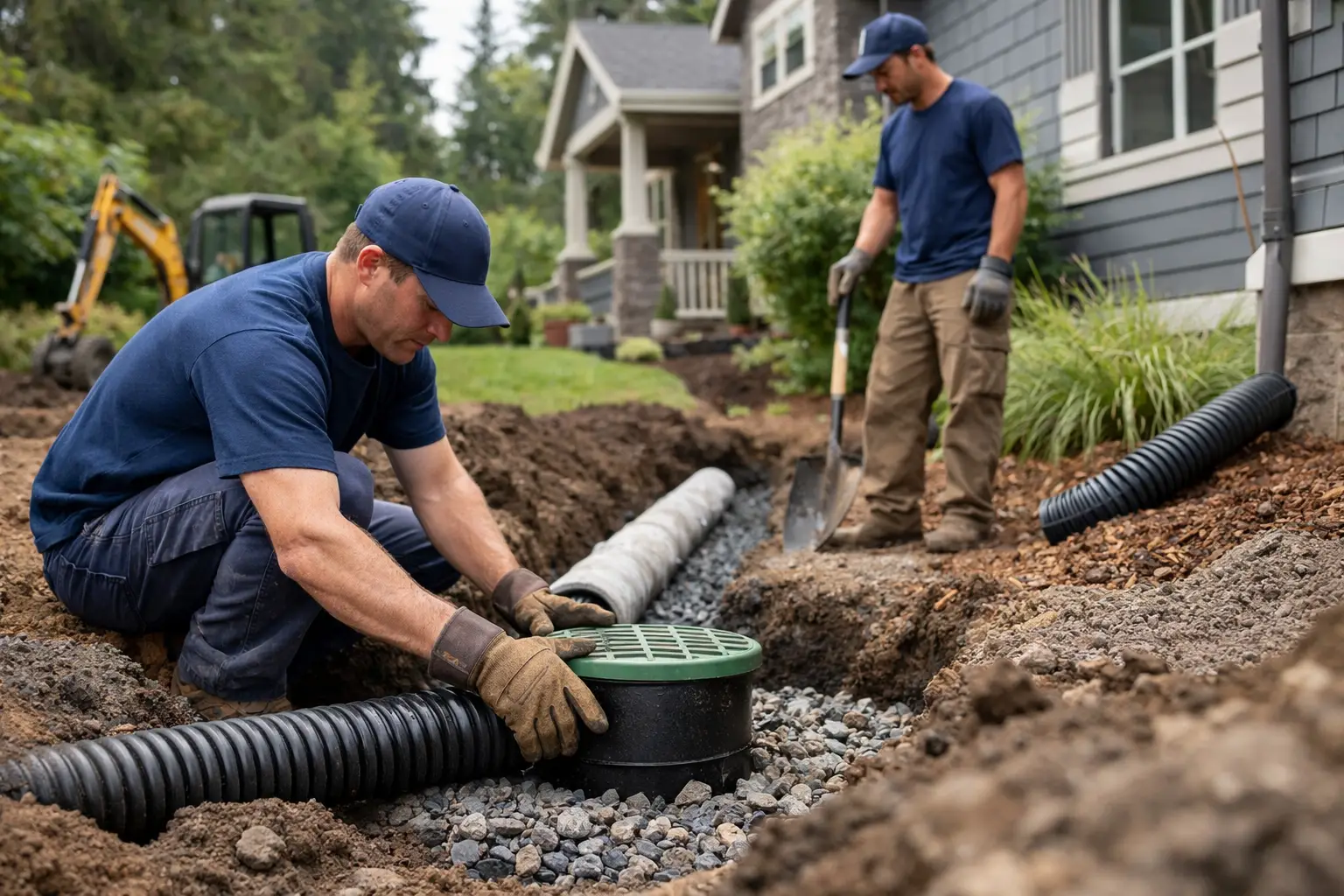
A yard can look finished and still have a drainage problem underneath it. Water pooling beside the foundation, soggy lawn areas, muddy walkways, and shifting pavers are all signs that deserve attention. Experienced drainage contractors assess where water begins, where it travels, and where it can safely discharge before recommending a solution.
For Portland-area homeowners, drainage is rarely an isolated concern. It affects patios, retaining walls, garden beds, fences, concrete surfaces, and the long-term condition of the home itself. A proper drainage project should protect the property while supporting the way you want to use your outdoor space.
When to Call Drainage Contractors
Portland’s rainy season can expose issues that stayed hidden through the summer. Standing water that remains for more than a day after rainfall, damp crawlspace odors, water stains near the basement, or soil washing out from behind a retaining wall are reasons to schedule an evaluation.
Some problems appear less dramatic but still matter. A lawn that never dries, moss-covered paths, settling pavers, or a downspout that pours water directly beside the house can all point to poor water management. Left alone, repeated saturation can soften soils, undermine hardscape bases, and place unnecessary pressure on foundation walls.
Drainage work is especially worth considering before a major landscape upgrade. Installing a paver patio, new lawn, retaining wall, or outdoor kitchen over existing water problems can lead to expensive repairs later. Addressing grades, runoff, and drainage routes first gives every finished surface a more dependable base.
What a Professional Drainage Assessment Should Cover
A qualified contractor does more than identify the lowest spot in the yard. The goal is to understand the entire site and identify the source of the water, not simply move it to another problem area.
During an on-site assessment, the contractor should consider the home’s foundation elevation, existing yard slope, roof runoff, neighboring properties, soil conditions, retaining walls, and current drainage features. In many Portland neighborhoods, compacted soil and clay-heavy conditions slow natural drainage. A system that works well in sandy soil may not perform the same way on a hillside lot or a property with dense soil.
The assessment should also account for how the yard will be used. A drainage route may need to work around a future patio, planting area, driveway, fence line, or play space. Planning these elements together avoids tearing out completed work to add pipe later.
Finding the right discharge point
Every drainage system needs a lawful, practical destination for collected water. Depending on the property, this may involve directing water to an approved stormwater connection, a properly designed dry well, a swale, or another suitable on-site location.
The best option depends on local requirements, soil capacity, lot layout, and the amount of water being managed. Water should never be redirected carelessly toward a neighbor’s property or allowed to collect at the base of a retaining wall. A professional plan considers both performance and responsible site drainage.
Common Residential Drainage Solutions
The right system is based on the cause of the problem. In some cases, simple grading improvements and downspout extensions are enough. In others, the project requires a more complete approach that combines excavation, pipe installation, hardscape removal, and landscape restoration.
A French drain is often used to collect subsurface water from saturated areas. It generally includes a perforated pipe surrounded by clean drain rock and protected by filter fabric. This allows water to enter the system while helping keep surrounding soil from clogging the rock and pipe. French drains can be effective along foundations, retaining walls, lawn edges, and persistently wet sections of a yard, but they must be installed at the correct depth and slope to work as intended.
Solid drain pipe is commonly used to carry roof runoff from downspouts or collected water from a catch basin to a discharge point. Unlike a perforated pipe, solid pipe keeps water contained as it moves through the property. This makes it useful where runoff needs to travel beneath a patio, walkway, or landscaped area.
Catch basins collect surface water at low points, such as the edge of a driveway, near a patio, or in a paved courtyard. They are particularly useful when heavy rain flows across hard surfaces faster than the surrounding soil can absorb it. Proper placement is essential. A catch basin installed even slightly above the actual low point may not collect enough water to solve the issue.
Swales and regrading manage water at the surface by shaping the land to guide runoff away from structures. This can be a practical solution for broad lawn areas or gently sloped yards. However, regrading must be handled carefully around foundations, property lines, mature trees, and existing hardscape.
Drainage Around Patios and Retaining Walls
Patios and retaining walls need drainage planning from the start. These features change how water flows across the property, and they can create problems when built without the proper base preparation or outlet for runoff.
A paver patio needs a compacted aggregate base that drains well and a finished slope that directs surface water away from the home. Where water flows toward the patio from a higher portion of the yard, a channel drain, catch basin, or subsurface collection system may be needed. The correct solution depends on the patio’s elevation and the volume of runoff it receives.
Retaining walls require an even more deliberate approach. Water behind a wall adds hydrostatic pressure, which can lead to bulging, cracking, shifting, and eventual failure. Well-built retaining walls typically include drain rock behind the wall, a perforated drain pipe at the base, filter fabric where appropriate, and a clear outlet for the water. The drainage details are not an optional upgrade. They are a core part of the wall’s structural performance.
For homeowners planning a full backyard renovation, using one contractor to coordinate drainage, excavation, retaining walls, concrete, and landscape installation can reduce conflicts between trades. The drainage system can be designed around the final yard instead of treated as a separate repair after construction is complete.
What Affects Drainage Project Cost
Drainage pricing depends on the extent of the problem and the amount of site work required to correct it. A straightforward downspout connection is very different from a system that requires excavating around a foundation, removing concrete, rebuilding a patio base, or installing drainage behind a retaining wall.
Access matters as well. A backyard with narrow side access may require more labor than an open lot where equipment can reach the work area easily. Depth of excavation, pipe length, soil conditions, the need for disposal, restoration of lawn or planting beds, and the chosen discharge method also affect the final quote.
A clear proposal should explain the recommended scope of work, materials, route of the system, and what areas will be restored after installation. Low bids can be tempting, but drainage failures are often caused by shortcuts that are not visible once the trench is backfilled. Proper pipe slope, clean drain rock, fabric, connections, and compaction are details that protect the investment.
Choosing Drainage Contractors for Your Property
Look for a contractor with experience in both drainage and the exterior structures affected by water. A drainage system should work with the grading, hardscape, retaining walls, and landscaping on the property, not compete with them.
Ask how the contractor will identify the source of water, where the system will discharge, and how the work will affect existing features. It is also reasonable to ask whether the project includes restoration and how the team will protect surrounding areas during excavation. Clear communication before work begins is a strong indicator of how the project will be managed on site.
Four Seasons Landscape & Construction approaches drainage as part of the larger outdoor environment. For homeowners in Tigard, Beaverton, Lake Oswego, Sherwood, Hillsboro, Portland, and surrounding communities, that means coordinating the work with the patio, wall, landscape, or concrete project you have planned.
Water will always move through a property. The difference is whether it has a planned route that protects your home and supports the outdoor space you want to enjoy. A professional on-site evaluation is the best place to start when recurring water issues are affecting your yard.