

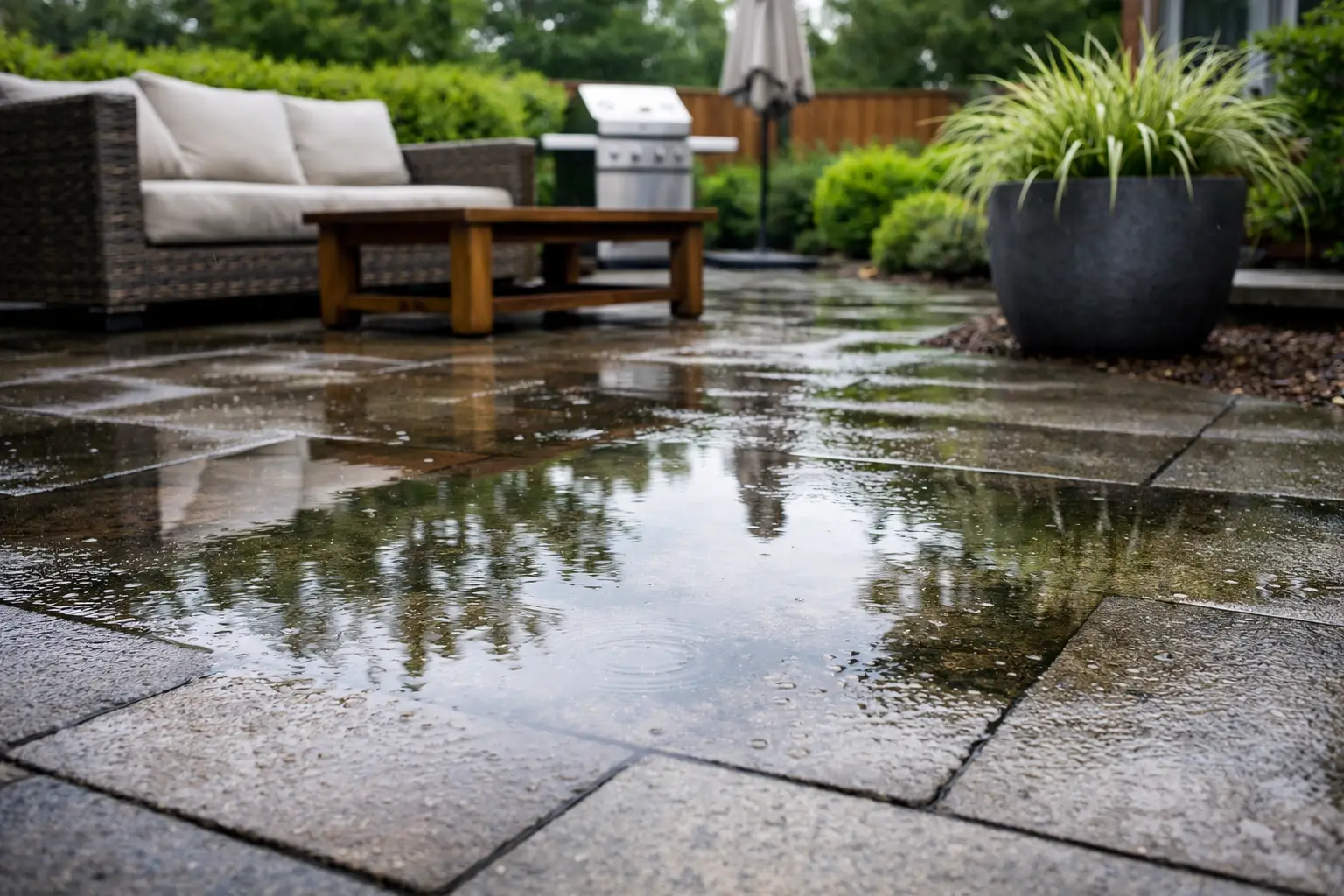
A puddle that remains on your patio long after a Portland rain shower is more than an inconvenience. If you have asked, “why does patio puddle?” the answer usually comes down to water having nowhere dependable to go. The cause may be as straightforward as a low spot in the surface, or it may point to a deeper issue with the patio base, surrounding grade, downspouts, or soil conditions.
In the Portland metro area, patios need to handle frequent rain, saturated ground, and seasonal runoff. A well-built patio should shed water away from the home and toward a planned drainage route. When it does not, standing water can make the space slippery, stain concrete or pavers, encourage moss growth, and gradually damage the installation beneath the surface.
Why Does a Patio Puddle After Rain?
Water settles at the lowest point available. On a patio, that low point can develop because the original installation was not sloped correctly, because the base has settled over time, or because runoff from the roof and yard is being directed onto the surface.
The right repair depends on the source of the water. Simply adding sand between pavers, patching a concrete depression, or sweeping water away may improve the appearance temporarily, but it will not correct a drainage or structural problem underneath. A proper assessment looks at the patio surface, the surrounding landscape, the home’s drainage system, and where water should safely discharge.
The patio slope is too flat or runs the wrong direction
Patios require deliberate pitch. Even a surface that looks level should have a subtle slope that moves water away from the house. As a general rule, a patio needs about 1/8 to 1/4 inch of fall per foot, depending on the material, layout, and drainage plan.
A patio can puddle when it was built nearly flat or when its slope directs water toward a wall, doorway, or the center of the patio. This issue is particularly common with older concrete slabs and do-it-yourself paver patios where visual level was prioritized over drainage. A surface may appear nearly perfect in dry weather while holding several gallons of water after a storm.
Correcting a slope problem may involve lifting and resetting pavers, rebuilding part of the base, replacing a concrete section, or redesigning the entire patio elevation. The best solution should protect the home first, then make the outdoor space comfortable and usable.
The paver base or soil beneath the patio has settled
Paver patios are only as reliable as the excavation and base preparation below them. If the base was too shallow, not compacted in layers, or installed over soft, wet soil without proper preparation, it can settle. The result is often a shallow basin where water collects.
Portland-area properties can have clay-heavy soils that hold moisture for long periods. When soil expands and contracts with changing moisture levels, a weak or poorly prepared patio base can move with it. Tree roots, buried debris, and previous excavation work can also create uneven support beneath the patio.
For a localized paver low spot, a contractor can often remove the affected pavers, correct the base material, recompact the area, and reinstall the pavers at the proper grade. If multiple areas have settled, the patio may need broader reconstruction. Reusing sound pavers can be possible, but the underlying work should never be skipped.
Roof runoff is dumping onto the patio
A downspout that ends beside or above a patio can send a concentrated stream of water across the surface. During a heavy storm, one roof valley can produce far more runoff than a patio was designed to handle. Even a correctly sloped patio can puddle if the water volume overwhelms its drainage path.
Look for downspout outlets near patio corners, splash blocks that have shifted, or underground drain lines that are clogged or disconnected. Water may also be coming from a neighboring slope, a raised planter, or a driveway that directs runoff into the outdoor living area.
The solution can include extending downspouts to a suitable discharge point, repairing drainage piping, adding a catch basin, or installing a channel drain where water crosses a patio edge. Drainage should be planned as a complete system. Moving water ten feet away is not a fix if it then pools beside the foundation or flows toward a neighbor’s property.
The surrounding yard grade is directing water inward
Your patio does not exist separately from the rest of the yard. If planting beds, lawn areas, retaining walls, or adjacent hardscape slope toward it, the patio can become the collection point for stormwater.
This can happen after landscape changes such as adding soil to garden beds, installing new sod, or building a retaining wall without addressing drainage behind it. Mulch and soil can gradually build up along a patio edge as well, blocking the route where surface water was intended to leave.
Regrading the nearby landscape may be enough for minor issues. In other cases, a French drain, swale, catch basin, or retaining wall drainage system is needed to intercept water before it reaches the patio. The goal is controlled water movement, not merely sending it out of sight.
Concrete has cracked or developed a depression
Concrete patios can settle, crack, and develop low areas as the ground moves underneath them. Water then gathers in the depression, seeps into cracks, and can worsen deterioration over time. In freezing conditions, repeated moisture exposure can contribute to surface damage, although Portland’s larger concern is usually persistent rain and saturated soil rather than severe freeze-thaw cycles.
Minor surface defects may be addressed with a properly selected concrete repair method, but repairs have limits. A thin patch over a slab that continues to settle often cracks or separates. If the slab has major settlement, poor drainage below it, or a slope toward the home, replacement or more substantial reconstruction may provide better long-term value.
How to Tell Whether the Problem Is Surface-Level or Structural
Start by observing the patio during and after a moderate rain. Note where the first water gathers, whether it is near a downspout, and how long it takes to drain. If the puddle is small and appears in one consistent paver joint area, a localized base repair may be appropriate.
More extensive warning signs deserve a closer look. These include multiple low spots, widening gaps between pavers, cracked concrete, loose edges, water against the foundation, moss that repeatedly returns, or patio doors that appear lower than the surrounding surface. These conditions can indicate that drainage and elevation need to be addressed together.
Avoid assuming that a larger drain is always the answer. A drain helps only when it is installed at the true low point, tied into a workable outlet, and supported by correct grading. In some yards, re-sloping the patio is the primary repair. In others, the patio slope is acceptable but roof runoff and yard drainage need to be redesigned.
What a Lasting Patio Drainage Repair Should Include
A durable repair begins with identifying the full path of water: where it starts, where it crosses the property, and where it can safely end. For paver work, that often means removing enough material to rebuild the compacted aggregate base rather than leveling only the top bedding layer. For concrete work, it may mean replacing a failed section and establishing the correct pitch before the new pour.
The finished surface should drain without creating a new issue at the house, fence line, garden bed, or neighboring property. If drainage components are needed, they should be installed with accessible cleanouts where appropriate and sized for the runoff they will receive. Quality grading, compaction, and edge restraint matter just as much as visible materials.
A patio repair is also a good time to consider how the space will be used. A rebuilt paver patio can incorporate a walkway, seat wall, pergola footing, landscape lighting conduit, or improved transitions to the lawn. Those additions are not necessary for every repair, but coordinating them during excavation can prevent repeat disruption later.
When to Bring in a Professional
Homeowners can clear leaves from drains, extend a loose downspout outlet temporarily, and monitor water movement. However, persistent patio puddles, settlement, or water near the home call for experienced evaluation. Incorrect grading can send water toward the foundation, and incomplete paver repairs can lead to more movement within a season or two.
Four Seasons Landscape & Construction evaluates patio drainage as part of the entire outdoor site, including hardscape condition, grading, roof runoff, drainage routes, and the soil beneath the work. That approach helps determine whether a targeted repair is sufficient or whether the patio and surrounding landscape should be rebuilt as one coordinated project.
A dry patio should not depend on a few sunny days to recover from rain. When water has a planned route from the roof, yard, and patio surface to a safe discharge area, your outdoor space is easier to use, safer underfoot, and better prepared for the next Oregon storm.