

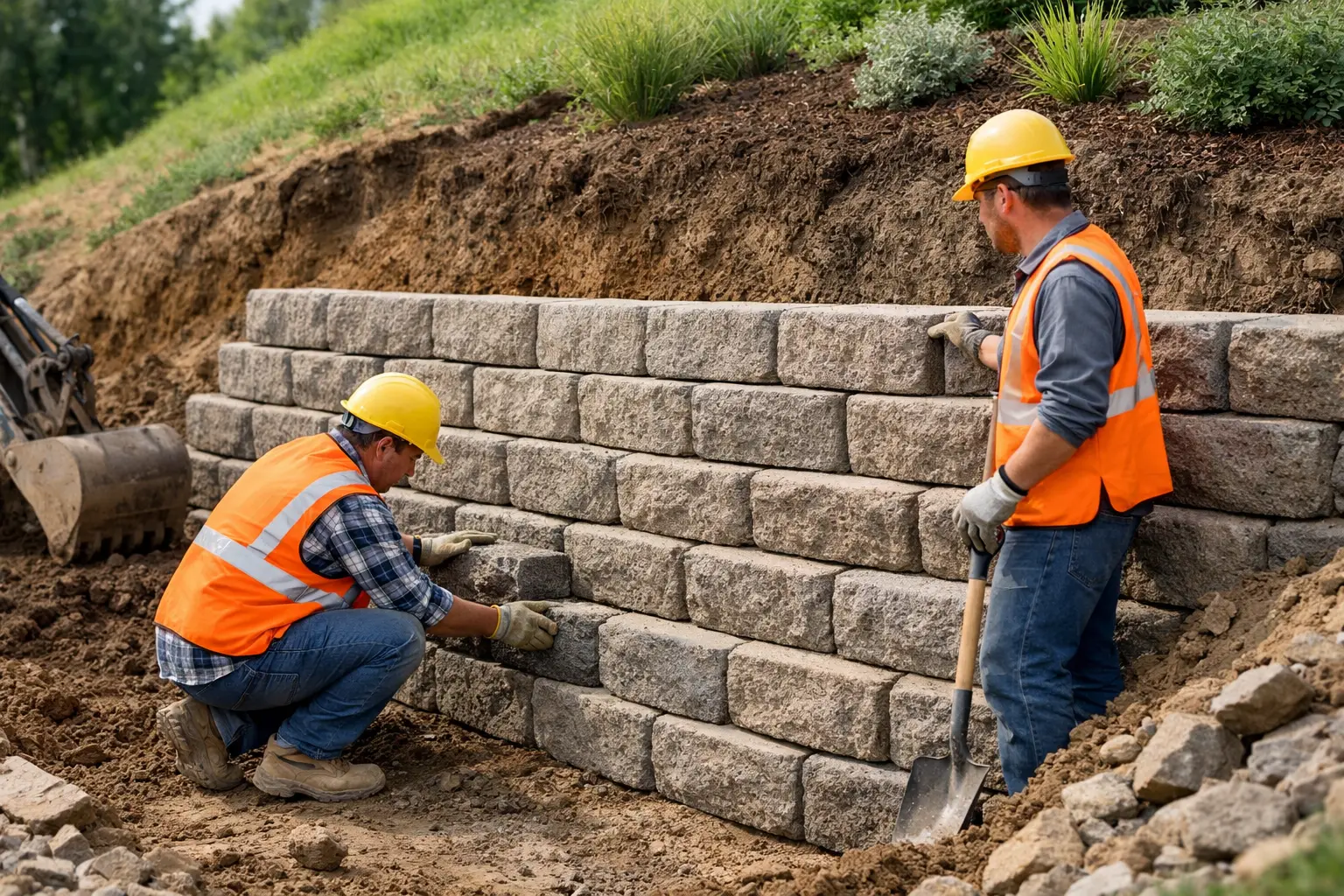
A steep backyard can lose more than a little dirt during a Portland rainstorm. Water running down an unprotected slope can carry soil, mulch, and plants with it, leaving bare patches, muddy low areas, and pressure against fences, patios, or foundations. Understanding how retaining walls prevent erosion helps homeowners recognize when a wall is a practical structural solution, not simply a landscaping feature.
A properly designed retaining wall holds soil where it belongs while directing water away from the areas most vulnerable to washout. For properties with slopes, uneven grades, failing garden beds, or drainage concerns, the right wall can turn an unstable part of the yard into usable, durable outdoor space.
How Retaining Walls Prevent Erosion
Erosion occurs when wind, rain, runoff, or gravity moves soil from one location to another. In the Portland metro area, repeated rainfall is often the main cause. Even a modest slope can develop ruts and exposed roots when runoff gains speed on its way downhill.
A retaining wall interrupts that movement. Instead of allowing one long, continuous slope where water can accelerate, the wall creates a stable change in grade. Soil is contained behind the wall, and the landscape can be shaped into level or gently sloped areas that are easier to plant, maintain, and use.
The wall itself resists the lateral force created by soil pressing downhill. Its base, materials, reinforcement, and drainage system all work together to keep the structure stable. This is why retaining wall construction requires more than stacking block or stone along a slope. The work below and behind the visible wall is what determines whether it performs for years or begins to lean, crack, or fail.
Holding Soil in Place
The most direct way a retaining wall controls erosion is by retaining soil at a planned elevation. On a sloped lot, gravity naturally pulls loose soil downhill. Heavy rain makes the problem worse by saturating the ground and carrying fine particles away.
A wall provides a physical barrier at the base or along the face of that slope. With the soil supported, the upper area can be graded properly, planted, or finished as a lawn, garden bed, patio, or walkway. This reduces the amount of exposed earth that rainfall can wash away.
In many yards, a series of shorter terraced walls works better than one tall wall. Terracing breaks a large slope into manageable levels, reducing the distance runoff travels and creating more opportunities for water to soak into the landscape rather than rush downhill.
Slowing and Redirecting Runoff
Retaining walls do not stop water from reaching a yard. They help manage where that water goes. This distinction matters because a wall without proper drainage can trap water behind it, increasing pressure on the structure and creating a different kind of problem.
A well-built wall is typically paired with drainage materials behind the structure, such as clean gravel and perforated drain pipe. These components give water a controlled path to move away from the wall rather than collecting in the soil. Depending on the property, drainage may connect to a suitable outlet, a swale, a catch basin, or another approved drainage solution.
Surface grading is equally important. The finished grade should guide runoff away from the home and prevent water from concentrating at the top edge of the wall. Gutters, downspouts, landscape drains, and hardscape areas all need to be considered together. A retaining wall can solve a slope problem, but it should not be treated as a replacement for a complete drainage plan.
Creating Stable Areas for Plants and Ground Cover
Bare soil erodes quickly. Healthy turf, shrubs, ground cover, and deep-rooted plants help protect the surface by softening the impact of rainfall and holding soil together with their root systems.
Retaining walls create level planting areas where vegetation can establish more successfully. Rather than trying to maintain mulch and plants on a steep, washed-out grade, homeowners can use terraced beds with defined edges and better soil conditions. In addition to erosion control, this approach improves access for pruning, irrigation, and seasonal maintenance.
Planting is a valuable partner to a retaining wall, but it is not always enough on its own. Deep slopes, active runoff paths, and areas near structures may need engineered support before planting can do its job effectively.
Why Drainage Determines Whether a Wall Works
Water is one of the most common reasons retaining walls fail. When wet soil builds up behind a wall, it becomes heavier and creates hydrostatic pressure. That pressure can push a wall forward, cause block movement, open joints in masonry, or lead to cracking in concrete.
For that reason, quality retaining wall installation starts with site evaluation and excavation. The contractor needs to understand the existing grade, soil conditions, drainage patterns, wall height, nearby structures, and the loads the wall will carry. A wall supporting a planting bed has different requirements than one supporting a driveway, parking area, patio, or portion of a home’s foundation landscape.
The base must be compacted and level, and the wall should be built with the appropriate setback or batter for its material and design. Segmental retaining wall block may use geogrid reinforcement for taller walls or challenging soil conditions. Natural stone and concrete walls require their own construction methods. Material choice affects appearance, but the structural details are what protect the investment.
Signs Your Yard May Need a Retaining Wall
Not every slope needs a retaining wall. Gentle grades with healthy vegetation and good drainage can often be managed through landscaping and thoughtful grading. A wall becomes more worthwhile when soil movement is ongoing or when the slope limits how the yard can be used.
Homeowners should pay attention to recurring washouts after rain, mulch collecting at the bottom of a hill, exposed tree roots, leaning edging, cracks near hardscape, or soil piling against a fence. Water pooling at the base of a slope is another warning sign, particularly when it sits near a patio, walkway, garage, or foundation.
A retaining wall may also make sense when a homeowner wants to reclaim unusable space. Leveling a section of a backyard can create room for a paver patio, outdoor kitchen, lawn area, garden, or play space while solving a grade-related erosion issue at the same time.
Choosing the Right Wall for Your Property
Retaining wall materials should fit both the property and the job. Concrete retaining wall block is a common option because it offers consistent sizing, strength, and a wide range of finishes. Natural stone can provide a more traditional or custom appearance. Poured concrete may be appropriate for certain modern designs or structural applications.
The best choice depends on the wall’s height, location, load requirements, drainage needs, budget, and the style of the home. For example, a low garden wall may allow more flexibility in material and design, while a taller wall supporting a steep slope needs more detailed planning and may require engineering or permits.
It is also worth considering the entire yard instead of viewing the wall as an isolated project. A retaining wall often connects naturally with steps, walkways, patios, fencing, drainage improvements, irrigation, and planting. Coordinating these elements during one project can produce a cleaner finish and avoid tearing up completed work later.
Professional Installation Protects the Long-Term Result
Retaining walls can look straightforward once they are finished, but proper installation involves excavation, base preparation, compaction, drainage, grading, and careful material placement. Small mistakes can become visible quickly when soil settles or winter rain arrives.
For Portland-area homeowners, local conditions make planning especially important. Many properties have wet-season drainage challenges, clay-heavy soils, hillside grades, or older landscaping that was not designed to move water effectively. An experienced landscape construction team can evaluate the site, identify the source of erosion, and recommend a wall and drainage approach that suits the property rather than applying a one-size-fits-all solution.
At Four Seasons Landscape & Construction, retaining wall projects are approached as part of the larger landscape. The goal is not only to build a wall that looks finished on installation day, but to create stable grades, controlled drainage, and outdoor spaces that continue to serve the home over time.
If a slope is washing away, water is pooling near hardscape, or part of your yard has become difficult to use, addressing the grade early can prevent more expensive repairs later. A well-planned retaining wall gives the landscape a stable foundation and gives homeowners a more dependable way to enjoy the space around it.