

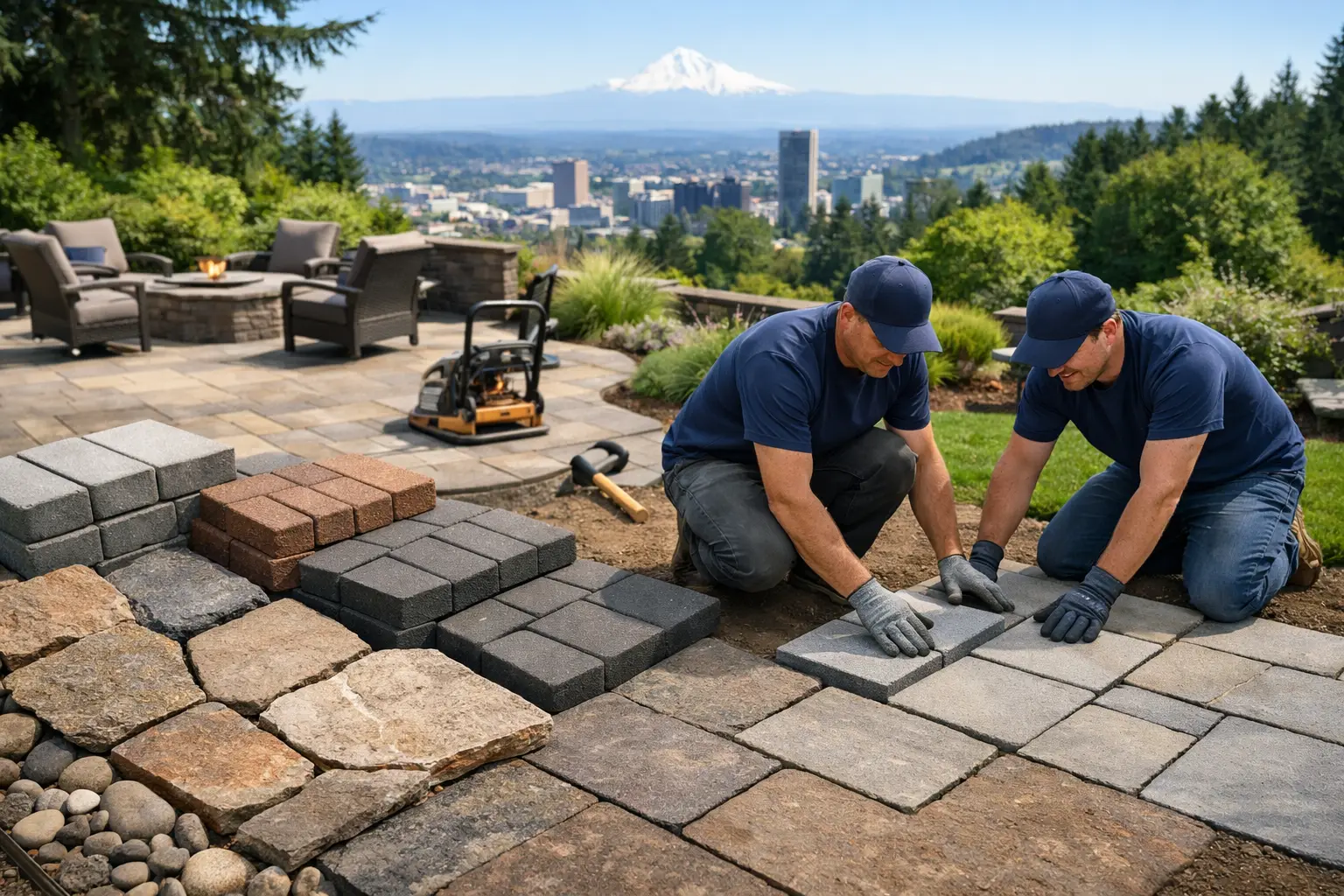
A patio in the Portland area has to do more than look good on a sunny July afternoon. It needs to handle months of rain, slippery leaves, temperature changes, and regular use without settling, puddling, or becoming difficult to maintain. Knowing how to choose patio pavers starts with the surface you want, but it should also account for the ground beneath it, the way water moves through your yard, and how the patio will be used.
The right choice can make an underused backyard feel like a true extension of the home. The wrong one may look attractive at installation but create drainage issues, shifting joints, or a surface that does not suit the way your family actually lives outdoors.
Start With How You Will Use the Patio
Before comparing colors and patterns, define the job the patio needs to perform. A small sitting area outside a back door has different requirements than a large space for dining, a fire pit, an outdoor kitchen, or a poolside gathering area.
For a dining patio, a relatively smooth surface with tight, consistent joints keeps chairs and table legs stable. If the space will connect to a grill or outdoor kitchen, consider stain resistance, heat exposure, and enough room for safe circulation. A path leading to a garden, shed, or side gate may benefit from smaller pavers or a layout that follows the natural movement through the yard.
Also think about the transition from the house to the patio. The finished elevation should work with door thresholds, siding clearances, steps, and existing walkways. Raising a patio too high can create water-management concerns at the foundation. Lowering it too far can leave an awkward step down. These details are best addressed in the design and site-preparation phase, not after materials have been ordered.
Choose a Paver Material That Fits Portland Conditions
Most residential patios use concrete pavers, natural stone, or porcelain pavers. Each can create a high-quality result, but each has different costs, installation needs, and maintenance expectations.
Concrete pavers
Concrete pavers are a practical choice for many Portland metro homes because they come in a wide range of sizes, shapes, textures, and colors. They can suit traditional, contemporary, and Northwest-inspired landscape designs, and individual units can be repaired or replaced more easily than a cracked poured-concrete slab.
Quality matters. Higher-grade concrete pavers generally hold their color and edges better over time. They also need a properly built compacted base, edge restraint, and joint material to perform as intended. A durable paver product cannot compensate for poor excavation or inadequate base preparation.
Natural stone
Natural stone brings variation and a more organic appearance that works especially well with mature landscapes, masonry features, and homes with classic or rustic architectural details. Flagstone, bluestone, and similar materials can create a distinctive patio that does not look manufactured.
The trade-off is that stone costs more in both material and labor, particularly when pieces require careful fitting. Surface texture and thickness can vary, which affects installation. Some stone can also become slick when wet if the finish is too smooth, so material selection matters in Oregon’s rainy climate.
Porcelain pavers
Outdoor-rated porcelain pavers offer crisp lines, consistent color, and a modern appearance. They are highly resistant to staining and moisture absorption, making them appealing near outdoor kitchens and covered patios. Many designs resemble natural stone, wood, or concrete while requiring less ongoing maintenance.
Porcelain must be installed with the right system for the project. It is not simply interchangeable with standard concrete pavers. Its strength, thickness, drainage approach, and edge treatment must all be considered, especially where the patio meets steps, lawn, or retaining walls.
Evaluate Color, Texture, and Pattern in Real Light
A paver sample viewed indoors or in a showroom does not tell the whole story. Portland’s overcast light, wet weather, surrounding evergreens, home exterior colors, and shade patterns can change how a material reads in the yard.
Warm gray, charcoal, tan, and muted earth tones tend to work well with many Pacific Northwest homes. A blended color can hide dust, pollen, and everyday debris better than a very light or solid dark surface. However, the best color is one that supports the home rather than competing with it. Look at roof color, trim, siding, existing stonework, and nearby fencing before making a final selection.
Texture deserves equal attention. A lightly textured paver usually provides better footing in wet conditions than a polished surface. It should still be comfortable enough for bare feet if the patio will be used for lounging or entertaining. Deeply textured materials may collect more dirt and moss in shaded locations, so there is a balance between traction and ease of cleaning.
Pattern affects both appearance and performance. Large-format pavers can make a compact patio feel more open and contemporary. Smaller pavers create visual detail and can accommodate curves more easily. Running bond, basketweave, and herringbone patterns each have a different character. Herringbone is particularly useful in areas with vehicle traffic, but on a patio, the choice is often driven more by the desired look and the shape of the space.
Do Not Treat Drainage as an Add-On
In the Portland metro area, patio drainage is part of the patio itself. Water needs a planned path away from the house and away from areas where it can saturate soil, undermine the base, or collect near a retaining wall.
A properly installed patio is graded so water moves in the intended direction. Depending on the property, that may involve a gentle surface slope, a channel drain near a doorway, a perimeter drain, a catch basin, or integration with an existing drainage system. The correct solution depends on roof runoff, soil conditions, yard slope, and where water can legally and safely discharge.
Permeable pavers are worth considering where managing stormwater on site is a priority. Their wider joints allow water to pass through into a specially designed base below. They are not the right answer for every property, and they still require careful excavation and base construction. But for some yards, they can reduce surface runoff while providing a finished patio or walkway.
Drainage should be reviewed before demolition begins. If a patio is being replaced because it has settled or holds water, the visible surface is usually only part of the problem.
Build the Base for Long-Term Performance
The most important part of a paver patio is the section you rarely see. A lasting installation begins with excavation to the correct depth, subgrade evaluation, compacted aggregate base, bedding layer, accurate grading, edge restraint, and properly filled joints.
Base depth is not one-size-fits-all. Soil type, drainage conditions, patio size, nearby structures, and expected loads all affect the design. Portland-area properties can have clay-heavy soils and seasonal saturation, both of which require thoughtful preparation. If the base is too shallow or not compacted in controlled layers, pavers can shift, settle, or develop low spots.
This is also the stage to plan for adjacent work. If the project includes a retaining wall, stairs, fencing, irrigation changes, landscape lighting, or a pergola, coordinating those elements early prevents unnecessary rework. A patio looks more finished when its borders, steps, and transitions were designed as part of the same outdoor space.
Set a Budget Around the Whole Project
Paver pricing is not just the cost of the pavers. A realistic budget includes demolition and disposal, excavation, aggregate base, drainage work, delivery, cutting, labor, edge restraints, steps or walls, and landscape restoration around the finished patio.
Material choices influence cost, but site conditions often have just as much impact. A flat, accessible backyard with good drainage is typically more straightforward than a steep yard with limited access, existing concrete removal, or water issues near the home. A clear site review helps identify those variables before construction starts.
If the budget needs to be phased, prioritize the permanent structural work first. It is usually wiser to build the base, drainage, and main patio correctly, then add optional features such as a fire pit, seating wall, or pergola later than to reduce the preparation hidden below the surface.
How to Choose Patio Pavers With Professional Guidance
The final decision should bring together appearance, traction, drainage, maintenance, and construction requirements. A paver that looks excellent beside your home’s exterior but is too slick, too porous, or poorly suited to the installation method may not be the best long-term value.
During a consultation, ask to review material samples in the actual yard, discuss how water currently moves through the property, and confirm what is included below the finished surface. You should also understand how the patio will connect to existing features and what steps will be taken to protect the home and surrounding landscape during construction.
For homeowners planning a complete outdoor upgrade, Four Seasons Landscape & Construction can coordinate paver patios with drainage, retaining walls, masonry, concrete, and landscape improvements so the finished space functions as one cohesive project. A carefully selected paver is the visible finish, but skilled preparation is what gives your patio a dependable place in the yard for years to come.