

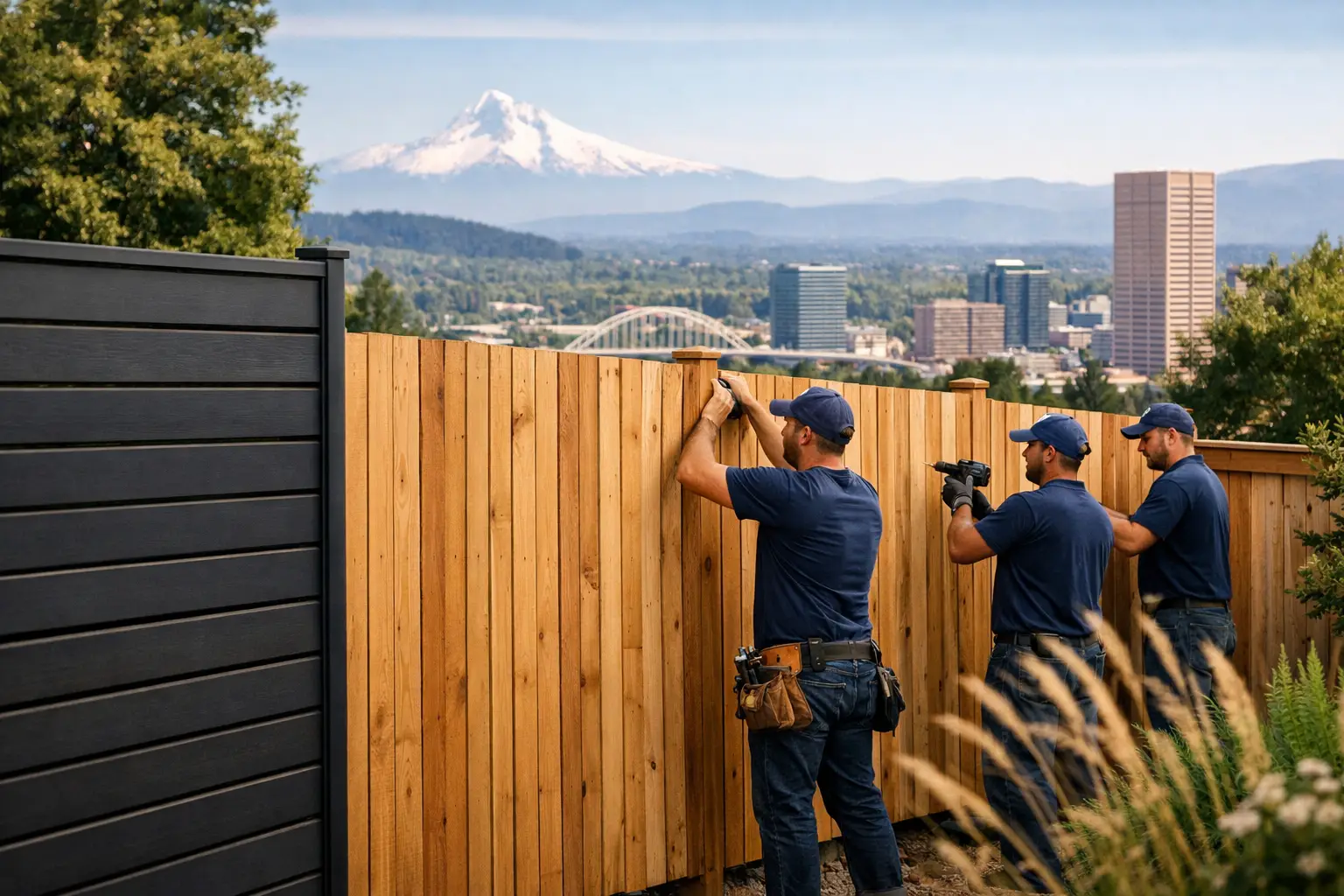
A privacy fence has to do more than block a neighbor’s view. In Portland-area yards, the best fence styles for privacy also need to stand up to months of rain, work with sloped ground, define outdoor living areas, and look appropriate beside the home. The right choice comes down to how much screening you need, the material you prefer, your maintenance expectations, and the conditions already present on the property.
For many homeowners, fencing is part of a larger yard improvement. A new fence can frame a paver patio, make a backyard safer for children and pets, create a more comfortable space around a hot tub, or provide a clean backdrop for planting beds. Planning the fence as part of the whole landscape usually delivers a more finished result than treating it as an afterthought.
Best Fence Styles for Privacy: What Works Locally
A solid fence is the most direct solution when privacy is the priority. However, a solid wall is not automatically the best fit for every yard. Height restrictions, wind exposure, drainage patterns, property lines, and the look of nearby homes all influence the final design.
In the Portland metro area, wood remains a popular choice because it fits Northwest architecture and can be built in several styles. Vinyl and composite fencing can reduce maintenance, while modern horizontal designs appeal to homeowners updating a contemporary outdoor space. Each option has practical trade-offs worth considering before construction begins.
Board-on-board cedar fencing
Board-on-board fencing is one of the strongest choices for consistent privacy. Vertical boards overlap one another, covering the narrow gaps that naturally occur as wood expands and contracts with changing moisture levels. That overlap helps maintain screening even after the fence has weathered through several Oregon winters.
Cedar is especially well suited to local conditions because it naturally resists decay and insects better than many other common wood species. It also has a warm, natural appearance that works well with stone, pavers, garden beds, and mature trees. A clear sealer can preserve more of the cedar color, while a stain can complement the home’s exterior palette.
The main consideration is maintenance. Cedar is durable, but it is not maintenance-free. Periodic cleaning, sealing, or staining helps protect the material and keeps the fence looking cared for. For homeowners who value natural materials and want a tailored appearance, that upkeep is often a worthwhile trade-off.
Solid vertical board fences
A solid vertical board fence is a familiar, versatile privacy solution. Boards are installed side by side on horizontal rails, typically with the finished face oriented toward the more visible side of the property. This style can be built with flat-top boards for a clean traditional look or with a subtle arched or capped top for more detail.
This is often a practical choice for side yards and backyard boundaries where full visual screening matters most. It can also be customized easily with a matching gate, post caps, trim, or a lattice accent at the top. For a conventional Portland neighborhood lot, a well-built vertical cedar fence offers a clean result without drawing unnecessary attention away from the house and landscape.
Because boards can shrink over time, a standard side-by-side installation may develop small openings between boards. Those gaps are not always a concern, particularly where the fence is set back from neighboring windows. When complete screening is essential, board-on-board construction is usually the better option.
Horizontal privacy fencing
Horizontal fencing uses long boards running between posts, creating a streamlined, contemporary appearance. It is a strong fit for remodeled homes, newer construction, and yards with modern patios, retaining walls, or pergolas. The broad horizontal lines can also make a compact yard feel wider.
This style requires careful installation. Long boards need properly spaced, securely set posts to prevent sagging or uneven lines. The gaps between boards must be planned deliberately: narrow gaps can provide strong privacy while allowing a little airflow and light, while wider spacing creates a more open screen rather than a true privacy fence.
Horizontal cedar is attractive, but it may cost more than a basic vertical fence because of the framing requirements and finish expectations. It is best for homeowners who want privacy without a heavy, enclosed appearance and who see the fence as a visible design feature in the yard.
Capped and trimmed privacy fences
Capped and trimmed fencing starts with a solid wood privacy fence and adds a top cap, trim boards, or a framed finish. These details protect exposed end grain, create a more substantial appearance, and give the fence a more polished edge from both sides of the property.
This style works particularly well around higher-end outdoor living spaces. A capped cedar fence can tie together a paver patio, outdoor kitchen, covered structure, or masonry feature without competing with those elements. It also gives a long perimeter fence a more intentional look than a plain panel design.
The additional materials and labor increase the initial cost, but the finished result can be worth it where the fence is highly visible from the house or entertaining area. Quality framing, straight lines, solid posts, and properly built gates matter more than decorative details alone.
Vinyl privacy fencing
Vinyl fencing provides a clean, uniform privacy barrier with low routine maintenance. It does not require staining or sealing, and it will not rot like untreated wood. For homeowners who want a bright, consistent look and less seasonal upkeep, vinyl can be a practical choice.
There are limitations. Vinyl does not offer the same natural character as cedar, and its appearance can feel less suited to older homes or heavily landscaped Northwest yards. It can also become brittle in very cold conditions and may be more difficult to repair discreetly if a panel is damaged. Material quality matters, especially for taller privacy panels exposed to wind.
A vinyl fence is often best where low maintenance is the clear priority and the design of the home supports a crisp, uniform finish. Choosing a professional-grade system with strong posts and proper reinforcement is essential for long-term performance.
Composite privacy fencing
Composite fencing combines wood fibers and synthetic materials to create boards that resist moisture, insects, and fading better than traditional wood. It is available in several colors and textures, including options that resemble stained wood. For homeowners who want the appearance of wood with less maintenance, composite can be an appealing middle ground.
Its higher material cost is the main drawback. Composite also expands and contracts differently than wood, so installation needs to follow the manufacturer’s spacing and fastening requirements. A poorly installed composite fence can look uneven or develop movement over time.
When the budget allows, composite can be a good fit for prominent backyard spaces where durability and a refined finish are both priorities. It is particularly useful for homeowners who do not want to plan on regular staining but still prefer a warmer look than vinyl.
Height, Codes, and Property-Line Details
Privacy is not only about fence style. A fence that is too short may not screen the view you are trying to address, while a fence that is too tall can create permit, code, or neighbor concerns. Residential height rules can vary based on whether the fence is in a front yard, side yard, backyard, corner lot, or near a driveway intersection.
Before building, confirm the property line rather than relying on an existing fence location. Older fences are not always installed on the actual boundary. It is also wise to discuss the project with adjacent neighbors, especially when replacing a shared fence or building close to their landscaping. Clear communication early can prevent disputes later.
Gates deserve the same attention as the fence itself. A wide gate for yard equipment, a self-closing gate for a pool area, or a reinforced gate on a sloped lot may require different hardware and framing. Gates are often the first component to show problems when posts, hinges, and latches are not installed correctly.
Build Privacy Into the Whole Yard Plan
The best privacy fence does not need to make every inch of the property feel closed in. In some yards, a solid fence along the most exposed boundary combined with layered evergreen planting creates better privacy than a tall fence around the entire perimeter. In others, a lower fence with a pergola screen near the patio provides privacy exactly where it is needed while preserving light and openness elsewhere.
Drainage should also be considered before new posts go in. Water collecting along a fence line can accelerate wear, affect soil stability, and complicate future landscape work. On sloped Portland-area properties, a fence may need to step with the grade, follow a slope, or coordinate with retaining walls and drainage improvements.
Four Seasons Landscape & Construction can help homeowners plan fencing as part of a complete outdoor project, from site preparation and drainage to patios, planting areas, and finished privacy screens. A fence built around the way you actually use the yard will provide more than separation from the neighbors – it will make the outdoor space feel settled, useful, and your own.