

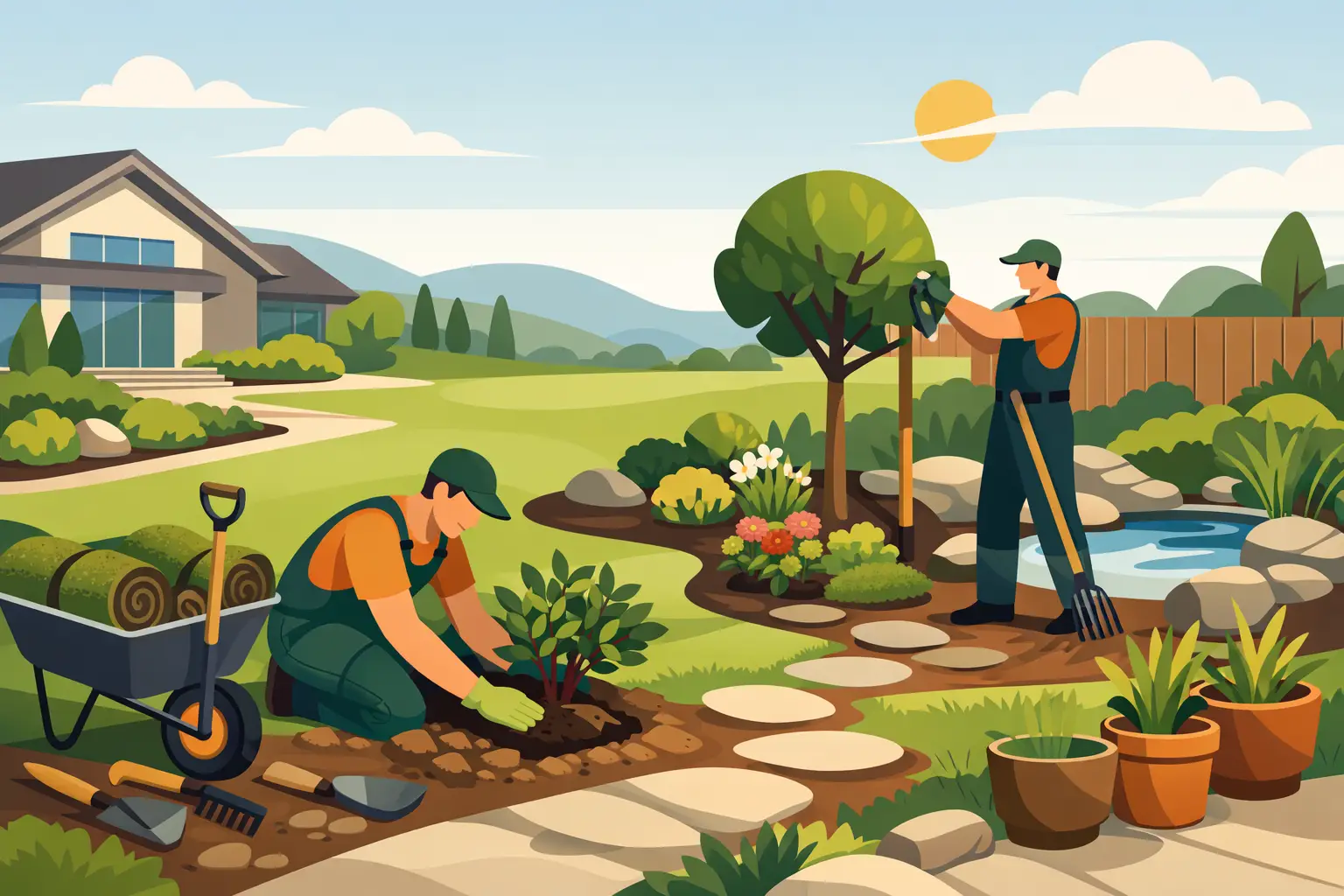
A new patio, lawn, or planting bed can look straightforward from the street. Underneath, however, there may be grading, drainage planning, compacted base material, irrigation lines, edging, and structural work that determines whether the finished yard performs well for years. So, what is landscape installation? It is the professional process of building and putting those outdoor elements in place, from the site preparation below grade to the visible details that make a property more usable and inviting.
For Portland-area homeowners, landscape installation often solves more than an appearance problem. A muddy side yard, a sloped backyard, standing water near the foundation, a cracked concrete path, or an unused lawn can all call for coordinated landscape construction. The right scope depends on the property, the goals for the space, and the conditions already present.
What Landscape Installation Includes
Landscape installation is the construction phase of an outdoor improvement project. It turns a plan, whether simple or detailed, into a finished space. The work may involve softscape features such as sod, trees, shrubs, mulch, and planting beds. It can also include hardscape features such as paver patios, walkways, retaining walls, stonework, concrete, fences, pergolas, and outdoor structures.
A complete installation begins with the site itself. Before new materials go in, a contractor evaluates access, existing grades, soil conditions, drainage paths, utilities, and structures that need to remain protected. This early work is easy to overlook, but it has a direct effect on the durability of patios, walls, lawns, and drainage systems.
For example, installing pavers is not simply placing pavers on the ground. A lasting patio requires excavation to the proper depth, a stable aggregate base, careful compaction, appropriate slope, edge restraint, bedding material, and accurate joint finishing. A retaining wall requires a properly prepared base, drainage behind the wall, suitable backfill, and construction that accounts for the wall height and the pressure of the soil it holds back.
Softscape and Hardscape Work Together
Many homeowners think of landscaping as plants and lawns. Plantings are an important part of a finished yard, but they are only one piece of the project. Hardscape construction creates the framework for how the space is used, while softscape adds color, texture, privacy, and a more natural feel.
A backyard renovation might include a paver patio for dining, a retaining wall to create a level area, drainage improvements to direct water away from the home, and planting beds that soften the edges of the new construction. In a front yard, the project may include a new walkway, stone or concrete borders, fresh sod, low-maintenance shrubs, and irrigation to support the landscape through dry weather.
The best combination depends on how you want to live in the space. A family that needs durable play space may prioritize grading, sod, and a simple walkway. A homeowner who entertains may invest more heavily in a patio, seating wall, pergola, lighting preparation, or an outdoor kitchen area. There is no single package that fits every property.
The Landscape Installation Process
Professional landscape installation should follow a clear sequence. The exact steps vary by project, but a well-managed job generally moves from planning and site preparation to construction, finishing work, and cleanup.
Consultation and Project Scope
The process starts with a conversation about the property and the homeowner’s priorities. Is water collecting near the house? Does the yard need better access? Are you replacing an old patio or building an entirely new outdoor living area? A useful consultation identifies both the desired result and the site conditions that could affect cost, schedule, or construction methods.
A transparent quote should define the work being completed, the materials included, and any assumptions that need to be confirmed once excavation begins. Older properties can have hidden issues, such as buried concrete, unsuitable soil, damaged drainage, or utility conflicts. Clear communication before work begins helps avoid surprises later.
Site Preparation and Excavation
Preparation is where much of the lasting value is built. Depending on the project, crews may remove turf, old concrete, shrubs, failing structures, or excess soil. They establish new grades, excavate for a patio or wall base, and prepare the ground for drainage, irrigation, or utilities.
Proper grading is especially important in the Portland metro area, where seasonal rain can expose weak drainage quickly. Water should move away from the home and not collect on patios, walkways, or lawn areas. In some yards, this requires surface grading. In others, it may involve catch basins, channel drains, French drains, or other drainage solutions designed around the property.
Building the Structural Features
Once the site is prepared, installation moves into the construction phase. This may include compacting aggregate base for pavers, pouring concrete, setting wall block or natural stone, installing fencing, framing a pergola, or creating stairs and walkways that connect different levels of the yard.
Quality workmanship matters most at the points that are hard to see after completion. A patio needs correct base depth and compaction. A concrete installation needs a properly prepared subgrade, reinforcement where appropriate, control joints, and finishing suited to the intended use. A fence needs stable posts and thoughtful layout. These details affect how the finished work handles weather, foot traffic, settling, and daily use.
Planting, Irrigation, and Final Details
After major construction is complete, the site begins to take on its finished character. Crews install topsoil where needed, sod or seed, plants, mulch, edging, and decorative rock. Irrigation may be installed or adjusted to serve new lawn areas and planting beds.
Plant selection should match the amount of sun, the soil, the available space, and the level of maintenance you want to take on. A landscape that looks good on installation day still needs room to mature. Overplanting can create crowding and unnecessary maintenance within a few years, while a thoughtful layout gives plants space to grow and keeps sightlines, paths, and windows clear.
When Landscape Installation Requires More Than Planting
Some projects are primarily cosmetic, such as replacing tired shrubs and refreshing mulch. Others involve structural or water-management concerns that should be addressed before new plants go in. Installing sod over poor grading, for instance, may create a green lawn for a season while leaving the underlying drainage issue unresolved.
Likewise, a new patio may need steps, retaining walls, drainage, or excavation to function safely and look proportionate to the home. Combining these services under one coordinated project can reduce scheduling conflicts and make it easier to keep the finished materials, elevations, and drainage plan working together.
This is also where a full-service contractor can be valuable. Rather than separating excavation, concrete, masonry, irrigation, fencing, and planting among several crews, homeowners can work through one project plan and one point of communication. Four Seasons Landscape & Construction approaches outdoor renovations with that start-to-finish mindset, coordinating the structural work and finishing details that give a yard a complete result.
What Affects Landscape Installation Cost?
Landscape installation costs vary widely because no two properties have the same access, slope, soil, demolition needs, or material selections. A small flat-yard planting project is different from a sloped backyard renovation with retaining walls, drainage, pavers, and a pergola.
Material choice also makes a difference. Concrete, pavers, natural stone, composite fencing, cedar, premium plants, and custom masonry each carry different labor and material costs. The least expensive option is not always the best long-term choice. For high-traffic areas, drainage-sensitive locations, and structures that support soil or elevation changes, investing in proper preparation and durable materials usually protects the project better than cutting corners below the surface.
Homeowners can make budgeting easier by separating must-have work from optional upgrades. Drainage corrections, safe access, grading, and structural stability generally come first. Features such as expanded planting, decorative stone, or additional outdoor amenities can sometimes be phased if the overall plan accounts for them from the beginning.
Choosing the Right Contractor for the Work
A landscape installer should be able to explain how the project will be built, not just describe how it will look. Ask about site preparation, drainage, base materials, compaction, wall construction, irrigation, and how the crew will protect existing features of the property. The answers should be practical and specific to your yard.
It also helps to choose a contractor with experience across the trades involved in your project. A patio that meets a retaining wall, a fence, a drainage route, and planting beds needs more coordination than a single-service job. Clear scope, realistic scheduling, quality materials, and consistent communication are signs of a contractor prepared to manage that complexity.
A well-installed landscape should feel natural to use from the first day: the path goes where people walk, the patio drains correctly, the wall creates usable space, and the planting supports the home instead of competing with it. Start with the problems you want the yard to solve, then build a plan that gives every visible feature the right foundation.