

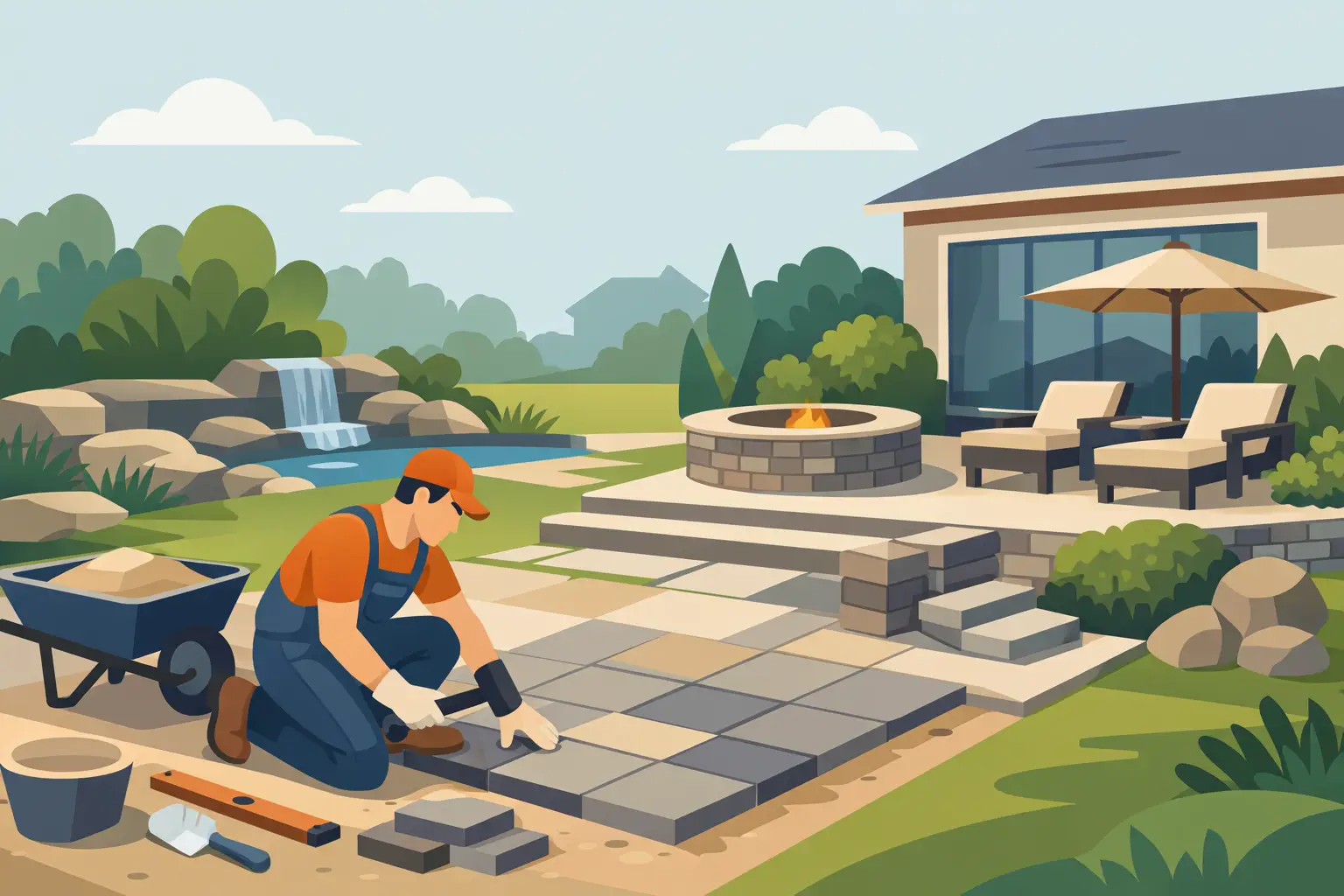
A backyard with patchy grass, poor drainage, and no usable patio does not need more plants alone. It usually needs structure. That is the simplest answer to what is hardscaping work – it is the built, non-living part of an outdoor space that gives a yard shape, function, durability, and year-round usability.
For homeowners in the Portland area, hardscaping is often the difference between a yard that looks unfinished and one that actually works. Our climate, slopes, wet seasons, and heavy use of outdoor living spaces make that especially true. If you are planning to improve your property, it helps to understand where hardscaping fits and why professional installation matters.
What Is Hardscaping Work?
Hardscaping work refers to the construction of permanent or semi-permanent features made from materials such as concrete, pavers, natural stone, brick, and block. These are the solid elements of a landscape. They are built to create outdoor living areas, solve site problems, improve access, and define how the yard functions.
Common hardscaping projects include patios, walkways, retaining walls, driveways, steps, fire pit areas, stone borders, concrete pads, and masonry features. In some projects, hardscaping also includes built seating, outdoor stairs, and structural bases for pergolas or other outdoor features.
The easiest way to think about it is this: if landscaping is the living layer of the yard, hardscaping is the framework underneath it. Plants can soften and finish a space, but hardscaping gives it order and purpose.
Hardscaping vs. Landscaping
Homeowners often use the two terms interchangeably, but they are not the same. Landscaping is the broader category. It can include lawn installation, planting, irrigation, grading, drainage, and decorative improvements. Hardscaping is one part of that larger picture.
Softscaping refers to the living elements, such as sod, shrubs, trees, flowers, and ground cover. Hardscaping refers to the constructed surfaces and structures that do not grow or change with the seasons.
That distinction matters when you are planning a project. A new lawn may improve appearance, but it will not fix an unusable slope or create a place to entertain. A paver patio may solve those problems, but it may still need surrounding plantings and irrigation to feel complete. In many of the best outdoor renovations, hardscaping and landscaping are designed together rather than treated as separate jobs.
What Hardscaping Usually Includes
Most residential hardscaping work centers on a few core features. Patios are one of the most common because they create functional outdoor living space for dining, seating, and gatherings. Walkways improve access and safety while giving the yard a more finished layout. Retaining walls are often necessary on sloped properties to hold back soil, create level areas, and reduce erosion.
Concrete work also falls into this category. That may include patios, walkways, driveways, pads, curbing, and decorative finishes such as stamped concrete. Masonry features such as stone walls, columns, and steps are another form of hardscaping, especially when the goal is a more custom or high-end look.
Not every project needs every element. Some yards need one well-built patio and proper drainage. Others require excavation, retaining walls, stairs, fencing, and grading before the space becomes usable. That is why hardscaping work is rarely just about appearance. It often involves structural planning, site preparation, and long-term performance.
Why Hardscaping Matters in Portland-Area Yards
In the Portland metro area, outdoor projects need to do more than look good in summer. They need to hold up through rain, moisture, shifting temperatures, and everyday use. That is one reason hardscaping is such an important part of residential improvement here.
A well-built patio creates a stable surface that stays usable when grass turns muddy. A retaining wall can make a sloped backyard safer and more functional. A properly installed walkway reduces wear patterns, standing water, and slippery access points around the home. Hardscaping also helps direct traffic and define space, which is important on larger properties and small lots alike.
There is also a value component. Buyers notice usable outdoor living space, clean access, good drainage, and quality materials. While no contractor should promise a specific return, professionally built hardscaping generally adds appeal because it solves real problems and improves how a property functions.
Hardscaping Is Not Just Decorative
Some homeowners assume hardscaping is mainly cosmetic, but that is only part of the picture. A patio may look attractive, but beneath it there should be excavation, compacted base material, edge restraint, and drainage planning. A retaining wall may frame a yard nicely, but if it is not engineered and installed correctly, it can shift, lean, or fail.
This is where experience matters. Good hardscaping work starts below the surface. Soil conditions, water movement, elevation changes, and load requirements all affect how the finished project performs. Cutting corners in base prep or drainage can lead to settling, cracking, pooling water, or structural issues later.
That is why substantial outdoor projects should be approached as construction work, not just surface improvement. Materials matter, but workmanship matters just as much.
Signs Your Property May Need Hardscaping Work
Many homeowners start researching hardscaping after running into the same problems year after year. Maybe the backyard has no level area for furniture or entertaining. Maybe water collects near the house or turns the lawn into mud. Maybe the slope is hard to maintain, or worn footpaths are cutting through the yard.
In other cases, the issue is less about repair and more about potential. You may have plenty of square footage but no clear layout, no gathering space, and no durable surfaces that make the area enjoyable. Hardscaping can turn an underused yard into a place that supports how you actually live.
If your outdoor space needs structure, better access, stronger drainage control, or more usable square footage, hardscaping is likely part of the solution.
What to Expect From a Professional Hardscaping Project
A quality hardscaping project should begin with an on-site evaluation, not a guess. The contractor needs to look at grade, drainage, soil conditions, access, existing features, and how you want to use the space. From there, the scope can be defined clearly, including materials, layout, excavation needs, and any related work such as drainage, irrigation adjustments, or fencing.
Installation usually involves more than homeowners expect. Demolition may come first if old concrete, failed pavers, or outdated landscape elements need to be removed. Excavation and grading follow. Then the base is built, drainage is addressed, and the hardscape materials are installed with attention to alignment, compaction, finish, and transitions.
The best results come from having one experienced contractor manage the process from start to finish. When hardscaping overlaps with concrete, masonry, drainage, and landscape work, coordination becomes a major part of project success. That is one reason many homeowners prefer working with a full-service company rather than piecing the job together across multiple trades.
Choosing the Right Hardscaping Features
The right project depends on your property, budget, and priorities. If you want outdoor living space, a patio may be the center of the plan. If the yard is steep or unstable, retaining walls and steps may come first. If curb appeal and access are the main goals, a new walkway, front entry improvements, or driveway concrete may make the biggest impact.
Material choice also depends on the use of the space. Pavers offer design flexibility and a refined look. Concrete can be cost-effective and durable, especially for larger surfaces. Natural stone brings character but may involve a higher investment. There is no single best option for every home. The right recommendation should reflect the site conditions and the level of finish you want.
At Four Seasons Landscape & Construction, hardscaping work is often part of a larger outdoor transformation because the best yards are not built in pieces without a plan. They are built to function well, drain correctly, and hold up over time.
What Is Hardscaping Work Really About?
At its core, hardscaping work is about making outdoor space usable. It creates places to walk, gather, relax, and manage the practical challenges that come with real properties. It can improve appearance, but its bigger job is to add structure and lasting value.
If you are looking at your yard and seeing wasted space, drainage issues, uneven ground, or no real place to enjoy the outdoors, hardscaping may be the step that changes everything. The right project does not just make your property look more finished. It makes it work better every day.