

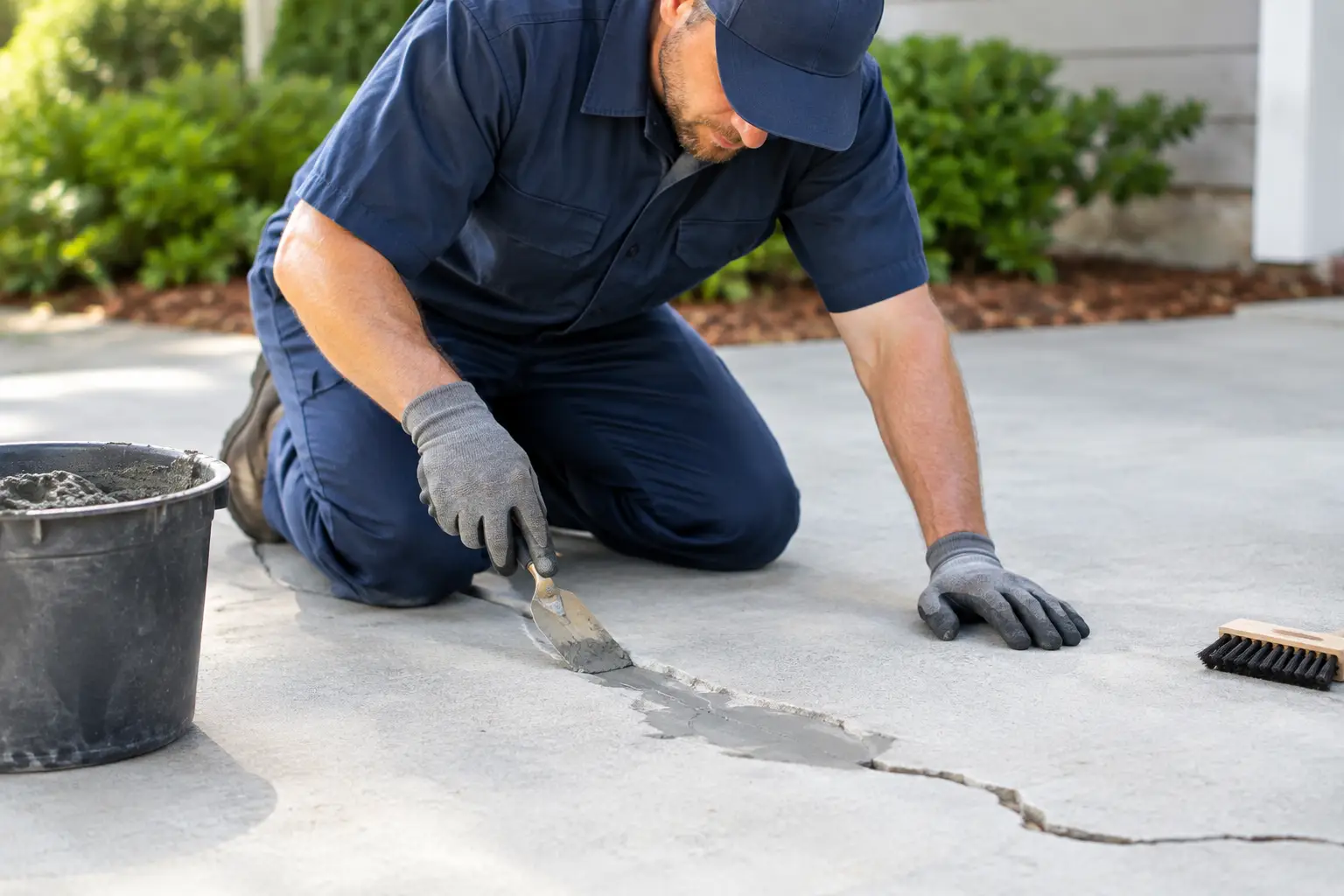
A crack in a driveway, patio, walkway, or garage slab is easy to dismiss at first. In the Portland area, however, seasonal rain, poor drainage, clay soils, and changing ground conditions can turn a small surface crack into a tripping hazard, a drainage problem, or evidence that the slab is moving. To repair cracked concrete slabs correctly, the first step is not choosing a filler. It is determining why the concrete cracked in the first place.
A cosmetic repair can improve the appearance of stable concrete. A lasting repair requires the right preparation and, when necessary, correction of the soil, drainage, or base conditions below the slab. That distinction helps homeowners avoid spending money twice on the same problem.
What Caused the Concrete Slab to Crack?
Concrete is strong under compression, but it will crack when it moves, settles, shrinks, or carries more stress than it can handle. Not every crack calls for replacement, but the crack pattern and surrounding conditions matter.
Hairline cracks are common, especially on older concrete. They may result from normal curing shrinkage or years of exposure. If the slab remains level and the crack has not widened, a properly installed concrete crack filler or sealant may be all that is needed.
Wider cracks, uneven slab sections, and cracks that continue to grow are different. These often point to settlement beneath the concrete, water washing away support, tree-root pressure, frost-related movement, or inadequate base preparation during the original installation. In Portland’s wet climate, water management is frequently part of the answer. Runoff that drains beneath a patio or driveway can soften or erode the base material, leaving the slab without consistent support.
Before scheduling a repair, look for signs beyond the crack itself. Water pooling near the slab, downspouts that discharge at its edge, nearby retaining walls, settled landscaping, and gaps along the foundation all provide useful clues. A slab that has dropped on one side may be structurally sound concrete sitting on unstable ground. Filling the visible crack alone will not correct that condition.
When Repairing Cracked Concrete Slabs Makes Sense
Repair is often the practical choice when the slab is largely level, the concrete is in otherwise good condition, and the cracking is limited. A repair can also work when the underlying cause has been addressed, such as redirecting a downspout or improving drainage away from the patio.
For narrow, stable cracks, the work generally involves cleaning out loose debris, allowing the area to dry, and placing a flexible concrete crack sealant or repair material designed for exterior use. The goal is to keep water and debris out of the crack while creating a finished appearance that blends reasonably well with the surrounding slab. The repair material should suit the crack width and expected movement. Rigid patch material in an active crack can break loose quickly.
Small areas of surface scaling, spalling, or chipped edges may be repaired with a bonded concrete patch. Proper surface preparation is what makes the difference. Weak concrete must be removed, dust needs to be cleaned away, and the patch needs a solid, sound surface to bond to. Applying new material over deteriorated concrete may look better briefly, but it rarely holds up through wet winters and temperature changes.
Joint repair is another common need. Control joints are intentional grooves that give concrete a planned place to crack as it cures and moves. When joint sealant fails, water can enter the joint and reach the base below. Cleaning and resealing these joints can help protect the slab, particularly on driveways and walkways exposed to regular rain.
Signs That a Patch Is Not Enough
There is a point where repeated repairs become less cost-effective than replacement. If a crack has created a noticeable height difference between slab sections, it can become a safety concern and may indicate broader movement below the concrete. A patched surface will not remove the trip edge.
Replacement is usually worth considering when a slab has multiple wide cracks, severe settlement, extensive surface deterioration, or drainage problems that cannot be corrected without removing concrete. The same is true when the existing patio or driveway no longer serves the way your household uses the property. Replacing a failing slab can be an opportunity to improve the layout, add a proper slope for drainage, widen a walkway, or create a more functional outdoor living area.
Concrete lifting can be an option in certain situations. If the slab is intact but has settled because of voids or compacted soil, lifting may restore a more even surface without full removal. It depends on access, slab condition, the cause of settlement, and whether the surrounding drainage can be corrected. A badly cracked slab or a slab with ongoing water issues may still require removal and a rebuilt base.
The Right Process for a Long-Lasting Repair
A quality concrete repair starts with an assessment of the entire area, not just the visible damage. The slope of the slab, adjacent soil grades, roof runoff, irrigation, and nearby hardscape all affect its performance.
For larger repairs or replacement, the process should include removal of unstable concrete, excavation to the appropriate depth, and installation of a properly compacted aggregate base. The base is not a minor detail. It distributes loads and helps reduce future settlement. Soft, saturated, or poorly compacted soil beneath new concrete is one of the most common reasons slabs crack prematurely.
Drainage should be addressed before new concrete is placed. Depending on the property, that may mean adjusting the grade, extending downspouts, installing drainage components, or creating a deliberate slope away from the home. A patio should feel level enough for furniture and entertaining, but it still needs enough pitch to move water away from the house and prevent standing water.
The concrete itself should be installed at an appropriate thickness for its use. A pedestrian walkway does not have the same demands as a vehicle driveway. Reinforcement, control-joint placement, edge conditions, and curing practices also matter. Good workmanship is often most visible years later, when the surface remains stable and water continues to drain as intended.
Avoid These Common DIY Repair Mistakes
Homeowners can successfully handle some minor crack sealing, but larger repairs are easy to underestimate. The most common mistake is applying a patch without removing loose material or cleaning the crack thoroughly. The repair then bonds to dust and weak concrete instead of a sound surface.
Another problem is using the wrong product. A flexible sealant is generally better for a moving crack, while a cement-based patch may suit a stable chip or spalled area. Using a hard patch in a crack that opens and closes with movement often leads to another failure.
It is also tempting to cover a cracked patio with a coating, overlay, or outdoor rug without diagnosing the slab. Those options can improve appearance, but they do not solve settlement, drainage, or structural cracking. If water is still reaching the base or the slab is continuing to move, the damage can reappear beneath the new finish.
Finally, avoid directing landscape drainage toward a repaired slab. Fresh mulch, new planting beds, and irrigation changes can alter how water moves through a yard. A concrete repair should be considered alongside the surrounding landscape and drainage plan.
Planning a Concrete Repair for Your Property
The best repair approach depends on the slab’s condition, how the area is used, and what is happening below the surface. A cracked front walkway may require a straightforward safety repair. A settled backyard patio beside the home may call for a more complete project involving excavation, drainage correction, and new concrete or pavers.
For homeowners considering a larger exterior renovation, coordinating the concrete work with retaining walls, landscaping, fencing, or outdoor structures can prevent unnecessary disruption later. It also allows grades and drainage to be designed as one system rather than as separate projects.
Four Seasons Landscape & Construction helps Portland-area homeowners evaluate cracked concrete in the context of the entire property. Clear expectations, proper site preparation, and skilled installation are the foundation of work that looks good and performs well through changing Northwest seasons.
If a crack is growing, holding water, or creating an uneven surface, addressing it early gives you more options. The right solution may be a targeted repair, slab lifting, or a full replacement built on a stable, well-drained base. A careful assessment now can protect your investment and make the outdoor space safer for years to come.