

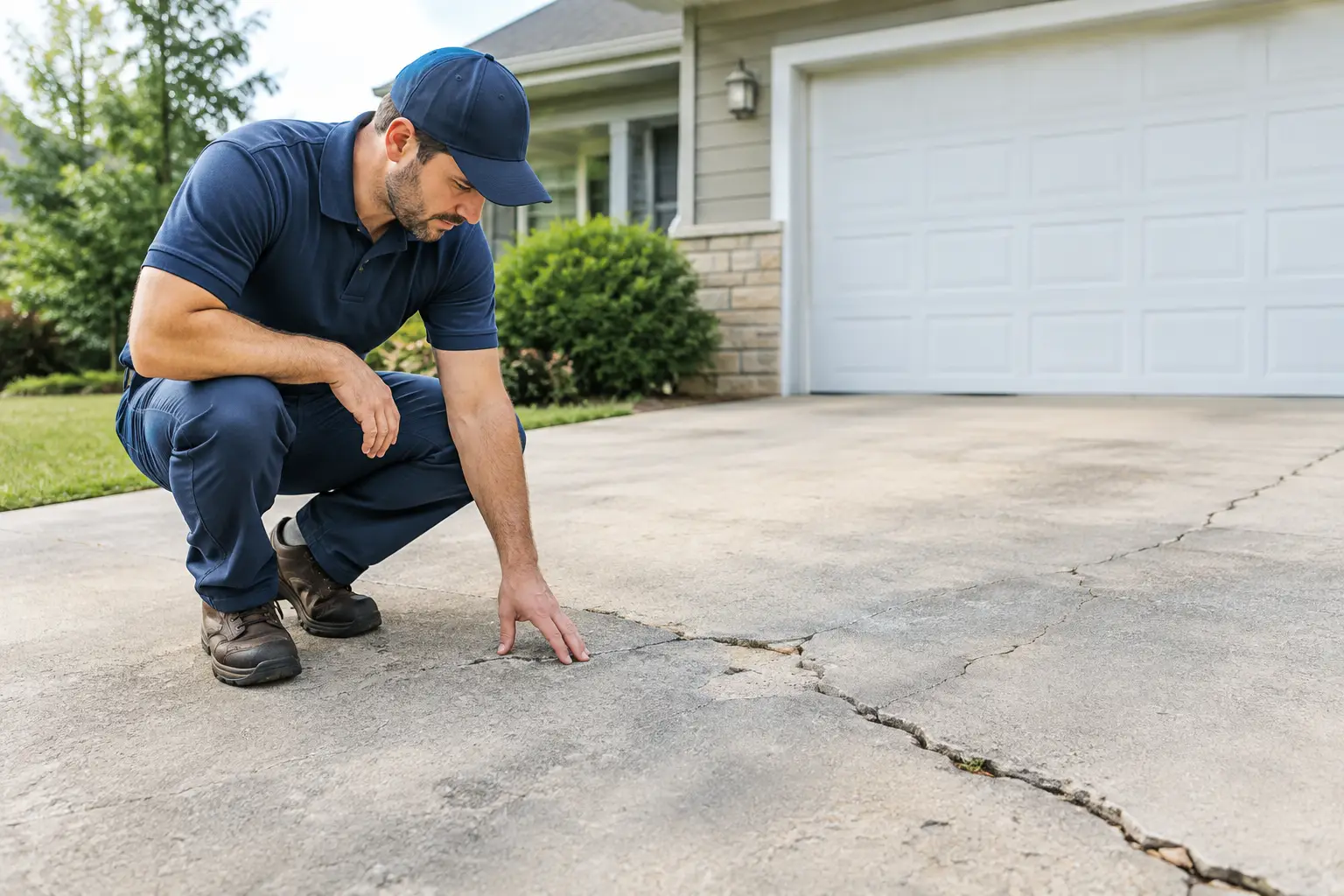
A driveway can look worn for years and still serve its purpose. But once cracking, sinking, drainage problems, or surface breakdown begin affecting how you park, walk, or protect the garage, the question becomes when to replace a concrete driveway rather than continue patching it. For Portland-area homes, wet winters and changing soil conditions can turn a manageable issue into a larger concrete and drainage project.
A professional assessment should look beyond the visible surface. The condition of the base, the direction water moves across the property, and the age of the slab all help determine whether repair is worthwhile or replacement is the better long-term investment.
1. Cracks Are Wide, Deep, or Spreading
Hairline cracks are common in concrete. They often develop as a slab cures or moves slightly with seasonal temperature changes. Small, stable cracks may be sealed to limit water intrusion and improve appearance.
Replacement deserves serious consideration when cracks are wide, deep, or continuing to spread. Cracks that run across the driveway, separate individual sections, or show vertical displacement usually point to movement below the slab. Filling those cracks may improve the look temporarily, but it does not correct an unstable base or water problem.
Cracks near the garage entrance also deserve close attention. If the slab is pulling away from the garage, water may find a path toward the foundation or create an uneven transition where vehicles enter.
2. Sections Have Settled, Lifted, or Become Uneven
A driveway should provide a consistent surface from the street to the garage or parking area. When one area drops below the next, rises at a joint, or develops a noticeable slope, it can become a trip hazard and make daily use less comfortable.
Settlement often occurs when the soil below the driveway was not properly compacted, when water washes out supporting material, or when drainage repeatedly saturates the subgrade. Tree roots can also lift concrete slabs, particularly along driveway edges.
Minor settlement in an otherwise sound slab can sometimes be addressed with lifting methods. However, replacement is generally the better choice when several sections are uneven, the slab is cracked throughout, or the base has deteriorated. Installing new concrete over the same failed conditions will only repeat the problem. The old slab must be removed, the base rebuilt and compacted correctly, and drainage addressed before new concrete is poured.
3. The Surface Is Flaking, Pitting, or Breaking Apart
Surface flaking, scaling, pitting, and exposed aggregate are signs that the top layer of concrete is breaking down. This can result from age, repeated moisture exposure, deicing products, poor finishing practices, or an original mix that was not suited to the application.
A driveway with limited cosmetic wear may be a candidate for resurfacing. That option works best when the underlying concrete is structurally sound, properly sloped, and free of significant cracks or movement. Resurfacing a slab that is sinking or heavily fractured is rarely a lasting solution.
When the surface is deteriorating across large areas, replacement gives you the opportunity to build a driveway that performs as well as it looks. It also allows for updated dimensions, better transitions, and a finish that complements the home’s exterior and surrounding hardscape.
4. Water Pools on the Driveway or Runs Toward the House
Standing water is not just an inconvenience after a Portland rainstorm. It can speed up surface wear, enter cracks, weaken the base below the slab, and create slick conditions. Water moving toward the garage, foundation, or lower landscape areas can create even more costly concerns.
A good driveway replacement plan starts with grade and drainage. The new concrete should be sloped intentionally so water moves away from the home and toward an appropriate drainage path. Depending on the property, the work may include trench drains, catch basins, channel drains, drain lines, grading adjustments, or related landscape drainage improvements.
This is one reason driveway replacement should not be treated as a simple tear-out and pour. A concrete crew can place a new slab, but a complete site assessment identifies why the old driveway failed and what needs to change underneath and around it.
5. Repairs Are Becoming Frequent and Expensive
Concrete repair has a place. Crack sealing, joint repair, minor patching, and localized slab lifting can extend the life of a driveway when the damage is limited. The key is knowing when repair costs are no longer producing meaningful value.
If you have repaired the same areas more than once, if patches are failing around their edges, or if new damage keeps appearing nearby, replacement may be more practical. Multiple repairs can also leave the driveway looking uneven in color and texture, which affects curb appeal even when it remains functional.
Consider the full cost of ownership, not just the price of the next patch. A properly installed new driveway with a prepared base and sound drainage can provide more predictable performance than years of recurring spot repairs.
6. The Driveway No Longer Fits How You Use the Property
Some driveways are structurally sound but no longer meet the needs of the household. You may need more parking, a wider vehicle approach, a turnaround area, a safer walkway connection, or better access for trailers and recreational vehicles.
Replacement is an opportunity to rethink the layout instead of working around an outdated footprint. It can be coordinated with retaining walls, front walkways, gates, lighting, landscaping, or drainage improvements so the completed exterior feels intentional rather than pieced together over time.
In many Portland metro neighborhoods, driveway changes also require careful attention to property lines, curb cuts, utility locations, and local permitting requirements. An experienced contractor can help identify these details before work begins, avoiding expensive changes during construction.
7. The Driveway Is Near the End of Its Service Life
A well-built concrete driveway can last decades, but it is not permanent. Its lifespan depends on installation quality, soil conditions, drainage, traffic loads, maintenance, and exposure to moisture. A driveway that is 25 to 30 years old may still have useful life if it is stable and drains well. Another driveway can fail sooner if it was installed on a weak base or has persistent water issues.
Age alone is not a reason to replace concrete. Age combined with widespread cracking, settlement, drainage issues, and surface deterioration is different. At that point, investing in a comprehensive replacement is often more sensible than trying to preserve a slab that has reached the end of its practical service life.
What a Quality Concrete Driveway Replacement Should Include
The visible concrete is only one part of a durable driveway. Quality installation begins with demolition and removal of the existing slab, followed by excavation to the appropriate depth. The contractor should inspect and prepare the subgrade, install and compact a suitable aggregate base, and establish the proper slope before concrete placement.
Forms create the driveway’s final shape and grade. Reinforcement, control joints, and joint placement should be planned for the driveway size and expected use. The concrete is then placed, finished, and cured with attention to weather conditions and the desired texture. A broom finish is a practical choice for traction, while decorative options such as stamped or colored concrete may suit homes seeking a more customized appearance.
The right thickness also depends on use. A standard residential driveway carrying passenger vehicles has different requirements than an area intended for heavier trucks, RVs, or frequent delivery traffic. Discussing those loads early helps ensure the new driveway is built for the way your household actually uses it.
Plan Replacement Before the Damage Spreads
Waiting until a driveway becomes difficult to use can limit your options. Cracks allow water below the slab, uneven sections become safety concerns, and drainage problems can affect more than the driveway itself. Planning ahead gives you time to address grading, drainage, walkways, and landscape improvements as one coordinated project.
For homeowners in Tigard and across the Portland metro area, Four Seasons Landscape & Construction can evaluate the driveway, surrounding grade, and site conditions before recommending a practical path forward. A well-planned replacement should leave you with more than fresh concrete. It should give your home a safer approach, better drainage, and a finished exterior built to hold up over time.