

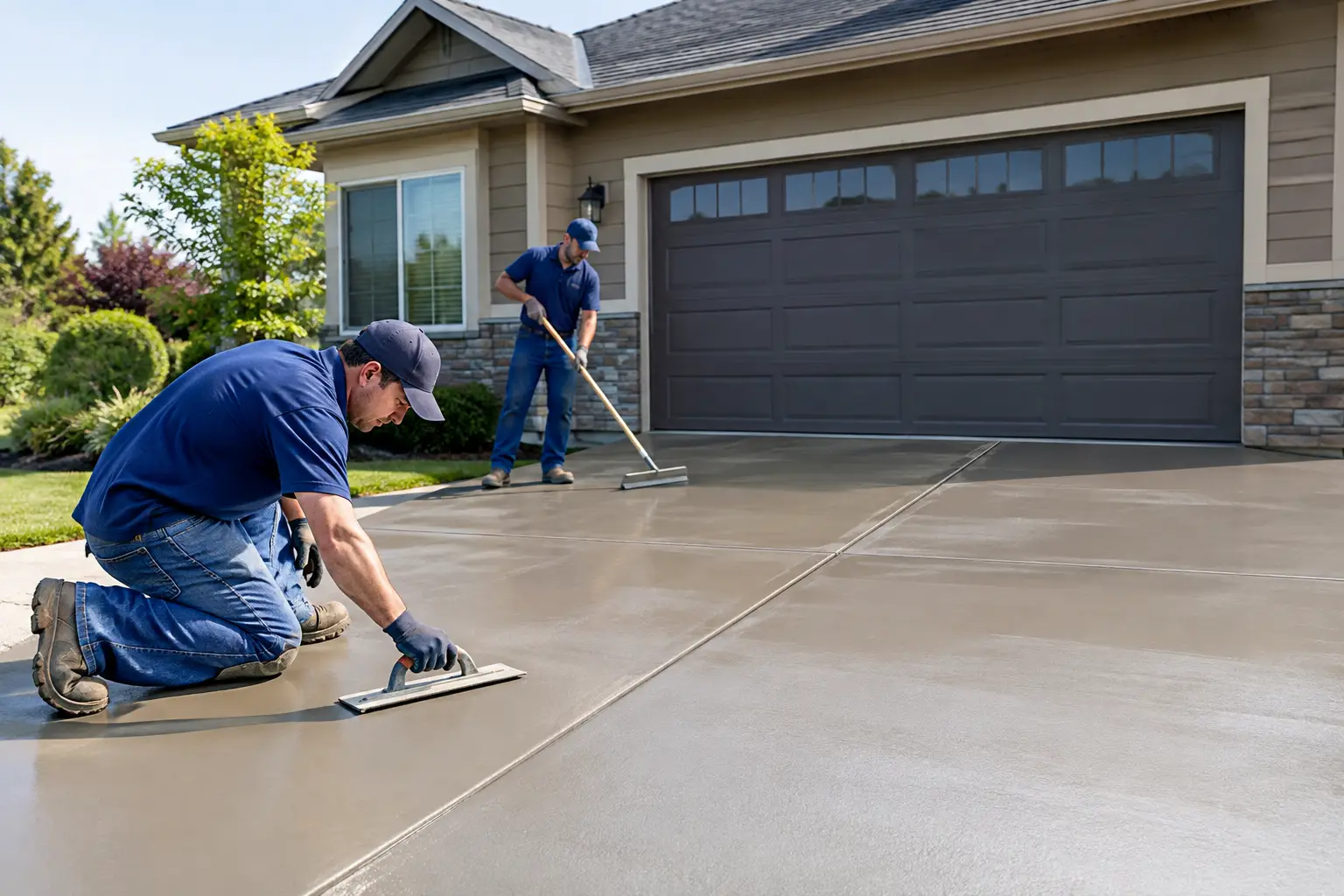
A cracked, puddled, or undersized driveway affects more than curb appeal. It can make parking difficult, direct water toward the home, and create a poor first impression every time you pull in. This Portland concrete driveway guide explains the decisions that have the biggest effect on a driveway’s performance in Oregon’s wet climate, from base preparation and drainage to finish selection and long-term care.
For Portland-area homes, concrete is often a practical choice because it provides a clean, durable surface that works with many architectural styles. But concrete is not a one-size-fits-all installation. A driveway that looks good for a few months can still develop settling, cracks, drainage issues, or surface wear if the site is not evaluated and prepared correctly.
Start With the Site, Not the Concrete
The visible concrete slab is only one part of the project. What is beneath it and where water goes afterward are usually more important to the driveway’s lifespan. Portland-area properties often have clay soils, slopes, mature trees, older drainage systems, and rainy-season runoff to consider. Each of those conditions can change the installation plan.
A professional driveway assessment should look at the existing grade, soil stability, vehicle access, drainage paths, and the condition of nearby hardscape. If the current driveway has settled near the garage, holds standing water, or has deep cracks in one area, simply placing new concrete over the problem will not solve it. The cause may be a weak base, poor compaction, failing drainage, or water moving beneath the slab.
In some cases, excavation and replacement are the right approach. In others, the project may require regrading, a drainage solution, or removal of unstable material before the new base is installed. This work can add to the initial scope, but it protects the investment and helps prevent repeat repairs.
Proper Base Preparation Makes the Difference
Concrete is strong in compression, but it relies on a stable, well-compacted base. Before a driveway is poured, the old material and unsuitable soil should be removed to the necessary depth. A compacted aggregate base is then installed and shaped to support the slab evenly.
Base depth depends on the site conditions and expected use. A standard residential driveway used by passenger vehicles has different needs than one regularly used by delivery trucks, large SUVs, RVs, or trailers. Homes with heavier vehicles or soft underlying soil may benefit from a more substantial base and a thicker slab.
Compaction should happen in controlled lifts rather than by spreading a thick layer of rock and compacting only the surface. This is a detail that homeowners may never see after the pour, yet it has a direct effect on whether the driveway stays level over time. A dependable contractor will explain what needs to be removed, how the base will be built, and why those steps are included in the quote.
Plan Drainage Before the Driveway Is Installed
Water management is a central part of any Portland concrete driveway project. A driveway must shed water away from the house, garage, foundation, and neighboring properties while avoiding low areas where water can collect.
The driveway should be graded with a deliberate slope. The exact direction depends on the property layout, street elevation, garage location, and existing drainage conditions. On a sloped lot, water can move quickly across a hard surface, so a swale, channel drain, catch basin, or other drainage feature may be needed to control runoff.
Drainage is especially important near garage doors. Water flowing toward the garage can lead to interior moisture problems and standing water at the threshold. If a driveway replacement reveals drainage problems around the home, it is often more efficient to address them during the same project rather than tear into the new concrete later.
This is where a full-service outdoor contractor can be valuable. Concrete work, grading, excavation, drainage, retaining walls, and landscape restoration often overlap. Coordinating them under one project plan helps avoid mismatched elevations and unnecessary rework.
Choose the Right Driveway Thickness and Reinforcement
For many residential driveways, a four-inch concrete slab is common. That does not mean four inches is right for every property. Areas exposed to heavier loads, such as an RV parking pad or a section where vehicles turn sharply, may need added thickness or reinforcement.
Reinforcement can help manage cracking and improve slab performance, but it does not replace proper base preparation or joint placement. Steel reinforcement, wire mesh, or fiber reinforcement may be considered based on the design and site conditions. The best choice depends on the driveway’s use, dimensions, subgrade, and budget.
Concrete naturally shrinks as it cures, and some cracking is possible even on well-built work. The goal is not to promise a completely crack-free slab. The goal is to control where movement occurs and reduce the risk of major, uneven cracking caused by soil movement, poor drainage, or inadequate support.
Control Joints Are a Necessary Part of the Design
Control joints are planned grooves cut or formed into the concrete. They encourage the slab to crack in predictable, less noticeable lines as it cures and responds to seasonal changes. They are not a cosmetic flaw. They are a necessary part of quality concrete installation.
Joint spacing and layout should suit the size and shape of the driveway. Long, uninterrupted sections of concrete are more likely to crack randomly. A thoughtful layout also considers the garage approach, walkways, planting beds, borders, and transitions to existing surfaces.
For homeowners considering decorative work, joints should be discussed early. Stamped concrete, colored concrete, borders, and scoring patterns all need to work with the functional joint plan. A quality finish should never come at the expense of proper slab performance.
Select a Finish That Fits Your Home and Use
A standard broom finish is a popular driveway option because it provides reliable traction and a clean, timeless appearance. It works well with traditional homes, modern exteriors, and most landscape designs. It is also generally more practical and cost-conscious than highly decorative options.
Exposed aggregate can add texture and visual interest, while decorative borders can help define the driveway and complement a patio, walkway, or front entry. Stamped concrete can create a more custom appearance, but it requires careful installation and ongoing maintenance to keep its color and sealer looking their best.
The right finish depends on your priorities. If you want a driveway built primarily for durability and easy maintenance, a broom finish may be the best fit. If curb appeal is a major goal and the driveway is part of a larger front-yard renovation, decorative concrete may be worth considering. The important thing is to choose materials and details that match both the home and the level of maintenance you are comfortable providing.
Understand the Construction Schedule
Concrete work is weather-sensitive, particularly in the Portland metro area. Heavy rain, saturated ground, freezing temperatures, and extreme heat can affect excavation, base preparation, placement, and curing. A professional crew plans around the forecast rather than rushing a pour under unsuitable conditions.
After placement, fresh concrete needs time to cure. It may be ready for careful foot traffic relatively soon, but vehicles should stay off the surface until the contractor confirms it has gained adequate strength. Rushing this stage can leave marks, damage edges, or weaken the surface before it has fully cured.
A clear proposal should outline the expected scope, preparation work, concrete finish, drainage items, cleanup, and any restoration of adjacent landscaping. It should also address what happens if weather delays the work. Straightforward communication is especially valuable when a driveway is your primary vehicle access.
Maintain the Driveway for Long-Term Value
A new concrete driveway does not require constant attention, but basic care matters. Keep leaves, soil, and debris from building up along edges and joints. Avoid using deicing chemicals that can damage concrete, particularly during its first winter. Use care with metal snow shovels and avoid parking extremely heavy equipment on areas not designed for that load.
If the driveway is sealed, follow the recommended resealing schedule for the chosen finish. Decorative and exposed aggregate surfaces may need more attention than a standard broom finish. Small joint or edge issues are easier to address early than after water has entered and undermined the base.
When a driveway replacement is part of a larger exterior project, consider how it connects to walkways, drainage, fencing, retaining walls, and planting areas. Four Seasons Landscape & Construction helps Portland-area homeowners coordinate these related improvements so the finished property feels intentional, performs properly, and is built to last.
A well-planned driveway should give you a stable place to park, direct water where it belongs, and complement the rest of your home. Taking the time to evaluate the site before selecting a finish or comparing quotes is one of the best ways to get a result you can rely on for years.