

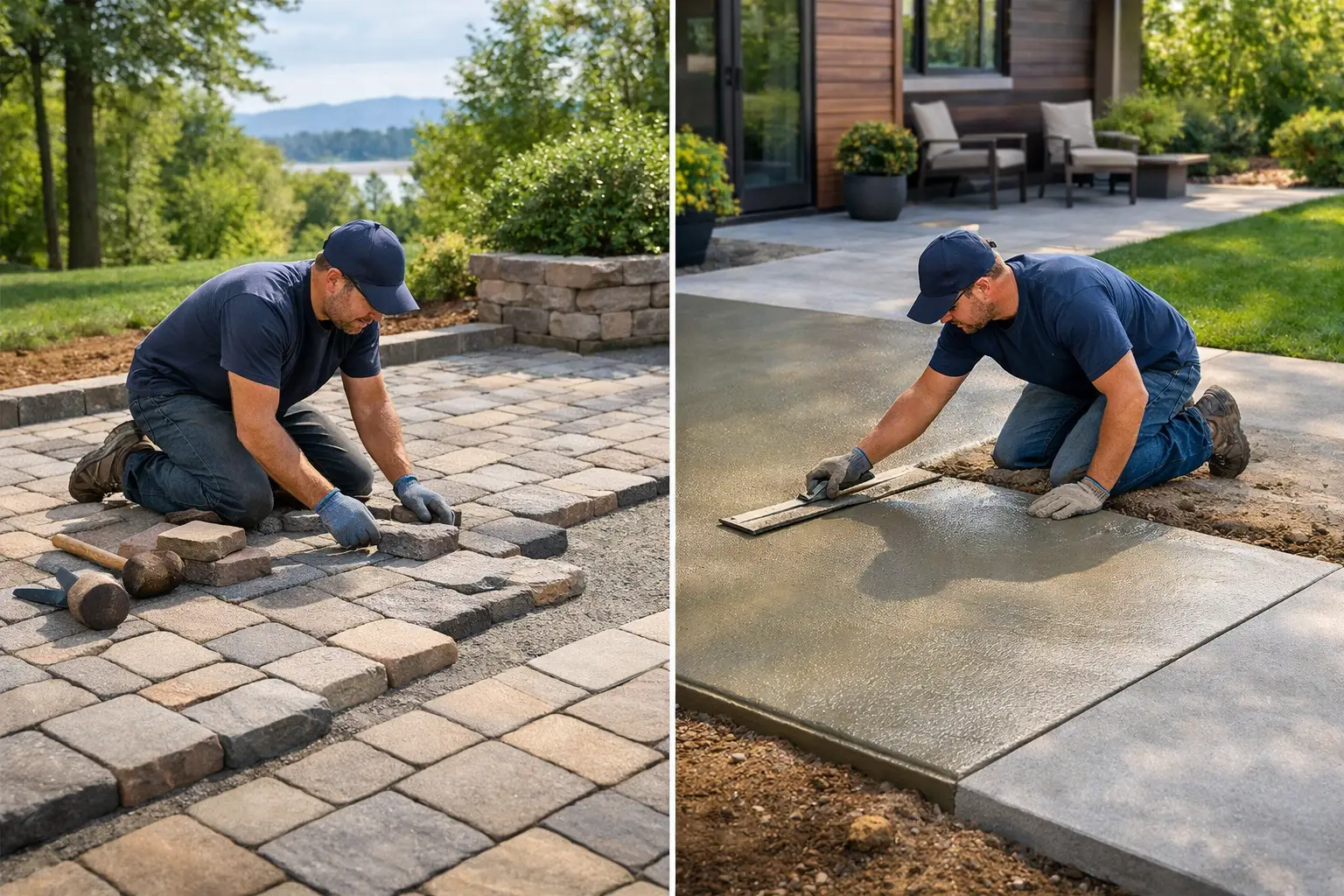
A patio in the Portland area has to handle more than patio furniture and summer dinners. It needs a stable base through wet winters, changing soil conditions, moss-prone shade, and the daily traffic of an active home. When homeowners compare paver patio vs concrete, the better choice is rarely about one material being universally superior. It comes down to how you use the space, what sits beneath it, the look you want, and how much flexibility you want years from now.
Concrete can provide a clean, efficient surface with a lower upfront cost in many applications. Pavers offer design range, easier spot repairs, and a surface that can adapt more gracefully when a property moves or settles. Both can be excellent investments when they are designed and installed with proper excavation, base preparation, grading, and drainage.
Paver Patio vs Concrete: The Core Differences
A concrete patio is a poured slab. It is formed, reinforced as needed, placed over a prepared base, finished, and allowed to cure. It can be broom-finished for traction, colored, stamped, exposed aggregate, or finished in a more contemporary smooth style. For homeowners who want a broad, simple surface with minimal joint lines, concrete is often appealing.
A paver patio is built from individual concrete, clay, or natural-stone units installed over a compacted aggregate base and bedding layer. Edge restraints hold the field of pavers in place, while joint sand helps lock the surface together. Pavers come in a wide range of sizes, colors, patterns, and textures, from traditional cobble-style layouts to large-format, modern slabs.
The visible surface is only part of the decision. In either system, long-term performance depends heavily on the work below grade. A patio installed over soft soil, inadequate base rock, or poor drainage can settle, hold water, or crack regardless of the finish material selected.
Upfront Cost and Long-Term Value
Concrete is commonly the more economical choice at the start, especially for a straightforward rectangular patio with a basic finish. The scope becomes more involved when the project includes stamped patterns, integral color, decorative borders, curved forms, steps, excavation, or difficult site access. A plain concrete slab and a high-end stamped concrete patio are very different projects with different budgets.
Pavers often require a higher initial investment because of material costs and the labor involved in excavation, base compaction, pattern installation, cutting, and edge restraint. That investment can make sense when design flexibility and long-term repairability matter to the homeowner. Pavers also pair naturally with retaining walls, walkways, fire pit areas, outdoor kitchens, and masonry features, which can create a more integrated outdoor living space.
It is helpful to look beyond the first quote. A low price does not account for whether the contractor has included demolition, haul-off, proper base depth, compaction, drainage corrections, access limitations, or finish details. A clear scope of work gives you a more realistic picture of what your patio will cost and how it is intended to perform.
Portland Weather Makes Drainage a Priority
Rain does not automatically rule out either material, but it does make drainage planning essential. Water should move away from the home and not collect along the foundation, at patio doors, or in low areas of the yard. The patio grade, adjacent landscape grade, downspout discharge, and any existing drainage concerns should be evaluated together.
A properly sloped concrete patio sheds water across its surface. Control joints are included to help manage where cracking occurs as the slab shrinks and responds to temperature changes. If water gets beneath or around a slab because of poor grading, however, it can contribute to soil movement and performance issues over time.
Paver patios have joints that allow water to pass through the surface and into the base below. This can be an advantage when the base is built correctly and water has a planned path to drain. It is not a substitute for drainage design. In a persistently wet yard, the patio may need a more substantial aggregate base, drainage rock, a channel drain, or other sitework to keep water from saturating the area.
For either option, the right solution may involve more than the patio itself. Correcting a downspout outlet, improving a side-yard swale, installing a drain, or addressing a retaining wall issue can protect the finished space and the home.
Cracking, Settling, and Repairs
Concrete can crack. Even well-installed concrete is expected to develop some cracking over time because it is a rigid material. Control joints reduce the visual impact by encouraging cracks to form in planned locations, but they cannot guarantee a completely crack-free slab. Minor hairline cracking may be cosmetic. Wider cracks, uneven sections, or slab movement can point to settlement, drainage problems, tree roots, or inadequate support below the concrete.
Repairing concrete depends on the condition and cause of the damage. Small cracks can sometimes be sealed, but patching often remains visible. If a slab has significant settlement or multiple areas of failure, replacement may provide the best finished result. Decorative stamped or colored surfaces can be especially difficult to patch without noticeable variation.
Pavers can also shift or settle if the base is not excavated and compacted correctly. The difference is that individual units can usually be lifted, the base corrected, and the pavers reinstalled. If a future utility repair requires access beneath the patio, a paver section can often be removed and replaced with much less visible disruption than a cut-and-patch concrete slab.
That repair flexibility is one of the strongest reasons homeowners choose pavers. It does not eliminate maintenance, but it can make future adjustments more manageable.
Design Options and How the Patio Will Be Used
Pavers offer the broadest range of patterns and layout options. They can define a dining area, transition into a walkway, frame a fire pit, or follow curves around a landscape bed. Borders, contrasting colors, and changes in pattern can add detail without making the space feel busy. They are a strong choice for homes where the patio is meant to be a focal point of a larger landscape renovation.
Concrete can be equally appropriate for a clean, contemporary outdoor area. A large-format concrete patio may suit modern architecture, covered patios, basketball pads, utility areas, and simple backyard gathering spaces. Stamped concrete can add the look of stone, slate, or wood textures while maintaining a continuous slab surface. The trade-off is that the pattern is fixed once installed, and future repairs may be more noticeable.
Think about furniture, too. Both surfaces can support tables, grills, and seating well when properly built. Larger pavers with narrow joints and smooth concrete finishes are generally easier for dining chairs than heavily textured materials or uneven natural stone. Around a pool, entry, or exposed outdoor kitchen, surface traction and drainage deserve additional attention.
Maintenance Expectations
Neither choice is maintenance-free, particularly in shaded Portland yards. Organic debris, moss, and algae can make any patio look neglected and can create slippery conditions. Regular sweeping, seasonal cleaning, and keeping nearby plants trimmed back will help preserve both concrete and pavers.
Concrete may benefit from periodic sealing, depending on the finish and exposure. Sealer can help protect decorative surfaces and reduce staining, but it needs to be selected carefully. Some products can alter the appearance or create an overly slick surface when wet.
Paver joints may need occasional replenishment over time, especially after heavy cleaning or normal weather exposure. Polymeric sand can help stabilize joints and discourage weeds when installed correctly. Individual stained or damaged pavers can often be replaced, which is useful around grills, planters, and high-use entertaining areas.
Choosing the Right Surface for Your Property
Concrete may be the right fit if you want a practical, streamlined patio, have a straightforward layout, and prefer to control initial project costs. It can deliver a durable, attractive surface when the site is prepared correctly and the finish is matched to how you use the yard.
Pavers may be the better fit if you want more visual detail, expect the patio to connect with other hardscape features, or value the ability to make localized repairs later. They are especially well suited to homeowners planning a complete outdoor living area rather than a standalone slab.
The most useful first step is an on-site assessment of the grade, access, existing materials, drainage, and intended use. Four Seasons Landscape & Construction helps Portland-area homeowners evaluate those practical details before recommending a patio system and project scope.
A well-built patio should feel like a natural extension of your home, not another surface that needs attention after every rainy season. Choose the material that supports your plans for the yard, then make sure the work beneath it is built to last.