

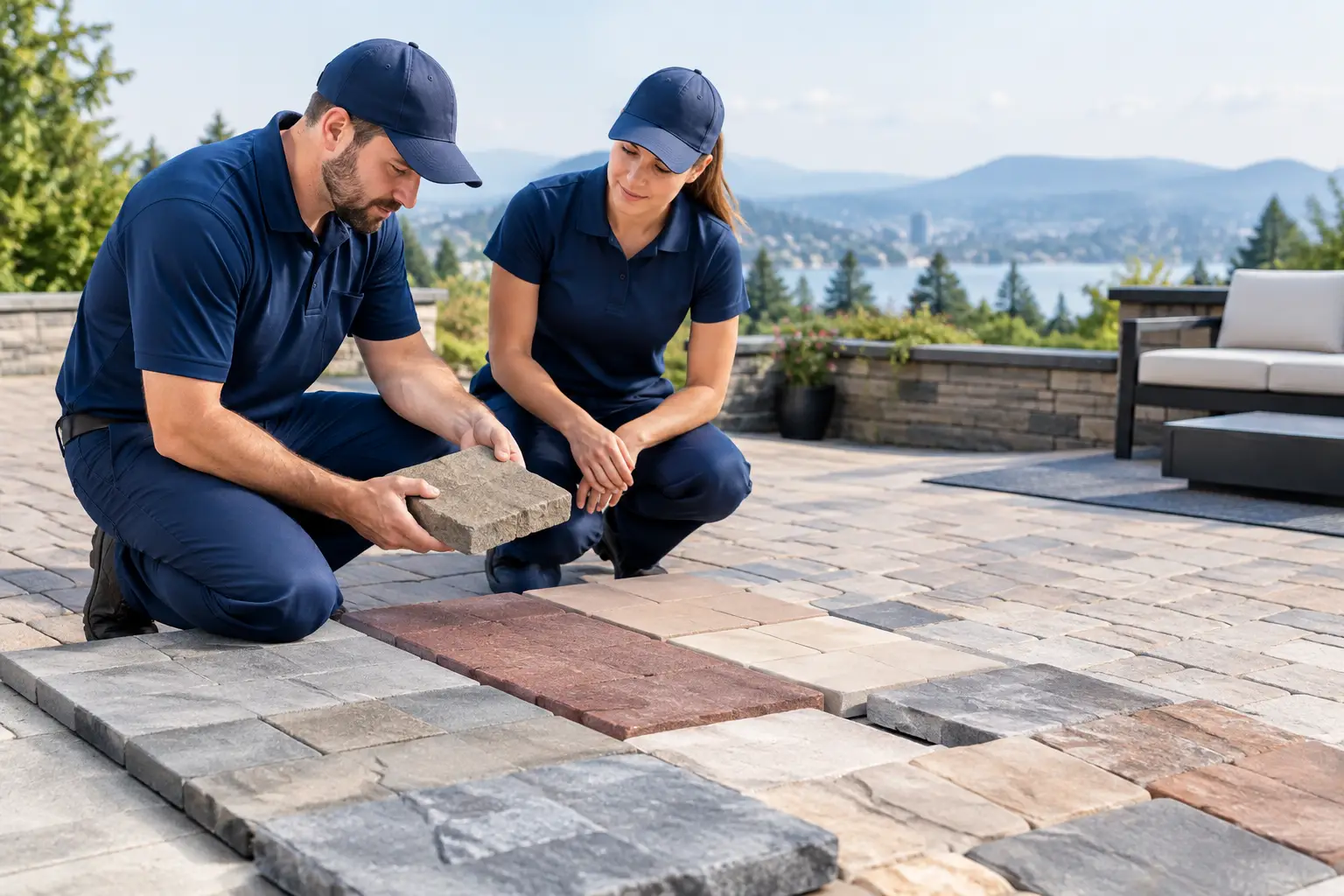
A patio material that looks excellent in a showroom can perform very differently after several Portland winters. Rain, shade, clay-heavy soils, moss growth, and regular temperature changes all affect how a finished surface holds up. This paver patio materials review looks at the options homeowners most often consider, with a practical focus on appearance, maintenance, drainage, and long-term value.
The right choice is not always the most expensive paver or the one with the boldest color blend. It is the material that fits your home, how you plan to use the space, and the site conditions beneath it. A well-built base, proper slope, and thoughtful edge restraint matter just as much as the paver itself.
What Matters Most in a Portland Paver Patio
Before comparing materials, consider the job the patio needs to do. A small sitting area outside a covered porch has different needs than a large entertaining patio with a fire pit, outdoor kitchen, retaining walls, and multiple grade changes.
Portland-area properties also require careful water management. A patio should direct surface water away from the home while allowing the base to remain stable. When drainage is overlooked, even a premium material can settle, shift, or develop standing water. This is why material selection and installation planning should happen together rather than as separate decisions.
Color and texture deserve attention, too. Light-colored pavers can brighten a shaded yard but may show leaf stains more readily. Very textured surfaces improve traction, yet can take more effort to clean. Smooth finishes create a cleaner contemporary look, though they may be less forgiving in wet, moss-prone areas without regular maintenance.
Paver Patio Materials Review: The Main Options
Concrete pavers: the most versatile choice
Concrete pavers remain the most common choice for residential patios, and for good reason. They are available in a broad range of shapes, colors, sizes, and laying patterns. Homeowners can choose a traditional cobble appearance, a clean large-format style, or a layout that complements existing masonry and landscaping.
Quality concrete pavers are designed for exterior use and are well suited to the Pacific Northwest when installed over a properly compacted aggregate base. Individual units can also be lifted and reset if future access is needed for drainage repairs, irrigation work, or utility lines. That repairability is a meaningful advantage over a poured surface.
The trade-off is that concrete pavers can fade gradually over time, especially in high-exposure areas. Joint sand may need periodic replenishment, and shaded patios need routine cleaning to control moss and organic buildup. For many Portland homes, however, concrete pavers provide the best balance of design flexibility, durability, and budget control.
Porcelain pavers: refined appearance with low absorption
Outdoor-rated porcelain pavers have become a popular option for homeowners seeking a modern, architectural finish. They are manufactured with consistent color and sizing, and many styles closely resemble natural stone, concrete, or wood without the variability of those materials.
Porcelain absorbs very little water, which helps it resist staining and freeze-thaw concerns. It is also easy to clean and holds its color well. These qualities make it especially appealing for covered patios, contemporary outdoor living areas, and spaces where a refined, uniform surface is the goal.
Installation is more specialized than standard concrete pavers. Porcelain can be brittle if it is not supported correctly, and cutting requires the proper equipment and experience. Material costs are generally higher as well. It is an excellent option when the look fits the home and the project budget allows for the added labor and preparation.
Natural stone: distinctive and built around character
Natural stone creates a patio with depth, variation, and a finished appearance that manufactured products cannot fully duplicate. Flagstone, bluestone, slate, and other stone products each bring their own color range, texture, and performance characteristics.
For a traditional home, a garden-style landscape, or a property with existing stone retaining walls and masonry, natural stone can tie the entire yard together. Its natural variation is also useful when a homeowner wants a patio that feels established rather than newly installed.
Stone does require careful material selection. Some varieties are more porous, some can be slick when wet, and some have irregular thicknesses that add labor during installation. The final cost often reflects that added handling and craftsmanship. Natural stone is generally a premium choice, but it can be a worthwhile investment for the right property and design.
Permeable pavers: a practical drainage-focused solution
Permeable pavers are designed with wider, aggregate-filled joints that allow water to pass through the surface and into a prepared base below. They can help manage runoff, reduce puddling, and support drainage goals on sites where water movement is a concern.
This option can be particularly useful in low-lying yards, areas near downspout discharge, and projects where a conventional patio would increase runoff toward the house or neighboring property. Permeable systems still need correct grading and base preparation. They do not eliminate the need to evaluate where water is coming from or where it needs to go.
The appearance of permeable pavers can range from traditional to contemporary, depending on the product. The main consideration is maintenance: joints need to stay open enough to function as intended. Fine sediment, leaves, and debris should be managed over time. When designed and installed properly, permeable paving can be both attractive and highly functional.
Choosing Color, Size, and Texture
Material type is only part of the decision. Paver scale affects how the patio feels. Large-format pavers can make a compact patio appear cleaner and more open, while smaller pavers and detailed patterns often complement traditional architecture or curved garden spaces.
For Portland homes surrounded by mature trees, mid-tone grays, warm charcoals, muted browns, and natural blends are often practical choices. They tend to hide dirt and seasonal debris better than very pale finishes while still working with the region’s common exterior palettes. A sample should be viewed outside, not only indoors, because wet weather and shade can change the way a color reads.
Texture should match the location. A smooth paver may be appropriate in a covered entertaining area, while a lightly textured or tumbled option can offer better footing around steps, slopes, and exposed patios. The goal is not simply to choose a surface that photographs well. It is to build one that feels safe and comfortable throughout the year.
Installation Has More Impact Than Most Homeowners Expect
A paver patio is a system, not just a finished surface. Excavation depth, base rock, compaction, geotextile fabric where needed, edge restraint, joint material, and drainage planning all affect the result. In the Portland metro area, soil conditions and existing grades can change significantly from one property to the next.
A patio that is not properly prepared may settle near edges, separate at joints, or send water toward the foundation. Those are installation issues, not necessarily material failures. A thorough site review should identify drainage concerns, downspout locations, elevation changes, access limitations, and connections to walkways, lawns, retaining walls, or outdoor structures before work begins.
For larger yard renovations, it is often more efficient to coordinate the patio with irrigation adjustments, lighting conduits, fence work, landscape grading, and drainage improvements at the same time. This avoids tearing out completed work later to address an overlooked structural need.
How to Make the Best Material Decision
Start with your priorities. If you want broad style options and a durable, repairable patio, concrete pavers are often the most practical choice. If your home has a clean contemporary design and you prefer a low-absorption surface with consistent color, porcelain may be worth the investment. If natural character and a one-of-a-kind finish matter most, stone can deliver exceptional results. If drainage is the primary concern, a permeable system may offer the strongest solution.
At Four Seasons Landscape & Construction, the material conversation begins with the property itself: how water moves, how the patio will be used, what existing features need to connect, and what level of maintenance makes sense for the homeowner. That approach helps prevent attractive choices from becoming expensive problems later.
A patio should feel like a natural extension of your home, not a surface you have to work around. Choose materials with the climate, base construction, drainage, and daily use in mind, and the finished space will be ready for quiet mornings, wet-season gatherings, and years of use.