

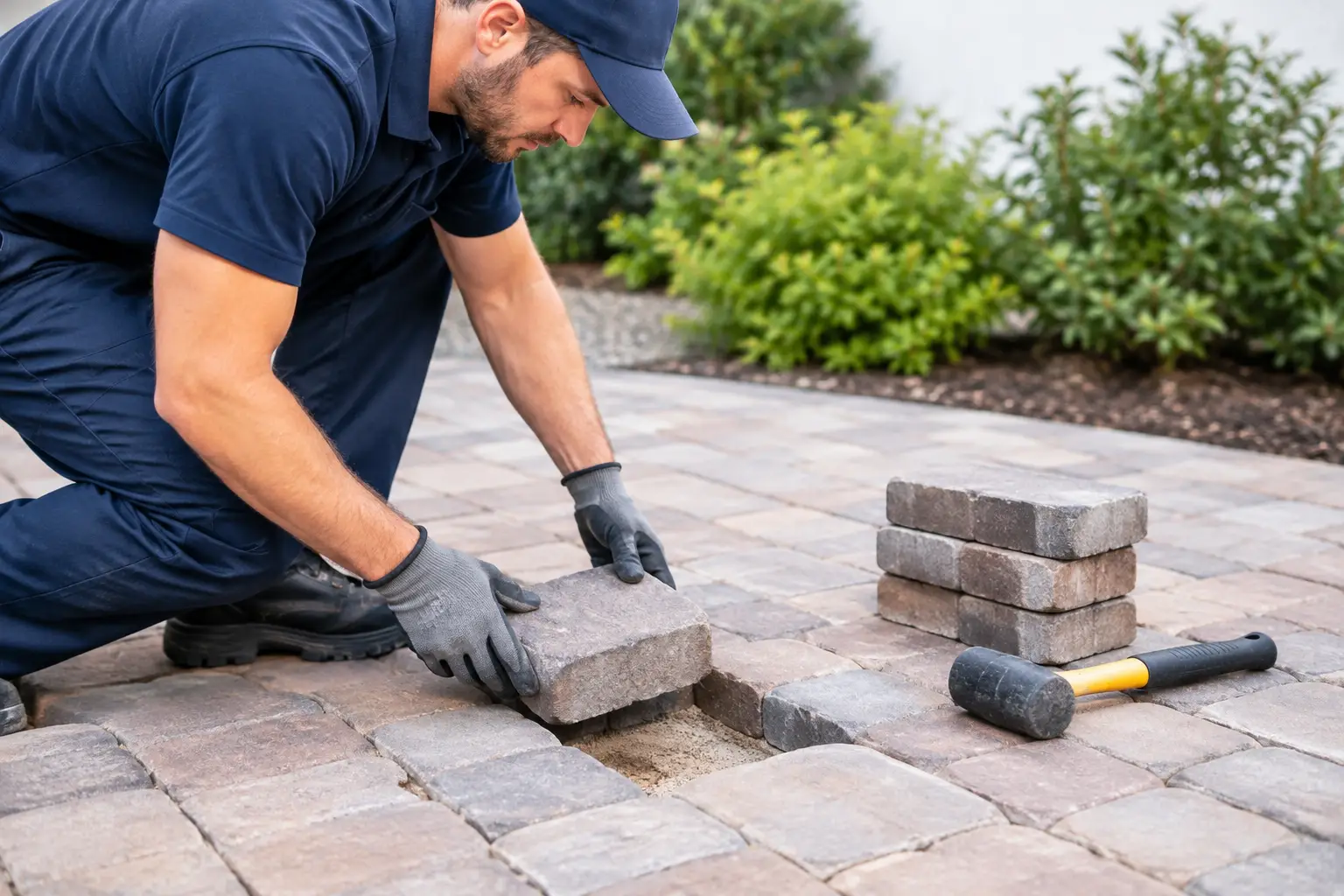
A paver patio that once felt solid can begin to shift one corner at a time. You may notice a low spot holding rainwater, loose edging, weeds in the joints, or a step that no longer feels safe underfoot. So, can pavers be repaired? In many cases, yes. Because individual pavers can be lifted and reset, repairs are often more practical than replacing an entire patio, walkway, driveway, or entry.
The key is determining why the pavers moved in the first place. A good repair corrects the visible problem and addresses the base, drainage, edge restraint, or soil conditions underneath. Simply adding sand over a sunken area may improve the appearance briefly, but it does not create a lasting surface.
When Can Pavers Be Repaired Instead of Replaced?
Pavers are designed as an interlocking system, not a single slab. That makes them especially repairable when the damage is limited to a defined area. A contractor can remove the affected pavers, rebuild the layers below as needed, and reinstall the original units or closely matched replacements.
Repair is usually a sensible option when the majority of the paved area remains stable and the pavers themselves are in good condition. Common repairable issues include localized settling, small areas of heaving, loose or missing joint material, minor staining, broken pavers, and edges that have spread apart.
A full replacement may be the better investment when movement affects most of the surface, the base was never built to the needed depth, drainage problems are widespread, or the existing pavers are heavily worn and no longer suit the property. An older patio can also reveal a larger issue, such as water directed toward the home or a failed retaining edge. In those situations, repairing isolated spots without improving the overall system can lead to repeat work.
Common Paver Problems and What Causes Them
Sunken or Uneven Areas
Settlement is one of the most common paver concerns in the Portland metro area. Heavy seasonal rain, poor drainage, inadequate compaction, and soft native soils can all allow the base below a patio or walkway to shift. On a driveway, repeated vehicle loads can make the problem more noticeable.
A proper repair starts by lifting the pavers in and around the low area. The crew removes compromised bedding material, evaluates the compacted aggregate base, and adds or rebuilds material where needed. After compacting the base in controlled lifts, fresh bedding sand is screeded to the correct elevation and the pavers are reset.
The goal is not merely to make the surface level. Patios, walkways, and driveways need intentional slope so water moves away from the house, garage, and other structures. Even a small drainage mistake can leave standing water or send runoff toward a foundation.
Raised Pavers and Frost Heave
Raised or tilted pavers can develop when moisture enters the base and soil expands during freezing conditions. Tree roots may also lift sections of a walkway or patio. Portland’s freeze events are generally less severe than in colder climates, but water management still matters because saturated soils and poor base preparation can create movement over time.
The repair approach depends on the cause. If the issue is isolated base movement, resetting the pavers may be enough. If roots are involved, the project requires more careful planning. Removing major roots can harm a mature tree or create future settlement, so the best solution may include rerouting the path, adjusting the layout, or working with an arborist when appropriate.
Loose Pavers, Open Joints, and Failing Edges
Pavers rely on edge restraints and joint material to stay interlocked. When a plastic, concrete, or metal restraint loosens, the outer pavers can creep outward. That movement opens joints and can make individual pavers feel loose.
Repairs may involve reinstalling or replacing the edge restraint, resetting the perimeter pavers, and replenishing joint sand. Polymer-modified joint sand can help resist washout and weed growth when it is installed on a clean, dry surface and activated according to the product requirements. It is helpful, but it cannot compensate for a weak base or missing edging.
Cracked, Chipped, or Stained Pavers
A cracked paver can often be replaced individually, provided matching material is available. Keeping a few extra pavers from the original installation is valuable for this reason. Over time, color can weather and vary by manufacturing batch, so a new paver may not match perfectly even when it is the same product line.
Oil, rust, moss, and organic stains may be treatable, but cleaning should be done with care. Excessive pressure washing can remove joint sand, scar some surfaces, and create an opening for more water to enter the system. The right cleaner depends on the stain and paver material. Sealing can be considered after repairs and thorough cleaning, but it should not be used to hide movement or structural problems.
What a Lasting Paver Repair Involves
Quality paver work is largely about what sits below the finished surface. A professional repair typically begins with a site review of the affected area, surrounding grade, drainage patterns, and condition of the edging. If the repair is near a home, steps, retaining wall, or driveway, those connections deserve close attention.
The affected pavers are carefully removed and set aside for reuse. Bedding sand is taken out, and the aggregate base is checked for soft spots, inadequate depth, washout, or poor compaction. The base is repaired or extended beyond the visibly damaged area when necessary, then compacted and graded to support proper drainage.
Fresh bedding sand is placed only after the base is stable and correctly shaped. The pavers are reset with consistent joints, cut as needed along edges, compacted into place, and finished with joint sand. Finally, the crew checks the surface for stable transitions, proper pitch, and secure edging.
This process is more involved than lifting a few pavers and adding loose sand, but it is what gives the repair a better chance of lasting through wet seasons and regular use.
When Paver Repair Becomes a Larger Sitework Project
Some paver issues point to problems beyond the paved area. Water spilling from a roof without adequate drainage, downspouts discharging next to the patio, or a yard that slopes toward the house can undermine the base repeatedly. A nearby retaining wall with poor drainage can create similar concerns.
In these cases, paver repair should be coordinated with drainage improvements, grading, excavation, or retaining work. Correcting the water path first can protect the new repair and help prevent damage to adjacent landscape features. This is also when working with one contractor who understands hardscaping, drainage, and site preparation can make the project more straightforward.
For homeowners planning broader improvements, a repair may be an opportunity to rethink how the area functions. A small, unstable patio might become a larger entertaining space with steps, lighting, a pergola, or better access to the yard. The right scope depends on the condition of the existing installation and how you want to use the space.
How to Tell Whether You Need a Professional Assessment
A few loose pavers or minor joint-sand loss may be manageable for a confident homeowner. However, it is wise to request an assessment when pavers are sinking near the home, water pools after rain, a walkway creates a trip hazard, or a driveway has broad areas of movement. These conditions often involve more than a surface-level fix.
Take note of when the problem appeared and whether it changes after heavy rain or freezing weather. Photos of standing water, spreading gaps, and affected edges can also help establish the source of the issue. Avoid filling deep low spots with sand or mortar before the area is evaluated, since temporary patching can obscure what is happening below.
Four Seasons Landscape & Construction helps Portland-area homeowners evaluate worn or unstable paver surfaces and determine whether targeted repair, drainage correction, or replacement is the best path forward. The recommendation should match the condition of the installation, not force every project into a full rebuild.
A paver surface should feel solid, drain predictably, and complement the way you use your property. Addressing early movement before it spreads usually preserves more of the original work and gives you clearer options for improving the space.