

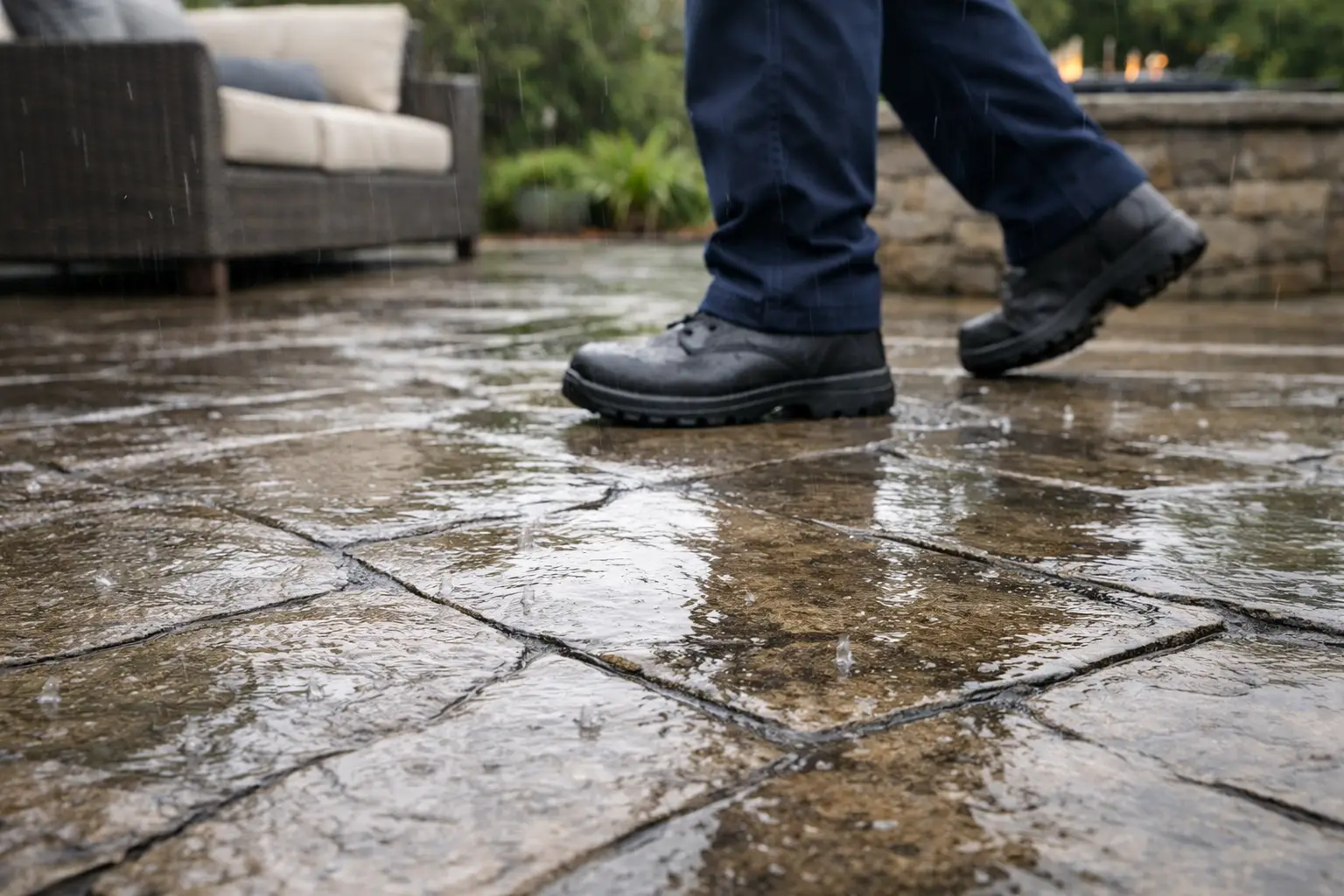
A stamped concrete patio can look like natural stone, slate, brick, or wood while providing the durability of concrete. But for Portland-area homeowners, appearance is only part of the decision. Is stamped concrete slippery? It can be, especially when rain, moss, wet leaves, or a smooth sealer reduce traction. The good news is that slip resistance can be addressed during design, installation, and routine maintenance.
Is Stamped Concrete Slippery?
Stamped concrete is not automatically slippery. Its traction depends on the stamp pattern, surface texture, slope, sealer, and the condition of the surface over time. A deeply textured stamp with a properly selected non-slip additive can provide dependable footing for many patios, walkways, and pool-adjacent spaces.
However, stamped concrete can become slick when it has a heavy glossy sealer, a shallow texture, standing water, or biological growth. This is especially relevant in the Portland metro area, where long wet seasons create favorable conditions for algae and moss. A beautiful patio still needs to work safely when it is raining on a November afternoon or when the surface is damp after a cool spring morning.
The practical answer is that stamped concrete can be a safe choice, but it should be designed with the site and the way your family uses the space in mind. A front walkway, a covered entertaining patio, and a path leading down a shaded side yard do not need exactly the same finish.
What Makes a Stamped Concrete Surface Slick?
Concrete itself is not the only factor. Most traction concerns develop from a combination of finish choices and site conditions.
A smooth or lightly textured stamp has less physical grip than a stone pattern with pronounced joints and irregular texture. Some homeowners prefer a clean, refined appearance, but very smooth decorative concrete is less forgiving when wet. The wrong sealer can also create problems. High-gloss sealers may deepen the color and give the surface a wet-look shine, yet they can reduce traction if they are applied too heavily or without an anti-slip aggregate.
Water management matters just as much. If a patio is flat, settles over time, or directs runoff toward a walking area, water can collect on the surface. Wet leaves, soil tracked in from the yard, and moss buildup can make even a well-textured finish slippery. In shaded areas beneath mature trees or along north-facing sides of a home, maintenance needs to be part of the plan from the start.
Choosing a Safer Stamped Concrete Finish
The safest finish is rarely one single product or pattern. It is a set of choices that work together: texture, color, drainage, sealer, and how the space will be used.
Select a Pattern With Real Texture
Patterns that replicate slate, flagstone, fieldstone, or rough-cut natural stone generally offer more texture than smoother tile or wood-plank patterns. The stamped joints and surface variation provide places for shoes to grip, particularly when the concrete is damp.
Texture should still be balanced with comfort and cleanability. An overly aggressive texture may be harder to sweep, may catch chair legs, and can feel uncomfortable for bare feet. For a family patio, the goal is typically visible and functional texture without a rough, unfinished feel.
Use the Right Sealer and a Non-Slip Additive
Sealer protects stamped concrete from moisture, staining, fading, and surface wear. It also brings out color variation and helps preserve the decorative finish. But more shine is not always better.
For walking surfaces, a professional installer can add a fine non-slip aggregate to the final sealer coat. This creates additional traction without significantly changing the appearance of the patio. The additive must be evenly distributed and appropriate for the sealer being used. Too little may not improve footing enough, while too much can leave the finish hazy or rough.
A satin or low-gloss sealer is often a practical choice for outdoor living areas. It can still enhance the concrete’s color while avoiding the overly slick, glossy appearance that concerns many homeowners.
Plan Proper Slope Before Concrete Is Poured
A stamped concrete surface needs intentional drainage. Water should move away from the home and should not collect at doorways, steps, or the main path through the patio. Proper grading and a consistent slope are foundational parts of a concrete project, not details to correct after the surface has hardened.
In some yards, drainage improvements may need to happen before or alongside the patio installation. Downspout discharge, compacted soil, low areas, and nearby retaining walls can all affect how water moves through the space. Addressing these conditions upfront helps protect both the patio and the surrounding landscape.
Consider Where People Will Walk Most Often
High-traffic routes deserve special attention. The path from a back door to a grill, gate, garage, or outdoor dining area should remain easy to navigate when wet. Steps need consistent dimensions, clean edges, and adequate drainage at the landing.
If the patio connects to a pool, hot tub, or frequently used water feature, traction becomes even more important. A textured pattern, non-slip sealer additive, and regular cleaning are sensible safeguards in these areas.
Portland Rain, Shade, and Moss Change the Equation
In Tigard, Beaverton, Lake Oswego, Hillsboro, Sherwood, and across the Portland metro area, outdoor surfaces regularly face rain, tree debris, and extended damp weather. A patio that looks clean in July can develop a slippery green film by late winter if it is shaded and not maintained.
This does not mean stamped concrete is a poor fit for the Pacific Northwest. It means the installation needs to account for local conditions. Thoughtful grading reduces standing water. A finish with adequate texture improves day-to-day footing. Keeping trees and shrubs trimmed back can improve sunlight and air circulation, helping the surface dry more quickly.
Homeowners should also avoid treating a slippery surface with harsh methods that damage the sealer or decorative color. Aggressive pressure washing, strong acids, and unsuitable de-icers can shorten the life of the finish. The right cleaning approach depends on the sealer, the extent of moss or algae, and the age of the concrete.
How to Improve Traction on Existing Stamped Concrete
If an existing stamped concrete patio feels slick, replacement is not always necessary. Start by identifying the cause. Is the problem limited to moss and debris? Does water pond in a particular area? Is the sealer unusually glossy or worn unevenly?
A thorough cleaning can make a noticeable difference when organic buildup is the main issue. Once the surface is clean and fully dry, resealing with a compatible product and a non-slip additive may improve traction. If water is collecting in one area, drainage corrections may be needed around the patio, along adjacent landscape beds, or at nearby downspouts.
For older patios with widespread settlement, cracking, or poor slope, a more substantial repair or replacement may be the better long-term investment. Applying another coat of sealer will not solve a drainage problem or correct a patio that directs water toward the house.
Stamped Concrete Compared With Other Patio Surfaces
Stamped concrete is not the only outdoor surface with traction considerations. Smooth broom-finished concrete can become slick with algae. Natural stone varies widely by type and finish, and some polished or dense stones can be slippery when wet. Pavers offer joints and texture that can improve grip, but they also need a properly prepared base, edge restraint, and drainage plan to remain stable.
Stamped concrete is a strong option for homeowners who want a continuous decorative surface, custom color, and the look of masonry without individual paver joints. It is particularly well suited to patios and walkways where the grade can be carefully controlled. The trade-off is that a stamped slab requires careful finishing and long-term sealer maintenance to preserve both appearance and safe traction.
Build Safety Into the Project From the Beginning
The best time to address slip resistance is before construction begins. During planning, consider shade, runoff, nearby trees, access routes, steps, and whether children, older family members, or guests will use the space regularly. These details guide the pattern, finish, drainage approach, and sealer selection.
Four Seasons Landscape & Construction approaches stamped concrete as part of the full outdoor environment, not as an isolated slab. A patio may need excavation, grading, drainage work, retaining features, or landscape adjustments to perform as intended through Oregon’s wet seasons.
A well-built stamped concrete patio should give you more than a decorative surface. With the right texture, drainage, and maintenance plan, it can remain a comfortable, dependable place to gather even when the forecast calls for rain.