

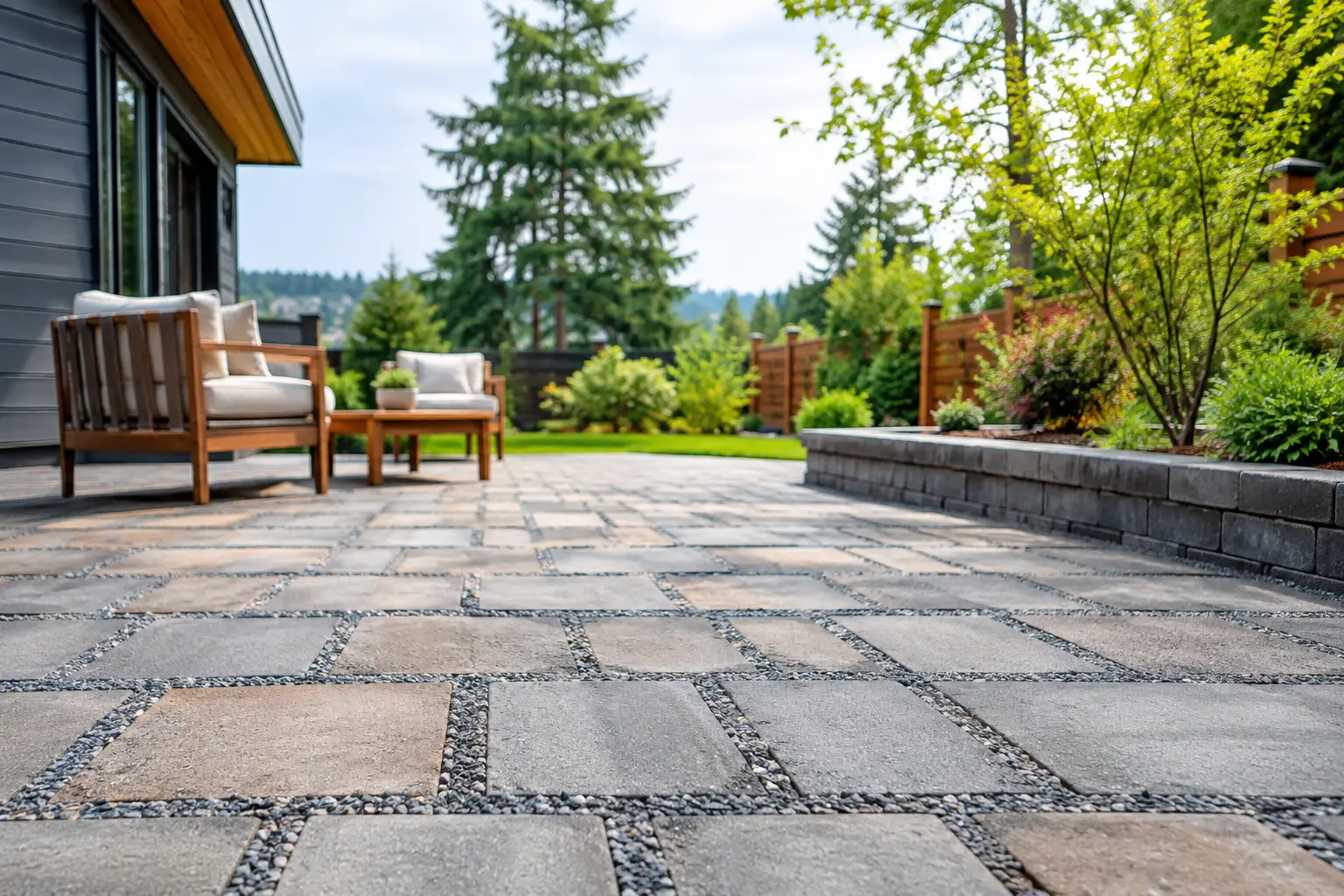
A patio should make a Portland backyard more usable, not create a new place for water to collect. With our long wet season, the best permeable patio surfaces do more than look finished. They allow rainwater to move through the surface and into a properly prepared base, helping manage runoff while creating a durable area for dining, gathering, or relaxing.
The right choice depends on how you use the patio, the grade of the property, the soil beneath it, and the look you want for the home. A material that works well for a quiet garden path may not be the best fit for a large entertaining space, a sloped yard, or an area with poor drainage. Professional site preparation matters just as much as the surface you see.
Why Permeable Patio Surfaces Matter in Portland
Portland-area properties often deal with compacted soils, steady seasonal rain, and yards that do not drain evenly. Traditional concrete patios shed water across the surface, which can concentrate runoff near foundations, steps, lawns, or neighboring property. That does not make concrete a poor material in every application, but it does mean drainage must be designed intentionally.
A permeable patio is built to let water pass through joints, openings, or porous material into layers of clean aggregate below. Those layers temporarily hold water and allow it to infiltrate the soil or move toward a planned drainage system. When designed correctly, the patio surface remains stable, drains efficiently, and reduces standing water after rain.
This approach is especially useful when replacing an aging patio, converting a muddy lawn area into usable space, or improving drainage as part of a larger backyard renovation. It can also work alongside retaining walls, landscape grading, French drains, walkways, and outdoor living features.
Best Permeable Patio Surfaces for Residential Projects
Permeable Interlocking Pavers
Permeable interlocking pavers are often the strongest all-around choice for homeowners who want a polished, long-lasting patio with reliable drainage. Unlike standard paver installations that use sand-filled joints, permeable systems use wider joints filled with clean, angular aggregate. Water moves through those joints and into an open-graded base below.
These patios offer the finished appearance many homeowners want for a high-end outdoor living area. They are available in a range of colors, shapes, and laying patterns, making them suitable for contemporary homes, traditional properties, and Northwest garden settings. They also handle foot traffic, patio furniture, grills, and regular entertaining well when the base is excavated and compacted correctly.
The primary trade-off is cost. Permeable pavers require careful excavation, edge restraint, aggregate selection, and grading. The installation is more technical than a simple gravel patio, but the result is a defined, durable surface that can add real function and curb appeal to the property.
Natural Stone With Permeable Joints
Flagstone, bluestone, and similar natural stone can create a patio with a more organic, custom appearance. When stones are set with open joints over a properly prepared aggregate base, water can drain between them rather than running across a solid slab.
This option works particularly well for garden-focused yards, smaller gathering areas, and homes where natural materials complement existing stonework or landscaping. Each piece has variation in color and texture, so the finished patio feels less uniform than manufactured pavers.
Natural stone requires skilled layout and base preparation. Irregular stone pieces must be fitted carefully to avoid trip hazards and movement over time. Some varieties are also more prone to surface variation or seasonal moss growth in shaded Portland yards. A thoughtful design, correct slope, and periodic cleaning help keep the patio safe and attractive.
Gravel Patios
A gravel patio is one of the most naturally permeable and budget-conscious options available. Water moves easily through the gravel, and the surface can be installed in areas where a fully paved patio is not necessary. It is well suited for casual seating areas, fire pit spaces, side yards, garden patios, and portions of a larger landscape plan.
For the best results, gravel should not be spread directly over soil. The area still needs excavation, a stable aggregate base, proper edging, and a compacted finish layer selected for comfort underfoot. Angular crushed gravel generally locks together better than smooth river rock, which tends to shift under furniture and foot traffic.
The trade-off is maintenance. Gravel can migrate beyond edges, develop low spots, or collect leaves and organic debris. It may need occasional raking and replenishment, especially around active entertaining areas. Homeowners who want a perfectly level surface for dining tables and chairs may prefer permeable pavers instead.
Porous Concrete
Porous concrete uses a mix designed with connected voids that let water move directly through the slab. It can provide the clean, continuous look of concrete while offering better drainage than conventional concrete in the right application.
This is typically best for homeowners who prefer a modern, minimal patio appearance and want a fixed, solid walking surface. It can be an effective solution for certain patios, walkways, and hardscape areas, provided the subbase and drainage design are appropriate for the site.
Porous concrete is not a one-size-fits-all material. It requires experienced installation, careful mix placement, and ongoing attention to prevent pores from becoming clogged with sediment. In heavily shaded or debris-prone areas, maintenance and surface cleaning become especially important. It is also less forgiving to repair visually than modular pavers if future utility work or settling occurs.
Grass or Turf Pavers
Grass pavers use a structural grid that can be filled with soil and grass or aggregate. They are generally more appropriate for low-traffic access areas, occasional parking, overflow spaces, and utility routes than for a main family patio.
They can reduce the visual impact of a hard surface and allow water to drain through the grid. However, regular patio furniture, repeated foot traffic, and Oregon’s wet winter conditions can be hard on grass-filled systems. For a primary outdoor living area, they are usually better used as a supporting surface rather than the main patio material.
The Base Is What Makes a Permeable Patio Work
The visible surface is only one part of a permeable hardscape. Below it, the installation needs an engineered aggregate base that supports the patio while maintaining open spaces for water storage and movement. If a base is built with the wrong materials or improperly compacted, the patio can settle, clog, or drain poorly.
A professional assessment should consider soil type, existing grade, roof runoff, nearby foundations, utility locations, and where water will go during heavy storms. Some yards can rely partly on infiltration into the native soil. Others need underdrains, controlled overflow routes, or connected drainage improvements because clay-heavy or compacted soil drains slowly.
This is why patio drainage should be planned alongside the entire landscape. A new surface can affect planting beds, lawn areas, retaining walls, gates, and pathways. Addressing the full site helps prevent a patio project from moving water from one problem area to another.
Choosing the Right Surface for How You Live Outside
For a formal dining patio or a large entertaining space, permeable interlocking pavers usually provide the best combination of stability, drainage, and finished appearance. For a relaxed garden setting or fire pit area, natural stone or properly built gravel can be an excellent fit. Porous concrete may be worth considering when a clean, continuous surface is the priority and the site is suited to the material.
Think about furniture, foot traffic, pets, shade, and maintenance expectations. A low-maintenance surface may cost more initially but provide better value over time. Likewise, the least expensive material is not always the most economical choice if it needs frequent repair or does not solve the drainage issue that prompted the project.
At Four Seasons Landscape & Construction, patio projects begin with the site itself: how the yard drains, how the space will be used, and what materials will perform well over the long term. A well-built permeable patio should feel like a natural extension of your home while helping the property handle Portland rain with far less trouble.