

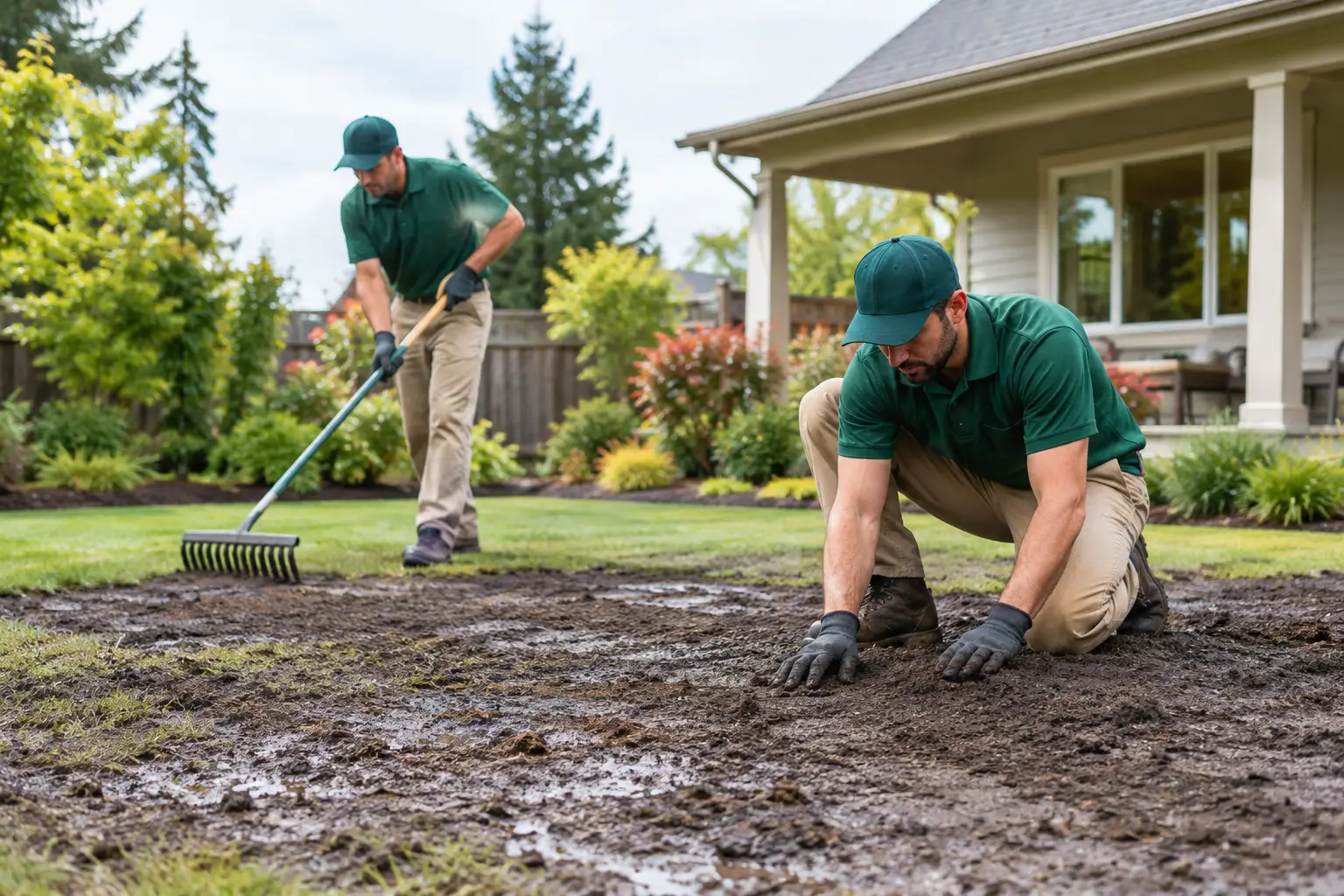
A Portland lawn can look perfectly healthy in late summer, then turn into a slick, muddy problem after the first sustained fall rains. Footprints sink near the gate, water collects beside the patio, and grass disappears where children, pets, or daily traffic cross the yard. Effective muddy lawn restoration is not simply a matter of laying new sod. It starts by finding out why the soil is staying wet and correcting the conditions beneath the surface.
For homeowners in Tigard, Beaverton, Lake Oswego, Hillsboro, and across the Portland metro area, the right solution often combines drainage work, grading, soil preparation, and new lawn installation. Addressing only the visible mud may improve the yard briefly, but the same wet conditions can quickly damage new turf.
Why Portland Lawns Turn Muddy
Our wet fall, winter, and spring seasons put pressure on every part of a yard. When rain cannot move through the soil or away from the house efficiently, it pools in low areas and saturates the root zone. Grass roots need air as well as water. In compacted, waterlogged soil, they weaken, thin out, and leave exposed dirt that becomes mud.
Compaction is a common issue in established residential yards. Years of mowing, foot traffic, construction activity, pets, and repeated wet-weather use can compress the soil. Heavy clay soils found throughout the Portland area can make the issue worse because they drain more slowly than looser, well-amended soils.
A muddy lawn can also point to a drainage or grading problem. Downspouts may discharge too close to the lawn. A patio, walkway, retaining wall, or neighboring grade may direct water toward one section of the yard. In some cases, an old lawn was installed over poor base soil without enough topsoil to support healthy roots. Each condition requires a different approach.
Start Muddy Lawn Restoration With the Cause
A lasting repair begins with an on-site evaluation of how water enters, travels through, and leaves the property. The lowest spot in a lawn is not always the source of the problem. Water may be arriving from a roof downspout, a sloped driveway, a neighboring yard, or an area behind a retaining wall.
During planning, a contractor should look at the yard’s existing grade, soil condition, drainage outlets, hardscape elevations, and intended use. A small side yard used only for storage may need a practical drainage solution and durable ground cover. A front lawn or family backyard may need a more complete restoration that improves appearance, drainage, and daily usability.
The goal is not to make a lawn unnaturally dry. Healthy turf needs moisture. The goal is to prevent standing water and prolonged saturation so the soil can support grass roots, foot traffic, and normal seasonal rain.
Signs That Drainage Work Is Needed
If water remains on the lawn for a day or more after rain, drainage should be part of the conversation. Other warning signs include moss spreading through thin grass, muddy areas that return every winter, soft ground around downspouts, erosion on slopes, or water moving toward the foundation.
A recurring muddy strip along a fence or between a house and garage can be especially revealing. These narrow areas often receive limited sun, concentrated runoff, and frequent traffic. Simply reseeding them rarely solves the underlying issue.
The Right Repair May Include More Than Sod
Once the source of excess moisture is clear, the restoration plan can be built around the site. For some properties, regrading the lawn to create positive drainage is enough to correct minor pooling. For others, a French drain, catch basin, solid drain line, or downspout connection may be needed to collect and redirect water to an appropriate discharge point.
Drainage work should be designed around the whole property rather than treated as an isolated trench. The location of patios, walkways, fences, planting beds, retaining walls, and utilities matters. A drainage system that moves water efficiently but disrupts a future patio plan can create unnecessary added cost later. Coordinating landscape construction and drainage from the start leads to a cleaner result.
After drainage and grading are addressed, compacted soil often needs to be removed, loosened, or amended. Poor subgrade may require excavation and replacement with quality topsoil. In less severe cases, soil preparation can include cultivating the surface, adding screened topsoil or compost, and establishing a smooth, properly sloped finish grade.
New sod provides the fastest finished appearance and is often the preferred choice for a complete lawn restoration. It establishes a uniform surface immediately and helps reduce erosion on newly prepared soil. Seed can be a good fit for some projects, particularly when budget or timing is a concern, but it requires more protection, careful watering, and patience while the grass fills in.
Choosing Turf for Real Yard Use
The best lawn is not always the most delicate or intensely green variety. Portland homeowners need turf that can handle wet seasons, partial shade, summer dry periods, and the way the yard is actually used. A lawn around a play area, dog run, or frequently used side gate should be selected and installed with durability in mind.
Sun exposure is a major factor. Turf under mature trees or on the north side of a home may struggle because of shade, root competition, and moisture retention. In these areas, a combination of lawn reduction, planting beds, stepping stones, gravel, or a defined walkway may perform better than continually replacing grass.
This is where practical design matters. Restoring every square foot with sod may not be the most durable investment if a specific route is used every day. A well-placed paver path from the driveway to the backyard, or a compacted gravel access strip for garbage bins, can protect the surrounding lawn and make the property easier to use in winter.
A Professional Lawn Restoration Process
Quality results depend on what happens below the finished green surface. A typical muddy lawn restoration project begins with a site review and clear scope of work. The plan should identify drainage needs, excavation depth, soil improvements, lawn area, and any hardscape or access improvements that will protect the finished yard.
The work may involve removing failed turf and soft soil, correcting the grade, installing drainage components, and bringing in approved base material or topsoil. The site is then shaped carefully so water moves away from structures while still creating a natural-looking lawn. Sod or seed is installed only after the base is prepared correctly.
Clean edges are part of the finished result. Where a lawn meets a patio, garden bed, fence, or walkway, proper elevations help contain soil and reduce runoff. If irrigation is present, heads may need adjustment so new turf receives even coverage without overspray onto concrete or masonry. If irrigation is not present, a restoration plan should account for how the new lawn will be watered during establishment and summer weather.
At Four Seasons Landscape & Construction, this type of work is approached as a site improvement project, not a quick cosmetic patch. Combining drainage, excavation, landscape construction, and hardscape experience allows one team to coordinate the work from the underlying problem through the final lawn installation.
Protecting the Restored Lawn
New sod needs regular watering while roots establish, but overwatering can recreate the saturated conditions that caused trouble in the first place. Watering should be adjusted for rainfall, temperature, soil type, and shade. In the Portland area, spring and fall installations often need less supplemental water than summer projects, though new turf should never be allowed to dry out during establishment.
Avoid heavy foot traffic until the lawn has rooted into the prepared soil. Keep mowing height appropriate for the grass type, and do not mow when the ground is soft enough to rut. Annual aeration can help reduce compaction in high-use areas, especially if the lawn receives regular activity from pets or children.
Downspouts should remain connected and directed as planned. If water begins collecting again, address it early rather than waiting for turf to fail. Small changes in grade, blocked drain outlets, or damaged irrigation components are easier to correct before the lawn turns into a larger excavation project.
A muddy yard does not have to remain an unavoidable part of a Portland winter. With the right drainage strategy, sound grading, prepared soil, and turf selected for the site, the lawn can become a usable extension of the home again – even when the forecast calls for another week of rain.