

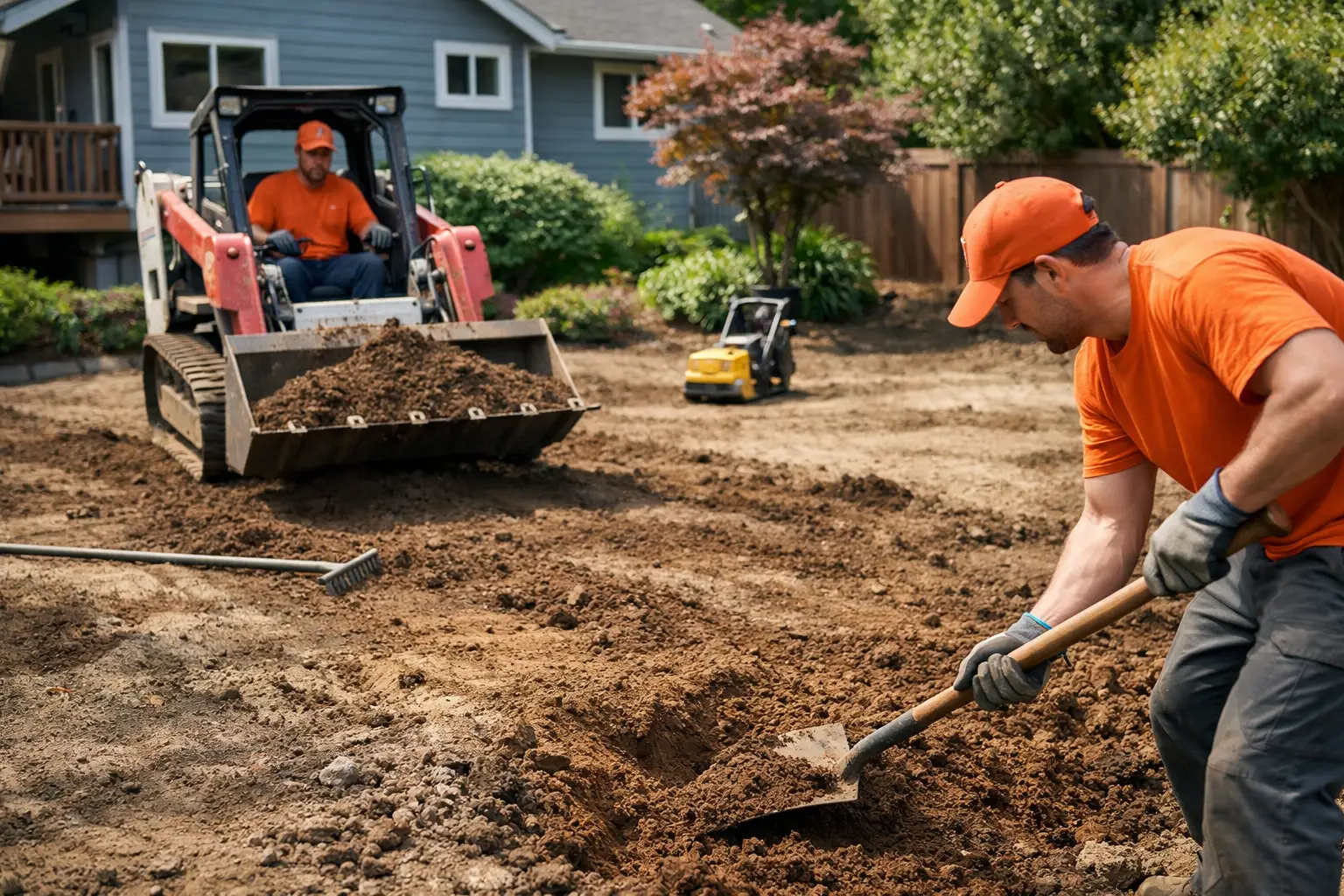
A yard can look finished and still fail where it matters most. Water may collect beside the foundation, a lawn may stay muddy long after rain, or a patio may feel disconnected from the rest of the property because the grade was never properly addressed. Uneven yard regrading gives Portland-area homeowners a way to correct those underlying conditions before they become recurring drainage, erosion, or usability problems.
Regrading is more than moving dirt until a yard looks level. It is a sitework process that reshapes the ground to direct water appropriately, create usable outdoor areas, and establish a stable base for landscaping or hardscape construction. Done well, it protects the home while making the yard more practical and enjoyable year-round.
What Uneven Yard Regrading Is Designed to Fix
Most yards are not meant to be perfectly flat. In fact, a completely flat yard can hold water. The goal is a controlled slope that moves runoff away from the home, patios, walkways, and other structures while fitting naturally into the rest of the property.
An uneven yard may have low spots caused by settling, old tree removal, poor original grading, compacted soil, or years of runoff. It may also have abrupt slopes that make mowing difficult, limit outdoor living space, or wash soil and mulch downhill during heavy rain. In the Portland metro area, where extended wet weather exposes drainage weaknesses, these issues often become impossible to ignore.
Regrading may be the right solution when water ponds near the house, lawn areas remain soft and muddy, soil erodes from planting beds, or a new patio needs a level and stable location. It can also be part of a larger renovation when a homeowner wants to turn a sloped or underused backyard into a lawn, terrace, retaining wall area, or outdoor living space.
Start With the Water, Not the Surface
The most common mistake in yard grading is treating a drainage problem as a cosmetic problem. Adding a thin layer of topsoil to a low area may improve the appearance temporarily, but it will not solve the issue if roof runoff, hardscape runoff, or groundwater is still feeding that area.
A proper site evaluation considers where water begins, where it travels, and where it can safely discharge. Downspouts, driveway runoff, neighboring properties, existing catch basins, soil conditions, and the home’s foundation elevation all affect the plan. The right approach may involve reshaping the yard, but it may also include drain lines, catch basins, gravel drainage zones, or a combination of grading and hardscape adjustments.
Surface drainage generally relies on a gradual, intentional slope. The exact grade depends on the site, but water should not be directed toward the house or trapped against a fence, retaining wall, or patio edge. If there is limited room to create enough fall, drainage infrastructure may be necessary rather than forcing a steep slope into a small space.
This is why a walk-through matters before construction begins. A contractor should identify the actual source of the problem and explain what the proposed grade will accomplish. Homeowners deserve to understand whether the work is intended to solve ponding water, prepare for a new landscape feature, improve access, or address several needs at once.
When Regrading Needs More Than Soil Work
Some uneven yards can be corrected with excavation, imported fill, compaction, and finish grading. Others need structural work to hold the new grade in place. Raising a yard substantially near a property line, patio, or existing slope can create pressure that loose soil alone cannot manage.
Retaining walls are often used to divide a steep yard into more useful elevations. A properly built wall can create a level patio area, a planting terrace, or a lawn space while controlling soil movement. The wall itself must be designed with base preparation, drainage, backfill, and appropriate materials. Skipping those details can lead to leaning, cracking, or water buildup behind the wall.
Concrete and paver surfaces also depend on correct grading. A patio should have enough slope to shed water without feeling noticeably slanted underfoot. Walkways need to drain without creating a trip hazard. If the surrounding yard is higher than the finished hardscape, water and soil can wash onto the surface. Addressing the grade before installation protects the appearance and lifespan of the finished project.
In some cases, the best answer is not to flatten the entire yard. Preserving a manageable slope and creating one well-built, level gathering space may be more cost-effective than extensive excavation and retaining. The right scope depends on the property’s layout, the homeowner’s goals, access for equipment, and how the space will be used.
A Practical Process for Uneven Yard Regrading
A quality regrading project begins with a clear plan, not with machinery arriving at the curb. The process typically starts by reviewing the property, discussing concerns, and taking measurements to understand elevations and drainage paths. Existing utilities, irrigation lines, trees, fences, and access routes should be considered before excavation is scheduled.
Next comes site preparation. Depending on the project, this may involve removing old lawn, landscape materials, failed edging, excess soil, or damaged drainage components. Equipment access is planned carefully to reduce disruption to driveways, gates, and finished areas of the property.
The rough grade is then established by cutting high areas, filling low areas, or both. Fill material must be placed in manageable lifts and compacted when the project involves structural support or hardscape preparation. Simply pushing loose soil into a low spot can lead to future settling, especially through wet Oregon winters.
Once the broad shape is correct, drainage components and retaining structures can be installed as needed. Finish grading follows, refining the surface for sod, seed, planting beds, gravel, or hardscape. A yard intended for sod needs a smooth, consistent surface with suitable topsoil, while a patio base requires a different level of compaction and material preparation.
Final cleanup and restoration matter as much as the excavation phase. A well-managed project leaves the site ready for the next step, whether that is new irrigation, lawn installation, a paver patio, planting, or fencing. When one contractor coordinates the full scope, the grade can be built around the finished landscape rather than treated as an isolated repair.
Signs a DIY Fix May Not Be Enough
Small lawn depressions can sometimes be addressed with topdressing and reseeding. However, larger or recurring problems usually call for professional evaluation. That is especially true when water is reaching the foundation, runoff crosses a sidewalk or driveway, soil is washing away, or the work will affect a new patio, wall, or other permanent improvement.
Homeowners should also be cautious around buried utilities, irrigation systems, septic components, mature tree roots, and property boundaries. Excavation can expose issues that are not visible from the surface. A contractor with landscape construction, drainage, and excavation experience can account for those conditions before they turn into costly changes mid-project.
Permitting and drainage requirements may also apply depending on the scope and location. Work that changes runoff patterns, adds retaining walls, or substantially alters the site should be reviewed carefully. A responsible contractor will help set realistic expectations about what the property can support and what additional steps may be required.
Build the Yard You Actually Want to Use
Uneven yard regrading is often the first meaningful step in a larger outdoor project. Once water is controlled and the ground is properly shaped, homeowners can make better decisions about patios, walkways, lawns, garden beds, retaining walls, and outdoor structures. The result is not just a tidier yard. It is a landscape built on a stable foundation.
For homeowners in Tigard and throughout the Portland metro area, Four Seasons Landscape & Construction approaches grading as part of the complete property picture. Clear planning, skilled excavation, and quality finishing work help ensure the yard functions as well as it looks. If your property has standing water, difficult slopes, or an outdoor project that needs a better starting point, a site consultation can turn a frustrating yard condition into a practical plan for lasting use.