

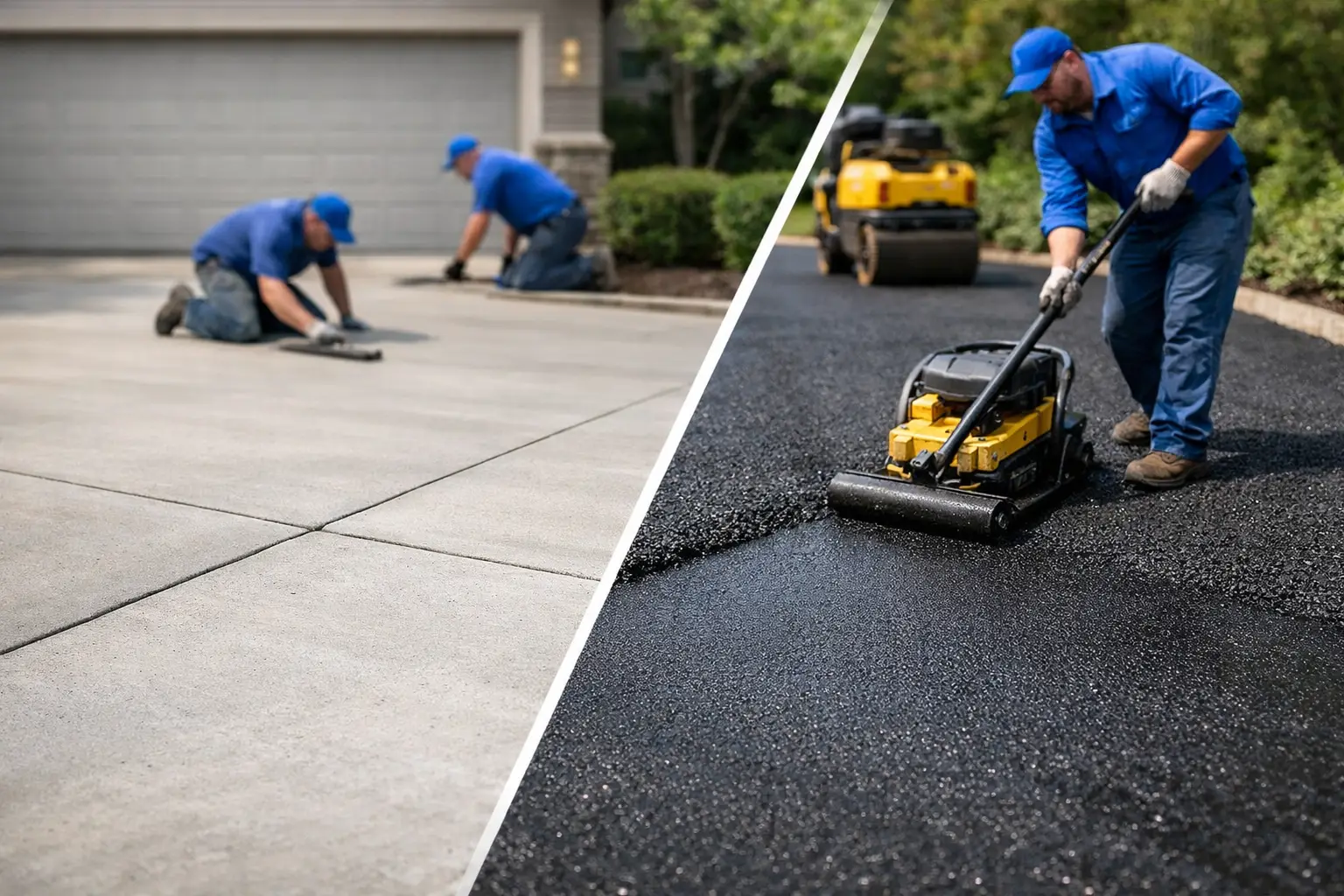
A driveway does more than carry vehicles from the street to the garage. It shapes curb appeal, handles daily traffic, and must stand up to wet Portland winters, tree debris, and changing ground conditions. When comparing concrete driveway versus asphalt, the better choice depends on how you use the space, the condition of the base beneath it, and how long you plan to stay in the home.
For many Portland-area homeowners, concrete is the longer-term, design-forward option. Asphalt can be a practical solution when lower upfront cost and quick installation are the priority. Both can perform well when the site is properly prepared. The key is not treating the surface material as the entire project.
Concrete Driveway Versus Asphalt: The Main Differences
Concrete and asphalt are built over a compacted base, but they perform differently once installed. Concrete is a rigid slab that distributes weight across the surface. Asphalt is a flexible pavement material that has more give under traffic and seasonal movement.
That distinction affects appearance, maintenance, repair options, and expected service life. It also means a driveway that looks fine on top can still fail early if drainage, excavation, grading, or base compaction were overlooked during installation.
Appearance and curb appeal
Concrete offers more design flexibility for a residential property. A standard broom-finish driveway looks clean and durable, while exposed aggregate, colored concrete, borders, decorative joints, and stamped finishes can coordinate with walkways, patios, retaining walls, or front-entry landscaping. Concrete also holds a lighter color, which can make a driveway feel more open and polished.
Asphalt has a simpler, darker appearance. A newly paved asphalt driveway can look sharp and uniform, especially on a larger drive or a home with a more traditional exterior. Over time, however, it fades to gray and may show patching, oil spots, and sealcoat variations more readily. It is usually selected for function rather than decorative impact.
Upfront cost and long-term value
Asphalt generally costs less to install than concrete, particularly for broad driveways or straightforward replacements. It also can often be placed and used sooner, which is helpful when access disruption needs to be kept short.
Concrete typically requires a higher initial investment because of material costs, forming, reinforcement details, finishing work, and curing time. Still, a properly installed concrete driveway can provide a longer service life with less routine maintenance. For homeowners planning to remain in the property for years, the higher initial cost may make sense when balanced against durability and curb appeal.
The right comparison is not simply the bid total. Ask what is included in excavation, base preparation, removal and disposal of the old surface, drainage corrections, thickness, reinforcement, joint layout, and site protection. A low price can leave out the work that keeps a driveway stable.
Durability under vehicles and daily use
Concrete performs especially well under regular passenger-vehicle traffic, provided the slab thickness and base are appropriate. It resists rutting and does not soften in hot weather. For homes with heavier vehicles, frequent deliveries, RVs, trailers, or tight turning areas, concrete can be designed with added thickness or reinforcement where loads are concentrated.
Asphalt is flexible, which can help it accommodate minor ground movement. Its softer surface is also more vulnerable to depressions, tire marks during warm weather, and damage from parked heavy equipment. Sharp kickstands, trailer jacks, and point loads can leave marks that would not affect concrete in the same way.
Neither material is immune to cracking. Concrete may develop cracks as the ground moves or the slab shrinks during curing. Asphalt can crack from aging, water intrusion, and inadequate support below. Proper joint placement in concrete and a sound compacted base beneath either material are more important than promises of a completely crack-free driveway.
Portland Weather, Drainage, and Base Preparation
In the Portland metro area, water management is central to driveway performance. Rainwater that runs toward the garage, sits at the edge of the pavement, or reaches the base can create problems regardless of whether the driveway is concrete or asphalt.
A well-planned project begins with evaluating grades, downspout discharge, existing drainage patterns, soil conditions, and the transition between driveway, sidewalk, lawn, and garage. In some cases, the right solution includes a channel drain, catch basin, swale, or drainage improvements before the new surface is installed.
Concrete must be sloped correctly so water moves away from structures and does not collect in low spots. Asphalt also needs positive drainage, but standing water is particularly hard on it because it can work into seams and soften the supporting layers over time.
The base matters just as much. Soft or wet subgrade, poor compaction, and insufficient aggregate can lead to settlement, cracking, and uneven areas. A dependable contractor will address unsuitable material and create a stable base before pouring concrete or paving asphalt. Surface replacement without correcting the reason the old driveway failed can simply repeat the same problem.
Maintenance Expectations for Each Material
Concrete is relatively low maintenance, but it is not maintenance-free. Keeping the surface clean, avoiding de-icing products that can damage concrete, and resealing decorative or exposed-aggregate finishes when appropriate will help protect its appearance. Small cracks can sometimes be sealed before moisture and debris enter them, although repairs may remain visible.
Asphalt requires more ongoing attention. Sealcoating is commonly recommended on a recurring schedule after the pavement has cured and as it ages. Cracks should be filled promptly to limit water intrusion, and deteriorated areas may need patching. These tasks are manageable, but they should be part of the ownership plan from the beginning.
Repairs are one area where asphalt has an advantage. Patches often blend more easily than concrete repairs. Concrete patching can restore function, but color and texture differences are often noticeable, especially on an older slab or decorative finish.
When Concrete Is Usually the Better Choice
Concrete is often the stronger fit for homeowners who want a permanent-looking upgrade, lower routine maintenance, and a driveway that complements higher-end hardscaping. It is a practical choice for front entries where the driveway is highly visible, properties with heavier daily use, and projects that include new walkways, steps, patios, retaining walls, or landscape improvements.
It is also a good option when a homeowner wants more control over the finished look. Joint patterns, edges, texture, and decorative concrete treatments can turn a basic vehicle surface into part of the overall exterior design.
Concrete does require patience. Weather conditions and curing time affect scheduling, and vehicles should stay off the new slab until it has gained sufficient strength. A quality installation is not something to rush to meet an arbitrary date.
When Asphalt Makes More Sense
Asphalt can be the right decision for a budget-conscious replacement, a long rural-style drive, or a property where the practical goal is restoring safe, smooth vehicle access without paying for a decorative finish. Its faster installation timeline can also be useful when a household needs driveway access restored quickly.
For a homeowner who is comfortable with periodic sealcoating and expects to make future changes to the property, asphalt may offer sensible value. It is not an inferior material by default. It simply has different maintenance needs and a different long-term appearance.
Build the Driveway Around the Whole Property
The best driveway material is one part of a larger site plan. Entry walkways, gates, drainage, planting beds, retaining walls, and garage access should work together rather than compete for space or send water in the wrong direction.
Four Seasons Landscape & Construction helps Portland-area homeowners evaluate those connected details before work begins, from excavation and drainage to concrete installation and surrounding landscape improvements. A clear scope, proper preparation, and skilled finishing give either material its best chance to perform.
Before choosing concrete or asphalt, look past the surface price and consider what your driveway needs to handle over the next decade. A well-built driveway should feel like a reliable part of the property, not the next exterior problem waiting to be repaired.