

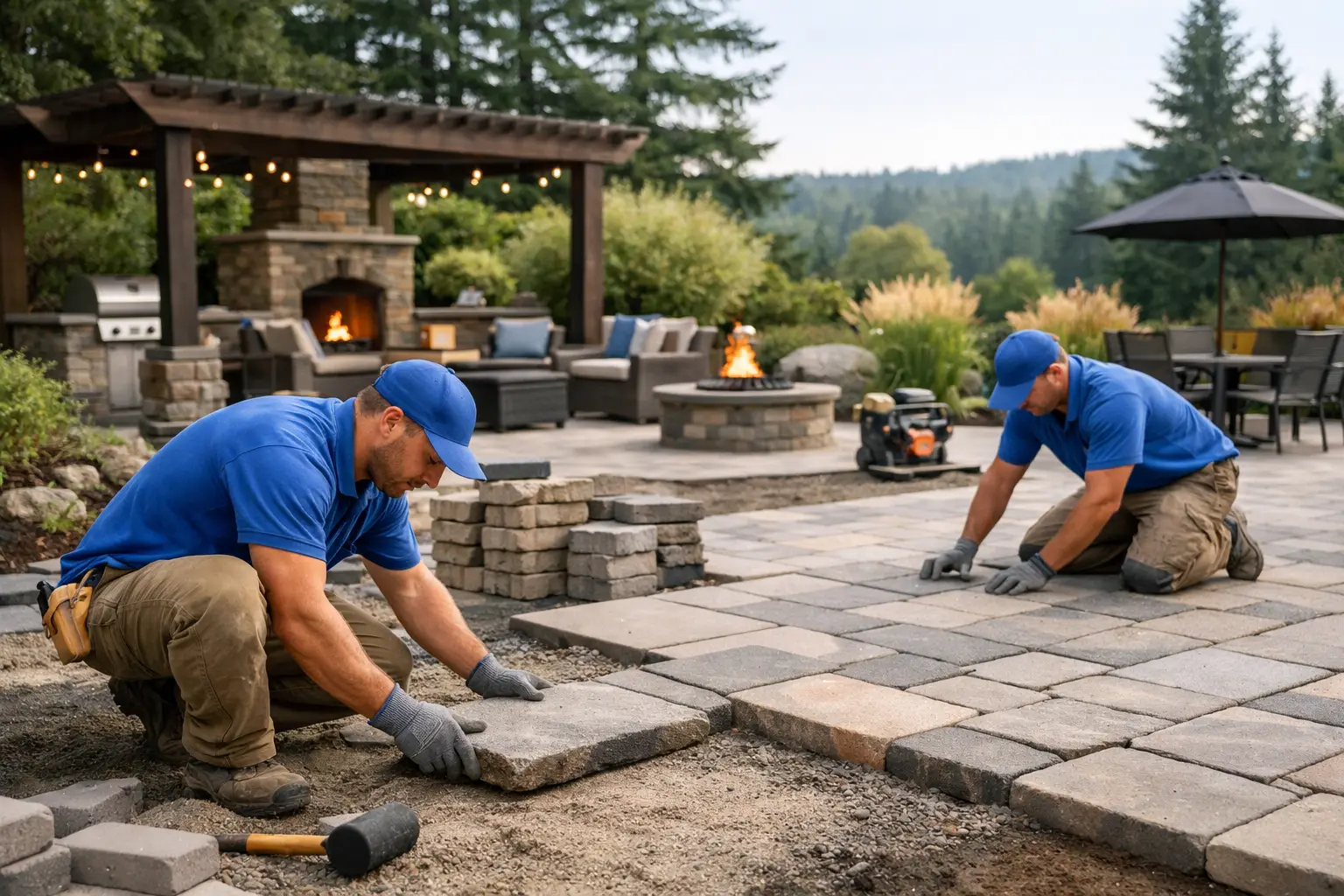
A patio can look straightforward on a sketch: a clean surface, a few chairs, perhaps a fire feature or pergola. On a Portland-area property, the work below and around that surface often determines whether it stays level, drains properly, and remains useful through years of rain, shade, and seasonal temperature changes. Choosing patio contractors is about more than finding someone who can install pavers or pour concrete. It is about finding a team that understands the entire site.
For homeowners in Tigard, Beaverton, Lake Oswego, Sherwood, Hillsboro, and across the Portland metro area, a well-built patio can turn a sloped, muddy, outdated, or underused yard into a practical extension of the home. The right project should fit the way you spend time outside while addressing the structural conditions that affect long-term performance.
What Patio Contractors Should Evaluate First
A quality patio project starts with an on-site evaluation, not a material recommendation. Before selecting pavers, concrete, or natural stone, a contractor should look at the existing grade, soil conditions, access, drainage paths, nearby structures, and the intended use of the space.
Portland-area yards often present challenges that are easy to overlook. Water may collect near a foundation, runoff may move across a sloped lawn, or a future patio area may sit below the surrounding grade. Installing a beautiful surface without correcting these conditions can lead to standing water, settling, shifted pavers, or drainage problems near the house.
The evaluation should also account for how the patio connects to the property. A patio may need steps from a back door, a walkway to a side gate, a retaining wall to create usable grade, or drainage improvements before construction begins. When one contractor can coordinate excavation, hardscaping, concrete, masonry, and landscape work, the project is easier to plan as one complete outdoor space rather than a series of disconnected jobs.
Choose the Material for the Site and the Way You Live
There is no single best patio material for every property. Each option has strengths, maintenance considerations, and cost differences. The right choice depends on your home’s architecture, budget, drainage needs, and how much flexibility you want in the finished design.
Paver patios
Pavers are a popular choice for outdoor living areas because they offer a wide range of colors, patterns, and sizes. They can complement traditional homes, contemporary properties, and natural Northwest landscapes alike. A properly built paver patio relies on excavation, a compacted base, edge restraint, bedding material, and careful grading. The visible pavers are only one part of the system.
Pavers can be a practical choice when a homeowner wants visual detail or expects future repairs may be needed. Individual units can often be removed and reset if access to buried utilities or localized settlement becomes an issue. That said, the base preparation must be done correctly. Poor compaction or inadequate drainage can cause movement regardless of the quality of the paver itself.
Concrete patios
Concrete offers a clean, durable surface that works well for many patio layouts. It can be finished as standard broom-finish concrete, stamped concrete, exposed aggregate, or colored concrete, depending on the desired look. Concrete can be especially effective for larger, simple patio footprints and modern designs with crisp lines.
Concrete does require thoughtful joint placement, reinforcement where appropriate, and a plan for water runoff. It can crack over time, particularly as soil moves and seasons change. Control joints help manage where cracking occurs, but they do not make concrete maintenance-free. An experienced contractor will discuss finish options, slope, thickness, and realistic expectations before the pour.
Natural stone and masonry
Natural stone patios, flagstone, and masonry details bring a more custom, permanent character to an outdoor space. These materials work particularly well alongside stone retaining walls, outdoor kitchens, fireplaces, and garden features. They also require skilled layout and installation to create a stable surface with consistent spacing and drainage.
Stone can carry a higher material and labor cost than standard concrete or basic pavers. For the right home and project scope, however, it provides a distinctive finish that ties the patio to the landscape rather than making it feel added on.
Drainage Is Part of the Patio, Not an Add-On
In the Portland metro area, water management deserves attention from the first conversation. A patio must be graded to direct surface water away from the house and toward an appropriate drainage area. Depending on the site, the work may include channel drains, catch basins, French drains, downspout connections, swales, or regrading.
The goal is not simply to get water off the patio. It is to manage runoff without sending it toward the foundation, neighboring property, or a low point that turns into a muddy problem each winter. A patio near a basement entry, retaining wall, or low-lying yard may require more drainage planning than one on an open, naturally sloped property.
This is one reason the lowest quote is not always the best value. A proposal that appears less expensive may leave out excavation depth, base materials, drainage work, hauling, or restoration of the surrounding landscape. Clear scopes and transparent pricing help homeowners compare proposals based on the full work required, not just the square footage of the finished surface.
Questions to Ask Patio Contractors Before You Hire
A productive consultation should give you confidence in both the contractor’s process and the project scope. Ask who will manage the work, how the crew handles changes discovered during excavation, and what preparation is included beneath the patio. You should also ask how drainage will be addressed and whether the contractor will coordinate related work such as retaining walls, fencing, irrigation adjustments, sod, or walkways.
It is also reasonable to ask for clarity around materials. Are specific paver lines, concrete finishes, base depths, edge restraints, or drainage components identified in the proposal? Are permits or utility locating needed for the planned work? A detailed answer does not need to be overly technical, but it should show that the contractor has considered the conditions unique to your yard.
Communication matters just as much once construction starts. Homeowners should know when work is scheduled, what areas of the property will be affected, how access will be handled, and what to expect if weather delays a portion of the work. Outdoor construction involves variables, especially excavation and site conditions, but a dependable contractor communicates early rather than leaving customers to guess.
Plan the Patio as an Outdoor Living Space
The strongest patio designs begin with use, not just dimensions. Consider whether the space is primarily for quiet morning coffee, family dinners, grilling, entertaining, or creating a safer route through the yard. A patio meant for a dining table needs room to move chairs comfortably. A grilling area benefits from a clear traffic path and a durable surface. A fire feature needs proper spacing from structures and furnishings.
It is also worth planning for what may come next. A new patio can provide the foundation for a pergola, covered structure, outdoor kitchen, built-in seating wall, lighting, landscaping, or privacy fence. Addressing those possibilities during the initial design can prevent costly rework later. For example, planning a pergola footprint before the patio is installed allows posts and footings to be coordinated correctly.
At Four Seasons Landscape & Construction, patio work is approached as part of the complete property, from excavation and drainage through hardscape installation and surrounding landscape restoration. That approach helps create finished spaces that feel intentional and function well beyond the first season.
What a Well-Managed Patio Project Looks Like
A professional project typically moves from consultation and site review to a clear scope, material selection, scheduling, construction, and final walkthrough. During construction, the existing area is excavated and graded, the base is installed and compacted, drainage components are placed as needed, and the selected patio material is installed. The crew then completes edges, transitions, and restoration work around the new surface.
The timeline depends on patio size, access, weather, material availability, and the complexity of related work. A straightforward patio replacement may move quickly, while a full backyard transformation with walls, drainage, steps, structures, and planting takes more coordination. A contractor should set expectations based on the actual scope rather than promising a schedule that ignores site realities.
A patio is most successful when it solves a real property need and gives your household a place you will use often. Start with the conditions in your yard, be clear about how you want to live outdoors, and choose a contractor prepared to build the groundwork as carefully as the finished surface.