

A wet patch at the bottom of a Portland-area yard may seem like a normal winter inconvenience. But when water remains long after rain stops, collects near the foundation, or turns a lawn into mud every season, it is usually a site drainage problem worth addressing. When do you need drainage? The answer is when water is no longer moving safely away from your home, hardscape, and usable outdoor areas.
Drainage is not a one-size-fits-all add-on. A well-built solution starts with understanding where water originates, how it travels across the property, and where it can be discharged responsibly. For homeowners planning a patio, retaining wall, concrete work, lawn replacement, or full yard renovation, drainage should be considered before surface materials are installed, not after problems appear.
When Do You Need Drainage in Your Yard?
You need a drainage solution when standing water, saturated soil, runoff, or groundwater creates a risk to your home, landscaping, or the way you use your property. In the Portland metro area, frequent rain and varied lot elevations make these concerns especially common. Clay-heavy soil can hold moisture near the surface, while sloped properties can send runoff directly toward a house, walkway, patio, or neighboring area.
The most obvious sign is pooling water that remains for more than a day or two after rainfall. A lawn should not stay soft and muddy for weeks, and planting beds should not function like shallow ponds. Waterlogged soil can damage turf, weaken plant roots, attract mosquitoes, and make routine maintenance harder.
Foundation-related symptoms require more urgency. If downspouts empty beside the house, water gathers along the foundation, or you notice damp areas in a crawlspace or basement, the property may need better roof runoff management, regrading, or a drain system. Landscaping cannot solve every foundation moisture issue, but keeping surface water directed away from the structure is an essential first step.
Other signs are less dramatic but still meaningful. Watch for:
- Soil washing out from under a fence, path, or retaining wall
- Pavers that settle, shift, or develop low spots after winter rain
- Erosion channels on a slope or bare areas where water repeatedly runs
- Moss, algae, or slippery buildup on consistently wet concrete and walkways
A single wet spot may be manageable with grading or a downspout extension. Recurring drainage issues, however, usually need a planned solution rather than another temporary patch.
Why Drainage Problems Get Worse Over Time
Water follows the easiest path. If a yard has low areas, compacted soil, failing edging, undersized downspouts, or a patio sloped toward the home, runoff will keep returning to the same trouble spot. Over time, that moisture can soften the soil beneath hardscape, wash away joint material, and create settlement that makes the surface hold even more water.
Retaining walls also depend on drainage. A wall is designed to hold back soil, but wet soil is significantly heavier than dry soil. Without drain rock, drainage fabric, proper backfill, and an outlet for water, pressure can build behind the wall. The result may be staining, movement, cracking, or premature failure. A visually attractive wall without the correct drainage details is not a durable wall.
The same principle applies to patios and walkways. A paver patio, stamped concrete area, or natural stone path needs a stable base and intentional slope. Water should move away from the home and off the finished surface without creating runoff problems elsewhere on the property. This is why drainage and hardscape construction should be planned together.
The Right Drainage Solution Depends on the Water Source
The goal is not simply to install a pipe. The goal is to manage the specific source of water and move it to an appropriate discharge point. That may involve one system or a combination of grading, drains, and roof runoff controls.
Surface Grading and Swales
Sometimes the most effective solution is reshaping the ground. Proper grading encourages water to flow away from the house and toward an area where it can drain safely. A shallow swale, which is a gently contoured drainage channel, can direct runoff across a yard without looking like a ditch.
Grading is often the right starting point when an entire lawn or landscape bed holds water. It can also be incorporated during a larger renovation, before sod, plants, patios, or pathways are installed. The trade-off is that grading alone may not be enough on a flat lot with poor-draining soil or where runoff volume is high.
French Drains and Area Drains
A French drain is generally a perforated pipe installed in a gravel-filled trench. It collects water moving through saturated soil and directs it toward a suitable outlet. This approach can work well along the edge of a lawn, below a slope, beside a retaining wall, or in a persistently wet landscape area.
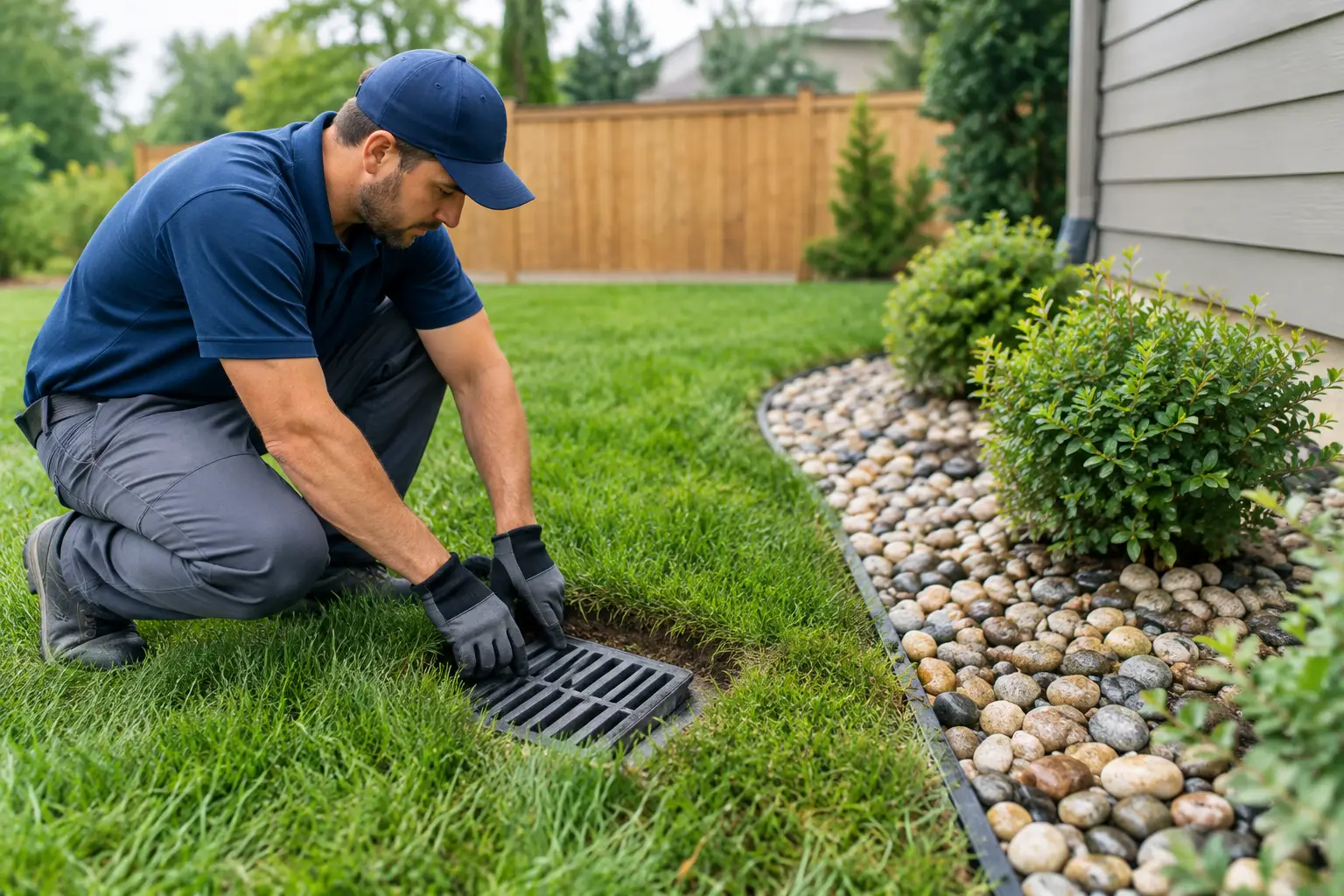
An area drain is designed to capture water at the surface through a grated inlet. It is often useful in low points near patios, driveways, stair landings, or other paved areas where water visibly pools. Unlike a French drain, which manages subsurface moisture, an area drain addresses water that collects on top of the ground or hardscape.
The best choice depends on the issue. Installing a French drain under a patio low spot may not solve the problem if the patio itself needs correction. Likewise, an area drain may capture surface water but do little for saturated soil higher up a slope.
Downspout Drainage
Roof runoff is a major source of concentrated water around residential homes. During a strong Oregon rainstorm, a roof can shed a surprising amount of water in a short time. When downspouts discharge at the foundation, near a retaining wall, or onto a walkway, they can create erosion and moisture problems even on an otherwise well-drained property.
Connecting downspouts to a properly sized solid drain line can move roof runoff away from the house. The discharge location matters. Water should not be routed where it will undermine a patio, flood a lower section of the yard, or create an issue for a neighboring property. Local requirements, site conditions, and available outlets should guide the design.
Retaining Wall Drainage
If you are building or replacing a retaining wall, drainage should be part of the wall system from the beginning. Quality installation typically includes free-draining gravel behind the wall, filter fabric to separate soil from aggregate, and a drainage path that relieves water pressure. Depending on wall height and site conditions, this may include a perforated drain pipe and carefully placed outlets.
This work is largely hidden once the project is complete, but it is one of the details that protects the investment. Cutting corners behind a wall can lead to expensive repairs later.
Drainage Should Come Before New Hardscape
Homeowners often call for drainage after a new patio, walkway, or lawn has already been installed and water starts collecting around it. In many cases, the smarter and more cost-effective approach is to evaluate drainage during the design and excavation phase.
Before a patio is built, the contractor can establish finished elevations, create proper slope, install drains where needed, and prepare a compacted base that supports the surface. Before a retaining wall is installed, the crew can plan the drainage zone and outlet. Before sod is laid, low spots can be corrected and irrigation can be coordinated with the final grade.
This coordinated approach reduces rework and helps ensure that the finished space performs as well as it looks. It also gives homeowners a clearer scope of work and fewer surprises once construction begins.
What a Professional Drainage Evaluation Should Cover
A useful drainage assessment looks beyond the visible puddle. It should consider roof runoff, property slope, existing drains, soil conditions, hardscape elevations, retaining walls, and the location of utility lines. The contractor should also look at how water behaves during heavy rain, not just how the yard appears on a dry day.
Clear communication matters here. Homeowners should understand what is causing the problem, what the proposed system is intended to handle, where water will go, and what limitations may apply. Drainage can greatly improve a wet yard, but no contractor should promise that a small drain will solve every groundwater or flood-related condition without evaluating the site.
For substantial landscape, hardscape, excavation, or retaining wall projects, Four Seasons Landscape & Construction can help homeowners plan drainage as part of a complete outdoor improvement project. Addressing water early protects the work that follows and helps create an outdoor space that remains usable through Portland’s wet seasons.
If your yard stays muddy, your patio holds water, or runoff is reaching the foundation, treat it as a construction detail that deserves a real solution. The right drainage plan can make the difference between a yard you avoid after rain and one you can rely on year-round.