

A wet yard can turn even a well-kept Portland property into a space homeowners avoid. Standing water near a patio, soft soil along a walkway, muddy lawn areas, and water moving toward the foundation are not simply landscaping concerns. They are signs that the yard needs a coordinated solution. A wet yard renovation addresses the source of the water, then rebuilds the landscape around proper drainage, stable grading, and the way your family wants to use the space.
For homes throughout Tigard, Beaverton, Lake Oswego, Hillsboro, Sherwood, and the surrounding Portland metro area, the right renovation often combines drainage work with hardscaping, retaining walls, lawn replacement, irrigation adjustments, and planting. The goal is not to hide a wet spot for a season. It is to create an outdoor area that works reliably through Oregon’s long, rainy months.
Why Portland Yards Stay Wet
Portland-area properties deal with frequent rainfall, compacted soils, mature landscaping, and sloped lots. In many yards, water is not draining where it should because the original grade no longer works with the home, patio, driveway, or additions made over time. A new fence, raised garden bed, concrete path, or neighboring construction can also change how water moves across a property.
Clay-heavy soil is another common factor. Water can sit near the surface rather than soaking in quickly, especially in low areas of the lawn. Downspouts that discharge too close to the house, undersized drains, and failing catch basins can add a large amount of water to an already saturated area.
The visible problem is often just one part of the picture. A puddle in the middle of the lawn may be caused by runoff from a roof, a high point near the side yard, or a blocked drainage route farther downhill. That is why effective work starts with evaluating the full site instead of installing a single drain where water happens to collect.
What a Wet Yard Renovation Should Accomplish
A well-planned renovation should direct water away from the house, prevent pooling in high-use areas, protect hardscape foundations, and make the yard more usable. It should also fit the property rather than force a one-size-fits-all drainage solution.
On a relatively flat lot, the work may center on regrading, catch basins, drain lines, and a properly prepared lawn area. On a sloped property, retaining walls, terraced planting zones, swales, or reinforced drainage systems may be needed to slow and direct runoff safely. The best approach depends on the slope, soil conditions, roof drainage, existing structures, utility locations, and available discharge options.
There is a practical balance to consider. Extensive drainage work can solve persistent water issues, but it also requires excavation and restoration of disturbed areas. Combining the work with a planned patio, walkway, retaining wall, or lawn renovation can often make better use of the construction process. Instead of repairing the yard twice, the drainage system is built first and the finished landscape is installed over a sound base.
Start With Grading and Drainage
Correct the Flow of Water
Grading is the foundation of a dry, functional yard. The soil should slope away from the home and guide surface water toward approved collection or drainage areas. Even small grade changes can make a meaningful difference, particularly near foundations, patios, and walkways.
During a renovation, low spots can be rebuilt with properly compacted base material and topsoil. In some cases, the landscape needs to be reshaped more substantially so runoff follows a controlled path rather than crossing the lawn or collecting against a retaining wall. Good grading is not about making the entire yard look perfectly flat. It is about creating intentional movement for water while preserving a natural, finished appearance.
Build the Right Drainage System
A drainage system should be selected based on what the yard needs. Catch basins collect surface water at low points. Solid drain pipe carries roof runoff or collected water to an appropriate discharge location. Perforated pipe may be used to relieve saturated soil in certain conditions. Channel drains can protect the edge of a patio, driveway, or garage where water tends to cross a hard surface.
Drainage details matter. Pipe needs proper slope, fittings must be installed securely, and drain outlets need a planned destination. A basin without a reliable outlet can become a buried bucket. Likewise, placing drainage beneath a future patio or lawn without adequate bedding and protection can lead to settlement later. Experienced installation accounts for both water movement and the structural needs of the finished yard.
Rebuild Outdoor Spaces on a Stable Base
Once drainage and grading are addressed, the yard can be redesigned around how you want to live outside. This is where a wet yard renovation becomes more than a repair project.
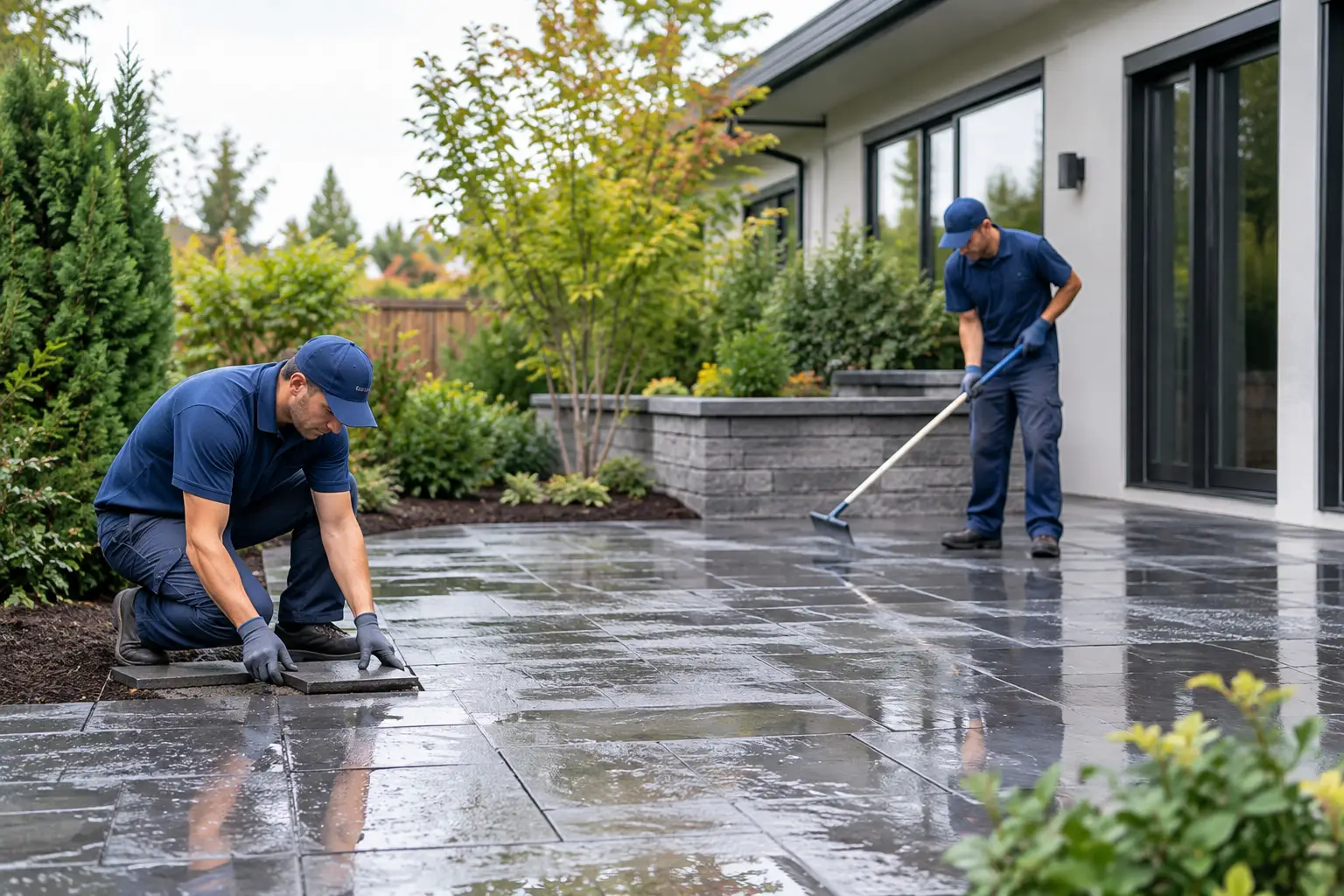
A paver patio can replace a muddy lawn area near the back door and create a reliable space for dining, grilling, or gathering. With proper excavation, compacted aggregate base, edge restraint, and drainage planning, pavers provide a durable surface that fits Portland’s wet climate. Permeable paver options may also be worth discussing for certain locations, though they still require proper base preparation and maintenance to perform as intended.
Concrete patios and walkways can be another strong choice when a clean, continuous surface is the right fit for the home. The slab must be graded correctly, jointed properly, and supported by a well-prepared base. Water should move away from the house and not become trapped along the edges.
Retaining walls are often part of the solution on uneven lots. A properly built wall can create level areas for a patio, lawn, or planting bed while managing the pressure created by soil and groundwater. Behind the wall, drainage stone, drain pipe, and suitable backfill are essential. A retaining wall that looks good but lacks drainage can shift, stain, or fail prematurely.
Choose Landscaping That Works With the Site
After the structural work is complete, the landscape should support the drainage plan rather than work against it. Fresh sod can transform a renovated lawn area, but it needs suitable soil preparation and positive drainage to establish well. If the space stays shaded or remains naturally damp, a smaller lawn area and more planting beds may be a smarter long-term choice.
Plant selection should account for sun exposure, soil moisture, and maintenance expectations. Some areas benefit from plants that tolerate seasonal moisture, while other parts of the yard may need improved soil and irrigation adjustments after regrading. Mulch, rock, and edging can help define planting zones, but they should not block swales, drain inlets, or water pathways.
This is also the right time to consider how the finished landscape will be maintained. Catch basins need occasional cleaning, gutters and downspouts should stay clear, and drain outlets should remain accessible. A well-built system does not require constant attention, but it should not be buried behind landscaping that makes service difficult.
Signs It Is Time to Renovate
Some water issues call for prompt attention, particularly when moisture is reaching the foundation, entering a crawlspace or basement, eroding soil, or undermining hardscapes. Other signs develop gradually: mossy, failing lawn areas; pavers that settle unevenly; muddy traffic paths; water that runs across a driveway; or a patio that cannot be used for much of the year.
If the problem is limited to one downspout or a small low area, a focused repair may be enough. When several symptoms appear across the property, a complete site plan is usually the more dependable investment. Treating only the most obvious wet spot can leave the underlying drainage pattern unchanged.
Plan the Work as One Coordinated Project
A wet yard renovation involves more than installing a drain line. It may require excavation, grading, concrete or paver work, retaining wall construction, irrigation modifications, fencing adjustments, and landscape restoration. Coordinating those trades under one experienced contractor helps prevent common problems, such as a patio being installed before drainage is complete or a new lawn being placed over soil that has not been properly graded.
At Four Seasons Landscape & Construction, the process begins with understanding how water moves through the property and what you want the finished outdoor space to provide. Clear planning, appropriate materials, and careful installation are what turn a soggy, underused yard into a space built for daily life in the Portland area.
A dry yard should not mean sacrificing the look or function of your property. With the right site work in place, rainy-season water can be managed quietly in the background while your patio, lawn, walkways, and planting areas remain ready to use.