

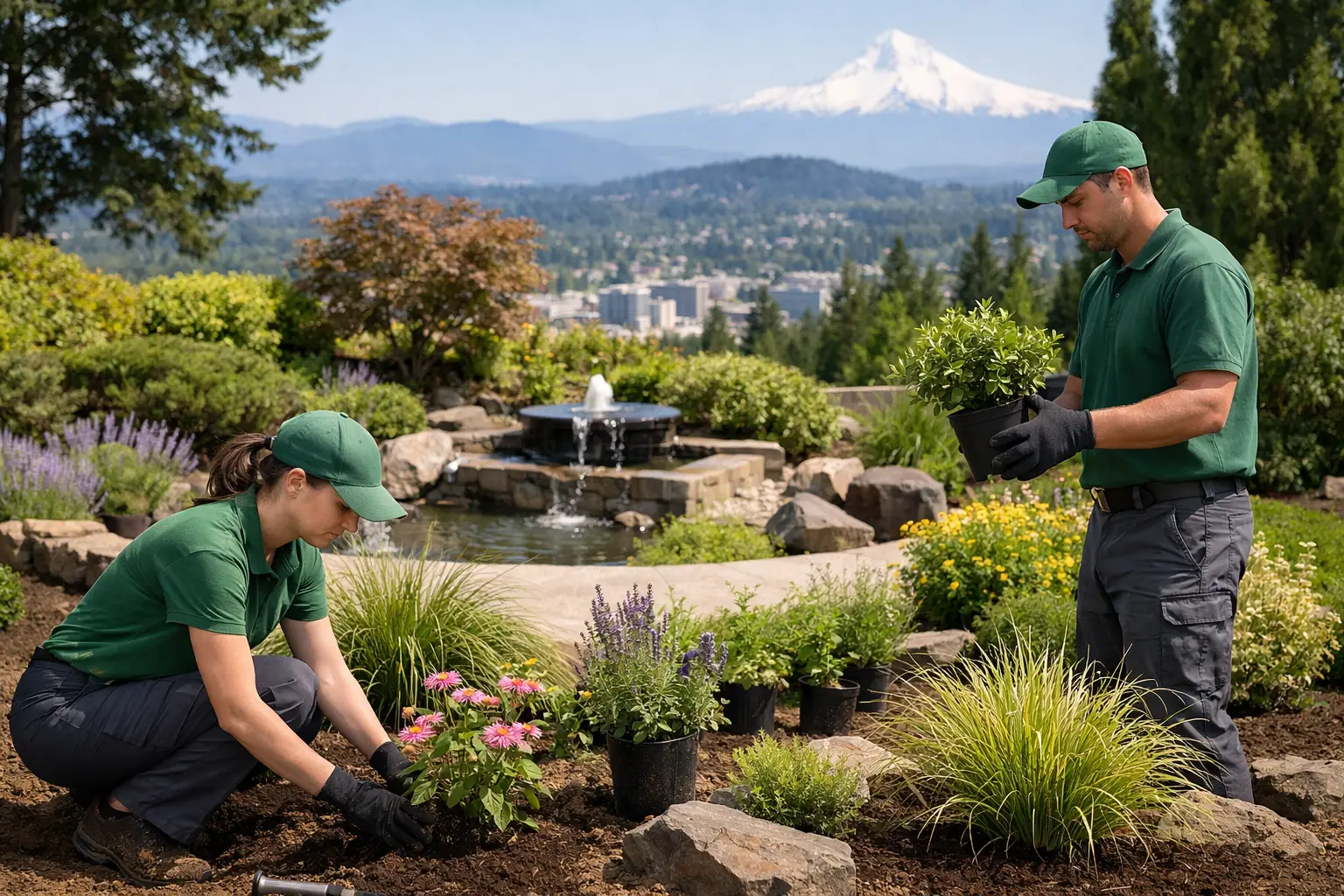
A garden bed can look full and inviting on installation day, then become crowded, bare, or difficult to maintain within a few seasons. The difference is usually not the quality of the individual plants. It is the plan behind them. Knowing how to design garden planting means accounting for mature plant size, site conditions, circulation, drainage, and how you want to use the yard year-round.
For Portland-area homeowners, planting design also needs to work through wet winters, dry summer stretches, heavy or compacted soil, and the deep shade created by mature evergreens. A well-planned garden does more than add color around the house. It frames patios and walkways, softens retaining walls, improves privacy, and makes the entire landscape feel finished.
Start With the Yard You Have
Before selecting plants, study how the property functions. Walk the yard at different times of day and note where sun reaches the ground, where water collects after rain, and which views you want to improve or preserve. A planting bed along a sunny driveway needs a very different approach than a damp side yard beneath Douglas firs.
In the Portland metro area, drainage should be part of the initial assessment. Plants will struggle in standing water, but a wet area does not automatically need to be filled with soil and planted like the rest of the yard. It may need grading, a drainage solution, or plant varieties that can tolerate periodic moisture. Addressing water movement first protects both the landscape investment and nearby hardscape features.
Soil conditions matter just as much. Many local yards have clay-heavy soil that holds water in winter and becomes dense in summer. Compacted soil near new construction, patios, or driveways can limit root growth. Proper bed preparation may include loosening the planting area, incorporating appropriate organic material, and creating a finished grade that directs water away from the home.
Design Garden Planting Around Structure First
A strong planting design has a framework. Existing trees, fences, retaining walls, patios, walkways, and the home itself establish the lines that plants will support. Rather than treating planting as decoration added at the end, use it to connect those built elements into one cohesive outdoor space.
Start with the largest visual elements. Small trees, upright evergreen shrubs, and broad shrubs can create privacy, screen an unwanted view, or add height beside a fence. Place these plants according to their mature width, not the size of the nursery container. Planting too close to a house, wall, or walkway leads to repeated pruning and often requires replacement years later.
Next, use medium-sized shrubs to build mass and rhythm through the beds. Repeating a few dependable varieties is usually more effective than placing one of every plant you like. Repetition gives the landscape a composed appearance from the street and prevents a garden from looking scattered. Lower perennials, grasses, and groundcovers can then soften bed edges and fill the spaces around the main plant groupings.
This layered approach also helps a landscape look good in every season. Evergreens provide winter structure. Flowering shrubs and perennials carry spring and summer interest. Ornamental grasses, seed heads, bark texture, and fall foliage keep the beds from disappearing once flowers fade.
Plan for Views From Inside and Outside
Consider where the garden will be seen most often. A front entry bed may be viewed from the street, front windows, and the approach to the door. A backyard planting area may need to look good from the kitchen, a paver patio, or an outdoor seating area.
Keep lower plants near walkways and seating areas so they do not obstruct movement or sightlines. Use taller planting along property boundaries, behind patio seating, or where privacy is needed. If a view is worth keeping, frame it with planting rather than blocking it with a continuous hedge.
Match Plants to Light, Water, and Maintenance Needs
Plant selection should follow the site, not a passing trend. A plant that thrives in a sunny, well-drained display garden may not perform in a shaded Portland side yard. Group plants with similar water and light needs together so irrigation and maintenance remain practical.
For sunny areas, drought-tolerant shrubs, ornamental grasses, and flowering perennials can provide long-season interest with less summer water once established. In shade, broadleaf evergreens, ferns, shade-tolerant groundcovers, and textured foliage often perform better than plants selected primarily for blooms. Near large trees, remember that roots compete for both moisture and nutrients, even in locations that appear damp during winter.
Native and regionally adapted plants can be valuable choices, especially when they suit the specific site. They are not a requirement for every project, and they should still be selected thoughtfully. The right mix depends on the look you want, the amount of maintenance you expect, wildlife considerations, and whether the area receives regular irrigation.
Avoid designing an entire yard around plants that need constant deadheading, staking, or protection from winter conditions unless hands-on gardening is a priority. For many homeowners, the best design balances seasonal color with dependable shrubs and perennials that remain attractive without weekly attention.
Use Spacing to Prevent Future Problems
Overplanting is one of the most common mistakes in new landscapes. Freshly installed plants are small, and it is tempting to close every gap immediately. Within two or three growing seasons, crowded plants compete for light and water, block air circulation, and lose their intended shape.
Use each plant’s mature spread as the guide for spacing, while recognizing that a newly installed bed will need time to fill in. Mulch provides a clean finished appearance during that establishment period and helps retain moisture, reduce weeds, and protect roots from temperature swings.
Spacing is especially important next to structures. Leave room around the foundation for access, drainage observation, and mature plant growth. Keep thorny or sprawling plants away from narrow walkways. Around patios and outdoor kitchens, select plants that offer fragrance, texture, or screening without dropping excessive debris where people gather.
Coordinate Planting With Irrigation and Hardscape Work
Planting performs best when it is coordinated with the construction work around it. Installing a patio, retaining wall, fence, walkway, or drainage system can change grades, runoff patterns, and sunlight exposure. Those changes should be understood before the final planting plan is set.
Irrigation zones should reflect plant needs. Lawn, shrubs, and low-water planting areas often require different watering schedules. A properly planned system places water at the root zone and makes seasonal adjustments easier, which is particularly useful during Portland’s dry summer months.
Edging and bed lines also deserve attention. Clean, purposeful bed edges create a clear transition between lawn, gravel, concrete, and planting. Curves can soften a landscape, while straight lines may complement modern patios or formal masonry. Either approach works when it relates to the home and the rest of the site.
If the project includes a retaining wall, grade change, or drainage correction, construction should come before planting whenever possible. Reworking a finished garden bed to access utilities or correct drainage costs more and disrupts plant roots. One coordinated plan reduces that risk.
Build Seasonal Interest Without Chasing Constant Bloom
A garden does not need every plant to flower at once. In fact, a bed made entirely of short-lived blooms can look uneven for much of the year. Better results come from combining structure, foliage, flowers, and seasonal change.
Choose a few moments of emphasis. Early spring bulbs and flowering shrubs can welcome the new season. Summer perennials can bring color close to patios and entryways. Fall foliage and grasses extend the garden’s appeal, while evergreen forms hold the design together in winter.
Texture is often as valuable as flower color. Fine grass blades, large glossy leaves, soft fern fronds, and the branching patterns of deciduous shrubs provide contrast even when little is in bloom. This is especially useful in the Pacific Northwest, where winter gardens are visible for many months.
Know When Professional Planning Adds Value
A simple border may be a manageable weekend project. A larger renovation involving slopes, drainage, irrigation, retaining walls, new patios, or privacy planting benefits from a more complete site plan. The goal is not to make the project unnecessarily complicated. It is to avoid installing beautiful plants in a location that has unresolved water, access, or construction issues.
Four Seasons Landscape & Construction helps Portland-area homeowners coordinate planting with the hardscape, drainage, masonry, and sitework that support a lasting outdoor space. A thoughtful consultation can clarify what needs to happen first and create a realistic path from an underused yard to a finished landscape.
The best garden planting plan leaves room for growth – in the plants, in the way your family uses the yard, and in the value it adds to your home over time.