

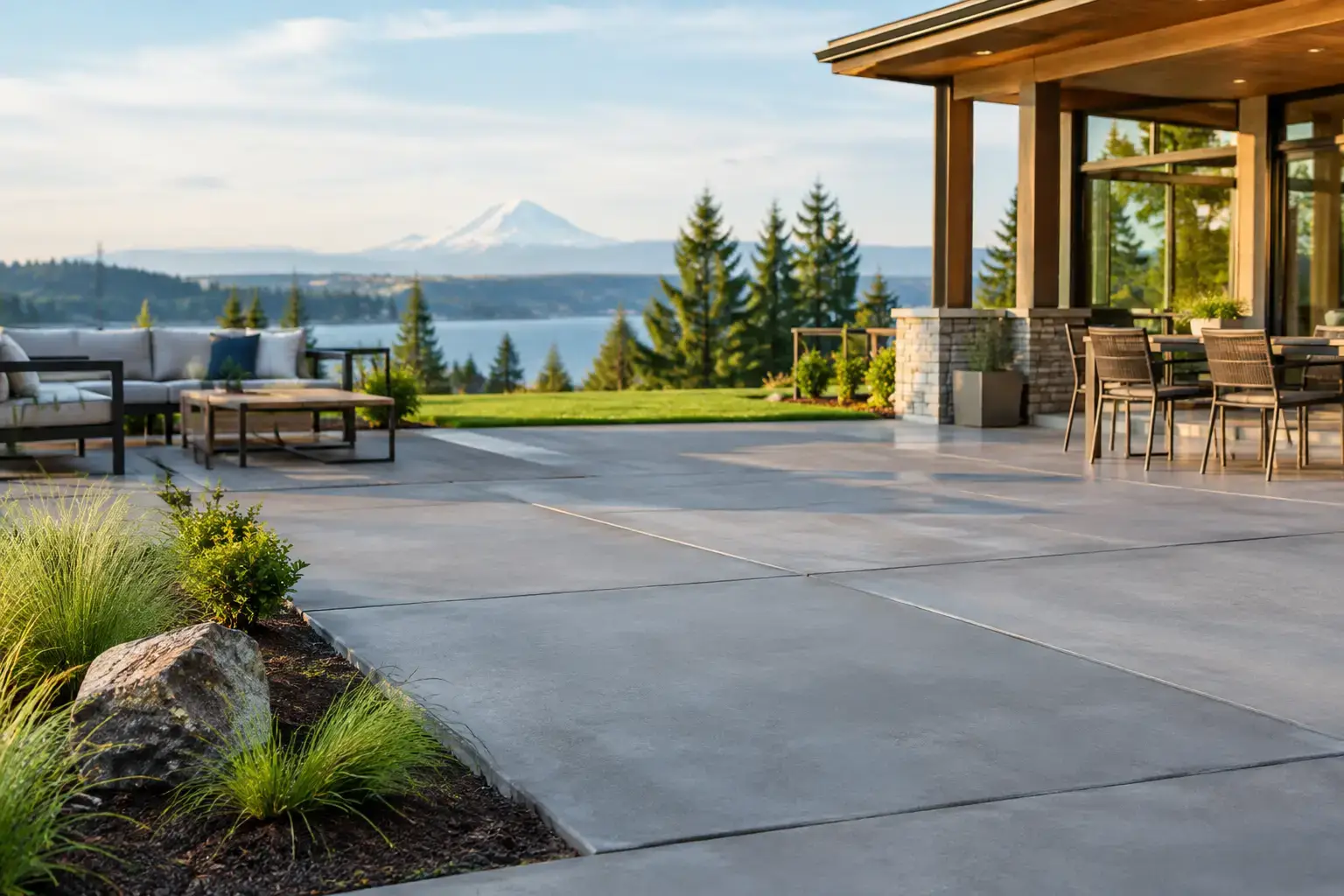
A concrete patio can look clean and modern on installation day, then become slick, stained, or out of place if the finish does not suit the property. In the Portland metro area, concrete finishes need to do more than look good. They need to handle frequent rain, shaded areas, foot traffic, and the daily use of an outdoor living space.
The right finish affects traction, maintenance, comfort, cost, and how well a patio, walkway, driveway, or pool-adjacent area fits the rest of your landscape. For homeowners planning a new concrete feature or replacing an aging slab, the best choice starts with how the space will actually be used.
Choosing Concrete Finishes for Your Project
Concrete is not a one-look material. The surface can be smooth, textured, patterned, colored, exposed with aggregate, or shaped to resemble more expensive materials. Each option has practical advantages, but no finish is right for every application.
A front walkway has different needs than a covered patio. A driveway must support vehicle weight and resist tire marks, while a backyard entertaining area may call for more decorative detail and a surface that feels comfortable underfoot. Drainage also matters. Water should move away from the home and should not collect in low points where algae and slick conditions can develop.
At Four Seasons Landscape & Construction, we look at the finish as part of the entire exterior project. Grade, drainage, surrounding hardscape, access, and the intended use of the space all guide the recommendation before concrete is poured.
Broom Finish: Practical and Dependable
A broom finish is created by drawing a specialized broom across freshly placed concrete. This leaves fine, consistent lines that add texture and improve traction. It is one of the most common finishes for sidewalks, patios, driveways, and utility areas because it performs well in wet weather without adding unnecessary complexity.
For many Portland-area homes, broom-finished concrete is a sound choice for exposed walkways and entry paths. The texture helps provide footing during rainy months, and the appearance works well with both traditional and contemporary homes. The direction of the broom lines also matters. On sloped walkways, they are typically run perpendicular to the direction of travel to improve grip.
The trade-off is appearance. A broom finish is neat and durable, but it does not create the decorative character of stamped or exposed aggregate concrete. Homeowners who want a more customized patio may use it in functional areas while choosing a decorative finish for the main gathering space.
Smooth Trowel Finish: Best for Covered Areas
A smooth trowel finish creates a refined, clean surface with little visible texture. It can work well under a covered patio, in a protected outdoor kitchen area, or as part of a more modern design where a simple surface is the goal.
Outside in the open, smooth concrete requires careful consideration. When rain, moss, or standing water are part of the equation, a highly smooth finish can be slippery. It is generally better suited to covered spaces or areas where texture can be added through a light finish treatment. A skilled installer can create a smoother look without making the surface impractical for its location.
Smooth concrete also shows imperfections, stains, and surface wear more readily than textured finishes. It is a good option when the site is protected and the homeowner is comfortable with routine cleaning and sealing.
Exposed Aggregate: Texture With Natural Character
Exposed aggregate concrete reveals the stone within the concrete mix by removing a thin layer of surface paste after placement. The result is a textured finish with visible river rock, crushed stone, or decorative aggregate. It has a natural appearance that pairs well with stone retaining walls, planting beds, wood structures, and Northwest-style landscapes.
This finish offers reliable traction and is often a strong choice for patios, walkways, and pool-area surfaces. It can also add visual interest without the repeating pattern associated with stamped concrete. Aggregate color and size influence the final look, so material selection should be reviewed before work begins.
The main consideration is comfort and cleaning. A heavily exposed surface can feel rough on bare feet and may hold more debris than a smooth slab. It should be selected with the amount of exposure and the intended use in mind. For a family patio where people may walk barefoot, a moderate aggregate exposure is often more comfortable than a highly textured surface.
Decorative Concrete Finishes for Patios and Entries
Decorative finishes make concrete a more visible design feature rather than simply a durable surface. They work especially well for front entries, larger patios, outdoor kitchens, and other areas where the hardscape sets the tone for the yard.
Stamped Concrete
Stamped concrete is patterned while it is still workable to create the appearance of natural stone, slate, brick, wood planks, or tile. Integral color, release color, and hand detailing can add depth and variation. It is a practical way to achieve a more decorative patio without individually installing pavers or natural stone across the entire area.
The quality of stamped concrete depends heavily on preparation, timing, color application, joint layout, and sealing. A poorly planned pattern can look repetitive, and joints that are not integrated into the design can interrupt the finished appearance. The best installations account for the shape of the patio, nearby structures, and how the pattern will align at edges and steps.
Stamped concrete needs periodic resealing to maintain color and protect the surface. In wet, shaded locations, the sealer and texture should be chosen carefully to support traction. A patio can be attractive and durable, but it should not be treated as maintenance-free.
Colored Concrete
Color can be added throughout the concrete mix or applied at the surface, depending on the desired result. Earth tones, charcoal, warm gray, and muted tan often complement Portland homes and landscape materials better than bright, heavily saturated colors.
Integral color is distributed through the slab, which can make minor surface wear less noticeable. Surface color hardeners and stains offer more variation but require a higher level of installation control. Concrete color also changes as it cures, so viewing samples and setting realistic expectations is essential. The final result will not look exactly like wet concrete on pour day.
Saw Cuts and Joint Layout
Control joints are necessary because concrete naturally shrinks and can crack as it cures. Good concrete work does not promise that concrete will never crack. It manages where cracking is most likely to occur by placing joints strategically.
On decorative projects, saw cuts can become part of the design. They can frame a patio into clean sections, complement a modern layout, or align with steps, borders, and nearby structures. Thoughtful joint placement is one of the details that separates a finished outdoor space from a plain slab.
Match the Finish to Portland Conditions
Portland-area weather puts extra emphasis on drainage, texture, and maintenance. Shaded north-facing areas, dense tree cover, and locations near irrigated planting beds can stay damp for long periods. Even the best finish will become slippery if water is trapped on the surface or organic growth is allowed to build up.
Proper site preparation starts below the concrete. The base must be compacted correctly, grades must direct water away from the house, and the slab should have a planned slope. Where a project involves retaining walls, landscape beds, downspouts, or nearby structures, drainage planning should happen before the pour rather than after water becomes a problem.
For surfaces that receive regular rain, texture is usually more valuable than an overly polished appearance. Broom finishes and exposed aggregate are often practical choices. Stamped concrete can also work well when the pattern, sealer, and maintenance plan are selected for wet conditions.
Installation Details That Protect the Finished Surface
The finish is only as good as the concrete beneath it. A durable slab requires appropriate excavation, a stable compacted base, reinforcement where the project calls for it, correct concrete thickness, and control joints placed at the right intervals. Driveways, patios, walkways, and steps are not built to the same specifications because they do not carry the same loads.
Weather on pour day also affects the work. Concrete can set too quickly in heat, and rain can damage a fresh surface if it arrives at the wrong time. Professional planning includes watching conditions, protecting the work when necessary, and allowing enough curing time before the area is put into regular use.
After installation, a quality sealer can help protect decorative concrete from moisture, staining, and surface wear. Sealing schedules vary by finish, exposure, and product used. Regular sweeping, gentle washing, and prompt cleanup of leaf debris or spills will extend the appearance of any concrete surface.
The best finish is the one that fits your home, your budget, and the way your family uses the space. A well-built broom-finished walkway may be the right answer for a busy side yard, while a stamped and colored patio may better suit a backyard built for gatherings. Start with the site conditions and practical needs, then choose the finish that gives your outdoor space lasting value and a look you will be comfortable living with for years.