

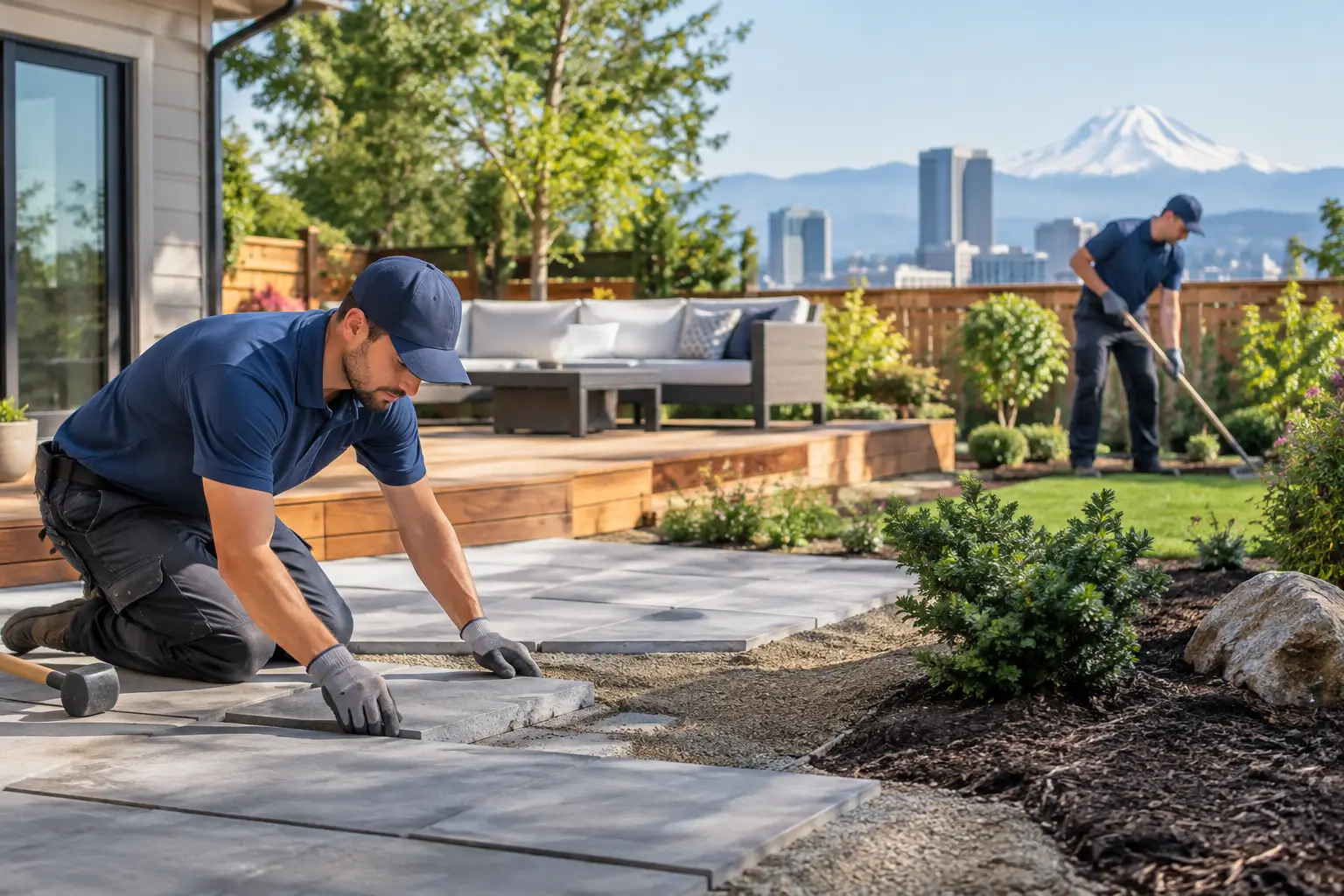
A successful yard renovation in the Portland area starts below the surface. Rain, clay soils, mature trees, slope, and older drainage systems can all affect what is possible and what will last. This Portland backyard renovation guide helps homeowners plan a space that looks finished, works for daily life, and is built to handle Oregon weather.
Start With How You Want to Use the Yard
Before selecting pavers, plants, or a pergola style, decide what the renovated backyard needs to do. Many homeowners have a lawn that is too wet to use for much of the year, a narrow side yard with poor access, or an aging patio that no longer fits how they entertain. The best design solves those problems first.
Think about the moments you want the space to support. That may mean a larger patio for family dinners, a level play area, a private place for a fire feature, safer stairs between the house and lower yard, or walkways that keep people out of muddy planting beds. A backyard can do more than one job, but every feature needs enough room to function comfortably.
A useful early exercise is to identify your priorities in order. If drainage and retaining work are necessary, they should take precedence over decorative upgrades. If outdoor dining is the main goal, patio size, access from the home, shade, and lighting should shape the layout. Clear priorities help prevent a project from becoming a collection of disconnected additions.
Build the Portland Backyard From the Ground Up
Portland-area properties often need structural site work before the visible finish work begins. A beautiful patio will not perform well if water collects beneath it, and a retaining wall is only as dependable as its base, drainage, and backfill.
Address drainage before hardscape installation
Water management is one of the most valuable parts of a backyard renovation. Roof runoff, hillside flow, compacted soil, and low spots can leave patios slick, lawns saturated, and foundations exposed to unnecessary moisture. The right solution depends on the property. It may include regrading, catch basins, French drains, downspout extensions, swales, or a combination of these measures.
Drainage should be planned alongside the patio, wall, and walkway layout rather than treated as an afterthought. Finished surfaces need intentional slope away from structures, and subsurface systems need a reliable place to discharge. On many properties, this work requires excavation before any new pavers, concrete, sod, or planting can be installed.
Evaluate grades, walls, and access
Sloped backyards can create excellent opportunities for terraces, defined gathering areas, and better views. They also require careful planning. Retaining walls must be designed and built for the soil pressure, water conditions, and height involved. Larger or more complex walls may require engineering or permits, depending on the site and local requirements.
Access matters as well. A backyard that can only be reached through a narrow side gate may require different equipment, staging, and material handling than an open lot. Discussing access early leads to a more accurate scope, schedule, and quote.
Choose Materials for Durability and Maintenance
Material selection affects appearance, cost, maintenance, and how the space performs through wet winters and warm summers. There is no single best choice for every Portland backyard. The right material is the one that fits the intended use and is installed on a proper base.
Paver patios are a strong option for homeowners who want a refined, flexible surface with a wide range of colors, patterns, and border details. Individual units can be repaired more easily than a large continuous slab if settlement or future utility work becomes an issue. Quality base preparation, edge restraint, joint material, and drainage remain essential.
Concrete can provide a clean, durable patio or walkway with a more continuous appearance. Standard broom-finish concrete offers dependable traction, while stamped concrete can create a more decorative look. Concrete requires joints and careful placement to manage cracking. It can be an excellent choice for larger gathering areas, drive approaches, steps, and modern landscape designs.
Natural stone and masonry bring substantial character to patios, wall caps, steps, and outdoor kitchen areas. These materials generally involve more detailed installation and can carry a higher cost, but they suit homes where permanent, custom craftsmanship is the goal. For retaining walls, the selection should be based on structural needs as much as appearance.
Wood and composite structures also deserve consideration. A pergola can define an outdoor room and provide a framework for shade, lights, or privacy screening. Fencing can make a yard more secure and more usable, particularly on homes close to neighboring properties. Material choices should account for exposure, maintenance expectations, and the style of the house.
Plan Outdoor Living Areas That Feel Comfortable
A patio often becomes the center of the backyard, but size and circulation determine whether it feels useful. A small landing outside a door may work for a grill, yet it will feel crowded once chairs, a table, and foot traffic are added. Plan enough room for furniture and clear paths around it.
Consider where people enter the yard, where food is prepared, and where children or guests are likely to move. A direct connection from the kitchen may be ideal for dining. A separate lower terrace may make sense for a fire feature or quieter seating area. On a sloped property, steps and landings should feel intentional, with consistent riser heights and secure footing.
Privacy is another common concern in Portland neighborhoods. Fencing, layered planting, screens, and pergola panels can create separation without making the yard feel closed in. The best approach depends on sight lines, sun exposure, existing trees, and local fence height rules.
Use Planting and Irrigation to Finish the Space
Landscaping should support the hardscape rather than compete with it. Planting beds soften patios and walls, guide movement, and add seasonal color. They can also help define zones in an open backyard. Native and climate-adapted plants are often practical choices because they are suited to local conditions once established, though every plant still has site-specific needs for sun, soil, and water.
Do not overlook irrigation. New sod, trees, shrubs, and planting beds need consistent water while they establish. A properly designed irrigation system makes maintenance easier and helps protect the investment in the landscape. Drip irrigation works well for many planting beds, while lawn areas may require a different approach.
Preserve established trees whenever possible, but account for roots, canopy shade, and future growth. Excavation or grade changes too close to a mature tree can cause long-term damage. A contractor should review these conditions before finalizing wall locations, patio elevations, and planting plans.
Set a Realistic Scope and Budget
Backyard renovations are best approached as a coordinated project, even if the work will be completed in phases. The largest costs are often hidden in the early stages: demolition, excavation, drainage, base preparation, retaining work, and access challenges. Those elements are not the most visible parts of the finished yard, but they protect the performance of everything built above them.
When comparing quotes, look beyond the total number. A clear proposal should explain the work included, materials, site preparation, drainage provisions, and any assumptions that could affect cost. Ask how existing concrete, soil, roots, and utilities will be handled. If a proposal is vague about base depth, wall drainage, or disposal, it may not reflect the full scope required for a lasting installation.
It can make sense to phase a project when budget is limited. For example, complete grading, drainage, and a main patio first, then add planting, lighting, or a pergola later. The key is planning the first phase so future work does not require tearing out finished areas.
Work With One Team From Site Work to Final Details
A backyard renovation often crosses several trades: excavation, drainage, concrete, masonry, fencing, irrigation, and landscaping. Coordinating those pieces through one experienced contractor reduces handoffs and helps keep the project aligned with the original plan.
Four Seasons Landscape & Construction works with Portland metro homeowners to manage these connected elements from the initial site review through final installation. The process should begin with an honest conversation about the property, priorities, budget, and timeline, followed by a clear scope of work and communication throughout construction.
The right backyard renovation is not simply the one with the most features. It is the one that drains properly, fits the way your household lives, and gives you a durable outdoor space you will want to use season after season. Start with a thorough site evaluation, then build each decision around a solid foundation.