

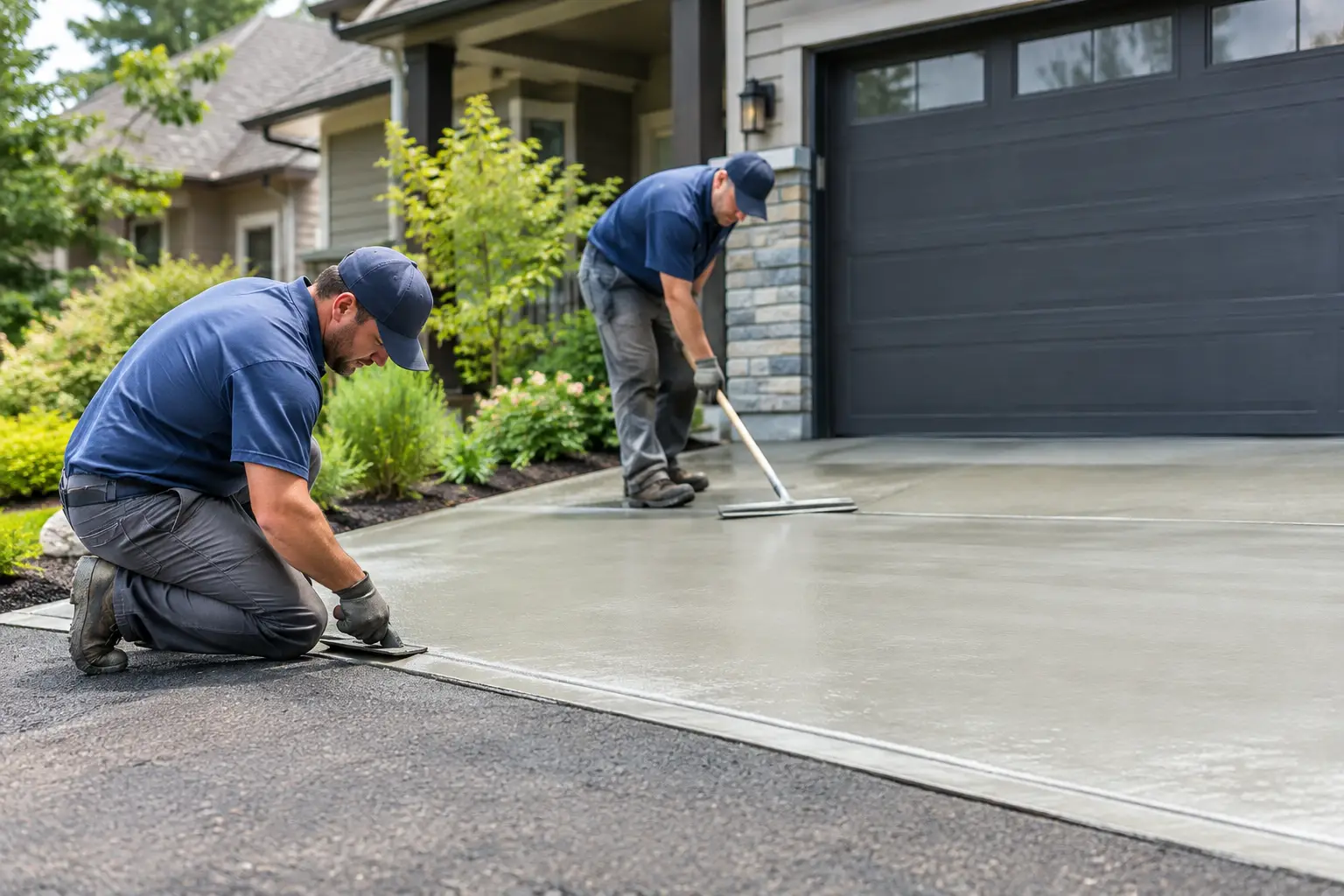
A cracked, sunken, or poorly sloped driveway apron can make an otherwise well-kept property look unfinished. More importantly, it can direct rainwater toward the driveway, sidewalk, or foundation. Driveway apron replacement restores the transition between the street and your private driveway with sound grading, durable materials, and a finished appearance that fits the home.
For Portland-area homeowners, this is rarely just a concrete repair. Our wet seasons, mature street trees, aging driveways, and local right-of-way requirements can all affect the scope. A quality replacement begins with understanding what failed, where water needs to go, and which portion of the work falls under city or county rules.
What Is a Driveway Apron?
The driveway apron is the section where a residential driveway meets the curb, street, or public sidewalk area. Depending on the property and jurisdiction, it may be a short concrete panel between the curb and sidewalk, the section that crosses the sidewalk, or the flared entry at the edge of the street.
It takes more abuse than most parts of a driveway. Vehicle tires turn and brake in the same area, delivery trucks may cross it, and runoff often moves through it. When the apron settles, cracks, or separates from adjacent concrete, the problem can create trip hazards, pooling water, and a difficult transition for vehicles.
A driveway apron is also highly visible. Replacing it can improve curb appeal, but the best results come from treating it as part of the complete driveway and drainage system rather than an isolated slab.
Signs It Is Time for Driveway Apron Replacement
Small hairline cracks do not always mean replacement is necessary. Concrete naturally develops minor surface cracking over time, and a stable apron may only need monitoring or limited repair. Replacement becomes the better choice when the concrete has lost its structural integrity or no longer drains correctly.
Common signs include wide or growing cracks, broken slab edges, exposed aggregate, deep spalling, settlement near the curb, or a noticeable lip between the apron and driveway. Water that sits at the entry after a normal Portland rain is another concern. Standing water can speed up deterioration and may point to a grading issue below the concrete.
Tree roots deserve careful evaluation as well. Removing and replacing concrete without addressing root pressure can lead to the same problem again. In some cases, the practical solution involves adjusting the apron design, coordinating with a qualified arborist, or considering a different approach to the surrounding hardscape.
Why Proper Drainage Comes First
Concrete is durable, but it cannot correct poor site drainage on its own. If water is flowing from the street back toward the house, collecting at the sidewalk, or washing soil from driveway edges, a new apron should be installed only after the drainage path is understood.
A contractor should evaluate the slope of the existing driveway, the relationship between the curb and sidewalk, nearby downspouts, landscape grades, and any visible low spots. The goal is controlled drainage that moves water away from the home while maintaining a safe, usable entry from the street.
The correct solution depends on the site. Some projects need minor base correction and carefully established concrete slope. Others benefit from driveway regrading, a channel drain, catch basin work, or improvements to adjoining walkways and landscape areas. Adding drainage where it is needed costs more upfront, but it can prevent recurring concrete damage and much larger water-management issues later.
Permits and Right-of-Way Work in the Portland Area
The location of the apron matters. Many driveway aprons sit partly within the public right-of-way, which can mean permit requirements, approved construction details, inspections, or restrictions on curb modifications. Requirements vary by city, county, and neighborhood, so homeowners should not assume the same process applies everywhere.
In Portland and surrounding communities such as Tigard, Beaverton, Lake Oswego, Hillsboro, Sherwood, and Wilsonville, a project may require coordination with the local transportation or public works department. Sidewalk access, curb cuts, street parking, stormwater requirements, and traffic control can also affect the plan.
A professional site review helps clarify the boundary between private driveway work and public-area work before demolition begins. This avoids a common and expensive mistake: installing new concrete that does not meet local standards or must be removed to accommodate a permit requirement.
The Driveway Apron Replacement Process
A lasting apron depends much more on preparation than on the final finish of the concrete. The work should start with a clear plan for dimensions, elevation, drainage, joint placement, material thickness, and how the new apron will connect to existing surfaces.
Removing the Failed Concrete
The damaged apron is saw-cut or broken out with care to protect adjacent driveway panels, sidewalks, curbs, and landscaping. If the existing driveway is also settled or cracked near the entry, the scope may need to extend beyond the apron. Patching a failing edge next to unstable concrete often produces an uneven result.
Rebuilding the Base
After removal, the subgrade is evaluated for soft soil, voids, root disturbance, and poor compaction. A properly prepared, compacted aggregate base provides the support concrete needs. Skipping this step may save time on installation day, but it increases the chance of settlement and cracking after the project is complete.
Establishing Grade and Reinforcement
The formwork sets the final shape and slope of the apron. This is where craftsmanship matters: the entry needs to meet the street and driveway cleanly while moving water in the intended direction. Depending on the design and site conditions, reinforcement and control joints may be used to help manage concrete movement and reduce random cracking.
Placing and Finishing Concrete
Concrete is placed, consolidated, leveled, and finished to provide a durable surface with appropriate traction. A broom finish is often a practical choice for residential driveway entries because it offers a clean appearance and better grip in wet weather. Edges and joints should be finished neatly, especially where the apron connects to sidewalks, curbs, or existing concrete.
Fresh concrete then needs time to cure. Traffic should stay off the new surface for the period recommended by the installer. Rushing vehicles onto a new apron can damage edges or leave permanent marks before the material has developed sufficient strength.
Choosing the Right Material and Look
Standard gray concrete remains the most common choice for driveway aprons because it is durable, practical, and compatible with most residential driveways. It can be installed to blend with an existing slab or to create a clean reset at the street edge.
For homes with paver driveways, stonework, or a more detailed landscape design, the driveway entry can be planned as part of a broader hardscape project. Decorative borders, paver accents, or a carefully selected finish may improve the look of the property, but public right-of-way rules can limit material choices. Function, code compliance, and drainage should guide the design before decorative details are selected.
Matching older concrete exactly is not always possible. Age, weather exposure, and previous sealing can make neighboring slabs appear different even when similar materials are used. A reputable contractor sets that expectation early and focuses on clean lines, sound construction, and a result that looks intentional.
When to Replace More Than the Apron
Sometimes a new apron reveals problems in the driveway behind it. If the driveway has widespread cracking, poor drainage, major settlement, or failing edges, replacing only the entry may be a short-term fix. The same is true when a narrow driveway needs widening, a walk needs to be reconfigured, or landscape drainage is contributing to the failure.
Combining related work can be more efficient than completing each piece separately. Excavation, base preparation, drainage improvements, concrete replacement, and landscape restoration can be coordinated under one plan. Four Seasons Landscape & Construction approaches these projects with the full site in mind, helping homeowners avoid gaps between concrete, drainage, and exterior improvement work.
Plan for a Stronger Entry, Not Just New Concrete
A driveway apron should make arriving home easier, safer, and cleaner in every season. Before scheduling the work, take note of where water collects, how vehicles use the entry, whether roots or soil movement are involved, and where public right-of-way rules begin. A careful assessment gives you the best chance of replacing the apron once and enjoying a durable, well-finished driveway entry for years to come.