

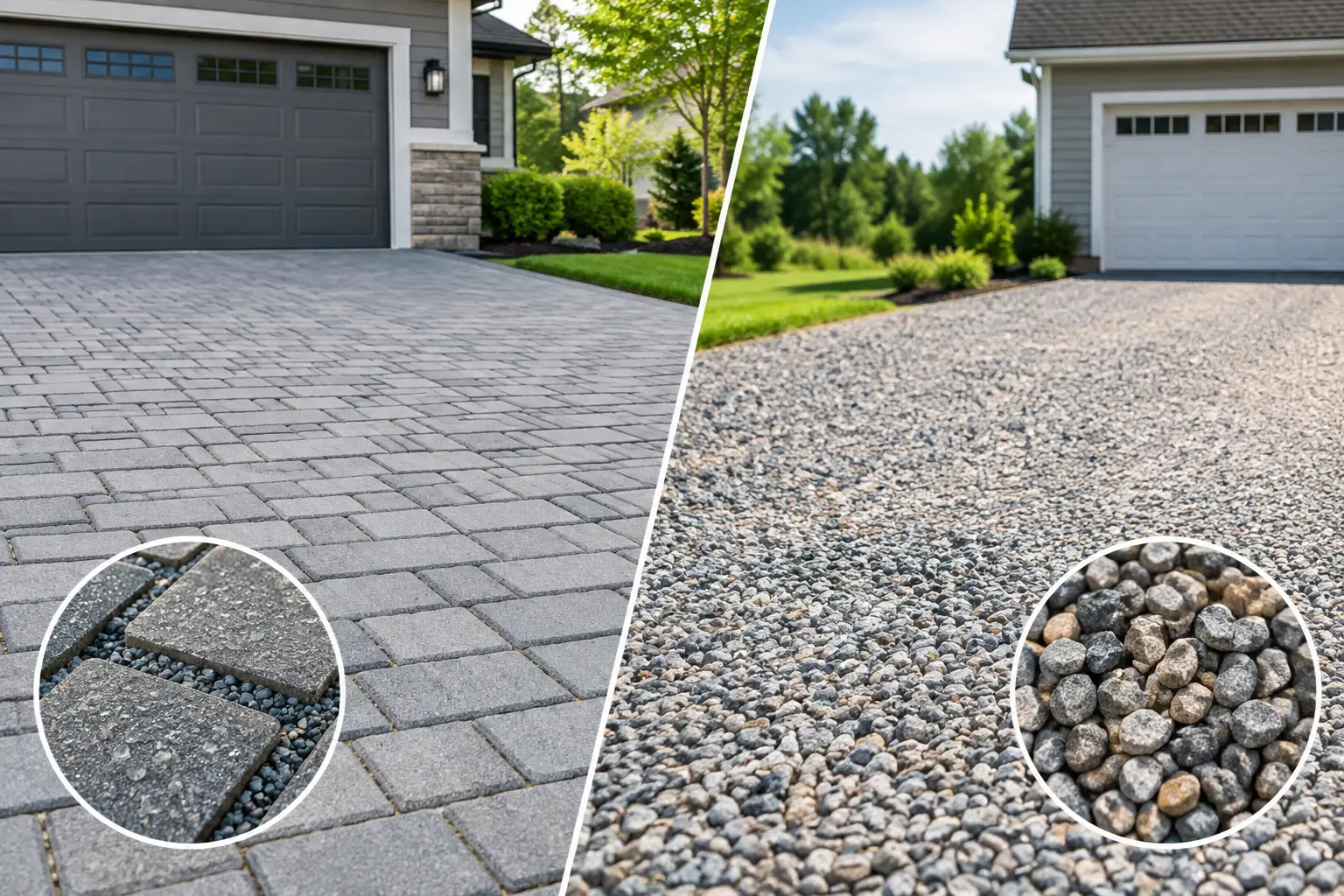
A wet Portland winter can quickly reveal whether a driveway, path, or patio surface was built for the site. Standing water, muddy shoes, shifting stone, and tire ruts are more than appearance issues. They can affect how safely and comfortably you use your yard. When comparing permeable pavers versus gravel, the better choice depends on the area’s use, the soil below it, drainage needs, and the finish you expect from the completed space.
Both materials can allow water to move through the surface rather than sheet-flowing across it. But they do not perform the same way, and they require different installation methods to hold up over time. For a lasting result, the decision should be based on more than the initial material price.
Permeable Pavers Versus Gravel: The Practical Difference
Permeable pavers create a firm, finished surface with small joints between units. Water enters those joints and moves into a specially prepared, open-graded aggregate base below. That base stores and directs water while supporting the pavers above it. The system needs proper excavation, base depth, compaction, edge restraint, and grading to work as intended.
Gravel is a loose aggregate surface. Water can pass through it readily, provided the underlying soil and base are prepared correctly. It is typically faster to install and often costs less at the outset, especially for large, low-traffic areas. The trade-off is that gravel moves. Foot traffic, vehicle tires, rain, and routine maintenance gradually displace the stone.
For homeowners who want a polished hardscape surface that works well for daily use, permeable pavers are often the stronger long-term choice. Gravel can be an excellent fit where a more natural, informal look is desired and occasional maintenance is acceptable.
Where Permeable Pavers Make Sense
Permeable pavers are well suited to driveways, walkways, patios, and side-yard access routes where stable footing and a clean visual finish matter. They are particularly useful on properties where managing runoff is a priority or where an existing paved surface sends water toward the house, garage, or neighboring areas.
A paver surface is easier to walk on with strollers, wheelbarrows, patio furniture, and rolling trash bins. It also gives outdoor living areas a more intentional look. Pavers come in a range of colors, patterns, and sizes, allowing the surface to coordinate with retaining walls, garden beds, masonry features, and the home itself.
For driveways, the structural base is the key factor. A pedestrian walkway and a vehicle driveway cannot be built to the same depth. The excavation and aggregate section must be designed for the expected load, site drainage, and soil conditions. In the Portland metro area, where many properties have clay-heavy soils and long wet seasons, this preparation is not a place to cut corners.
Permeable pavers also offer a repair advantage over poured concrete. If a utility line needs access or a small area settles, individual pavers can be lifted, the base corrected, and the surface reset. The repair can blend into the original installation more easily than a concrete patch.
Maintenance for permeable pavers
Permeable pavers are not maintenance-free, but their upkeep is generally straightforward. The joints need to remain open enough for water to enter, so periodic sweeping and occasional joint material replenishment may be needed. Leaves, soil, and fine debris should not be allowed to build up across the surface.
A properly built system will still need inspection over the years. If water begins ponding on top rather than draining through, the joints may need cleaning or the surrounding drainage may need attention. Keeping adjacent landscape soil and mulch from washing onto the paving helps protect the system’s performance.
When Gravel Is the Better Choice
Gravel can be the practical choice for long driveways, utility access areas, informal paths, garden routes, and spaces where a softer, more rural appearance fits the property. It is also useful when a homeowner wants to improve a muddy area without committing to a full hardscape installation.
For a large driveway, gravel can lower the initial project investment compared with pavers. It is flexible, drains well at the surface, and can be refreshed as needed. The look can range from compacted crushed rock to decorative gravel, depending on how the area will be used.
The limitations become more noticeable in high-use residential spaces. Loose gravel can migrate into lawns and planting beds, collect near entry doors, and make snow or leaf cleanup more difficult. On slopes, it can wash or creep downhill. Under vehicles, it may develop ruts and low spots unless the base, edging, and drainage are properly addressed.
Gravel is usually less comfortable for a patio or dining area. Chairs can sink or wobble, and small stones tend to travel indoors. It can still work around fire pits, storage sheds, garden areas, or casual sitting spaces, but it is rarely the first recommendation for a refined outdoor entertaining area.
Building a gravel surface that lasts
A good gravel installation is more than spreading rock over bare soil. The site should be graded so water moves away from structures and does not become trapped beneath the surface. Excavation, a compacted base, appropriate aggregate size, and durable edging all help the surface perform better.
In some locations, a separation fabric may be used between native soil and the aggregate base to reduce mixing. The right approach depends on soil conditions and the design of the area. A driveway that receives daily vehicle traffic needs a more substantial base than a garden path, even if both use the same visible gravel at the top.
Drainage Is More Than a Surface Material Decision
Neither pavers nor gravel can correct a broader drainage problem by themselves. If roof runoff, hillside water, or poorly graded landscape areas are sending significant water toward a driveway or patio, the project may also need drainage improvements. Catch basins, trench drains, downspout connections, swales, or regrading can be part of the solution.
This is especially relevant in established Portland-area neighborhoods, where additions, old concrete pads, mature landscaping, and neighboring grades can affect how water moves across a property. A contractor should look at the complete site, not just the square footage of the new surface.
Permeable paving can help reduce surface runoff, but it needs a suitable outlet or storage strategy when native soils drain slowly. Gravel can appear to solve drainage because water disappears through the stone, yet water may still collect below if the underlying grade is wrong. The goal is controlled water movement, not simply hiding water beneath a surface.
Cost, Durability, and Long-Term Value
Gravel generally has the lower initial cost because material and installation are simpler. It can be a sensible investment when budget is limited, the area is large, or the project is intended as a functional improvement rather than a finished outdoor feature. Over time, however, gravel often needs regrading, replenishment, and edge cleanup.
Permeable pavers require a larger upfront investment. The project includes more detailed excavation, base preparation, installation labor, edge restraints, and finish work. In return, homeowners receive a stable, durable surface that can enhance curb appeal and create usable outdoor space.
The value calculation should include how you plan to use the area. A front driveway is visible every day and must handle vehicle traffic. A patio needs to support furniture and foot traffic comfortably. A side-yard access path may only need dependable drainage and a clean walking surface. Choosing the least expensive material is not always the same as choosing the best value for the property.
Choosing the Right Surface for Your Home
Choose permeable pavers when you want a finished, stable surface for a driveway, patio, or main walkway; when curb appeal matters; or when you want drainage performance integrated into a complete hardscape design. They are a strong fit for homeowners planning a long-term improvement rather than a temporary fix.
Choose gravel when the area is informal, expansive, lower-traffic, or utility-focused, and when periodic maintenance fits your expectations. Gravel can be attractive and highly functional, but it needs thoughtful base preparation and containment to avoid becoming a recurring cleanup project.
For many properties, the best answer is a combination. A paver patio or front walk can provide the finished living space, while gravel handles a side-yard route, shed pad, or low-visibility utility area. Looking at the full yard plan often produces a better result than forcing one material into every location.
A site consultation should begin with how you use the space, where water currently goes, and what you want the completed property to feel like. Four Seasons Landscape & Construction can evaluate those details and build a surface that supports both the appearance and practical demands of your home for years to come.