

A muddy channel below a downspout, soil collecting on a patio, or a bare slope after a Portland rainstorm is more than a landscaping issue. It is a sign that water is moving across your property with enough force to carry soil with it. The best erosion control methods address that water at its source, then stabilize the ground with the right combination of drainage, grading, plants, and structural construction.
For homeowners in Tigard, Portland, Lake Oswego, Beaverton, and surrounding communities, erosion control often needs to account for long wet seasons, sloped lots, clay-heavy soils, and mature landscaping. The right solution depends on where the water starts, where it needs to go, and whether the affected area is a planting bed, lawn, driveway edge, patio, or hillside.
Start by Finding the Cause of Soil Loss
Erosion is not one problem with one fix. In many yards, water from a roof, uphill neighbor, compacted lawn, or poorly pitched hardscape concentrates in one low area. Once runoff follows the same path repeatedly, it cuts into the soil, exposes roots, and can undermine fences, walkways, and retaining structures.
A site review should look beyond the visible washout. The key questions are where water enters the area, how quickly it moves, whether the soil stays saturated, and what lies below the slope or drainage path. A small rill in a side yard may be corrected with downspout extensions and regrading. A steep backyard slope above a patio may require drainage improvements, reinforced planting, and a retaining wall designed for the site.
This assessment matters because surface repairs alone rarely last. Adding topsoil and mulch over an active runoff path may make the yard look better for a few weeks, but the next heavy storm can wash the material away again.
Best Erosion Control Methods for Residential Properties
The most effective projects combine methods rather than relying on a single material. Water must be collected and directed safely, while the soil needs enough cover or structure to stay in place.
Drainage improvements and proper grading
Controlling runoff is usually the first priority. Downspouts should discharge away from the foundation and should not empty directly onto an unprotected slope. Depending on the layout of the property, a contractor may install solid drain pipe, catch basins, channel drains, French drains, or a carefully planned dry creek feature to collect and convey water.
Grading is equally important. Soil should slope away from the house, patios should drain as designed, and low spots should not trap water near structures. On a sloped property, grading can slow runoff by creating gentler transitions and directing water toward an appropriate collection point.
Drainage work has to be planned carefully. Sending more water toward a property line, a neighboring yard, or a foundation creates a new problem instead of solving the existing one. A durable plan considers the entire path of the water from collection to discharge.
Deep-rooted plants, sod, and ground cover
Plant roots are one of the simplest and most natural ways to hold soil together. Well-established turf, native shrubs, spreading ground covers, and deep-rooted ornamental grasses help reduce the impact of rainfall while reinforcing the upper layer of soil.
Planting works especially well on mild to moderate slopes where runoff has already been managed. The soil should be prepared, covered with mulch or erosion-control blanket where needed, and watered consistently until plants are established. Newly planted material cannot stabilize a slope immediately, so temporary protection is often necessary through the first rainy season.
Sod can provide fast coverage for lawn areas, but it is not the answer for every hill. On a steep or actively eroding slope, sod may slide or fail to root before heavy rain arrives. In those conditions, a combination of stabilized grading, erosion-control fabric, shrubs, and drainage is usually more reliable.
Erosion-control blankets and mulch
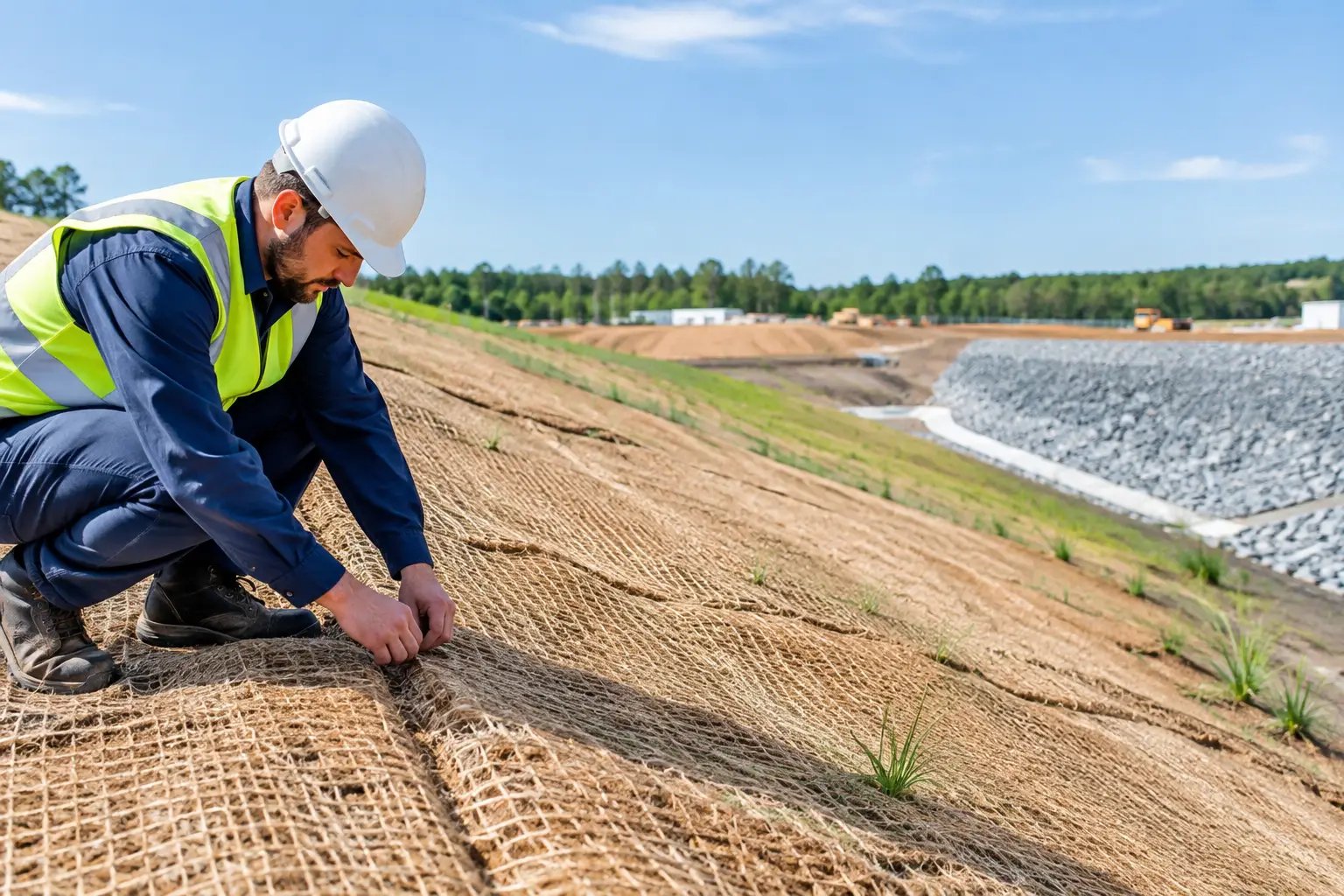
Biodegradable erosion-control blankets, coir logs, and properly applied mulch protect bare soil while vegetation takes root. These materials reduce rain impact, help retain moisture, and prevent loose soil from moving downhill during construction or after new planting.
This option is practical for freshly graded slopes, planting areas, and locations where a permanent structural wall is not necessary. It is not a substitute for drainage correction. If water is flowing in a concentrated stream across the slope, blankets can be displaced unless that runoff is intercepted first.
Mulch should be selected and installed with the slope in mind. Fine, lightweight bark can move easily during storms. Heavier mulch, edging, terracing, or planted pockets may be needed to keep the finished landscape neat and functional.
Retaining walls and terraced slopes
When a slope is too steep to hold soil safely or limits how the yard can be used, a retaining wall can provide a long-term solution. Retaining walls create level spaces for patios, lawns, garden beds, walkways, and play areas while keeping soil where it belongs.
A quality retaining wall is much more than stacked block or stone. Its performance depends on excavation depth, compacted base material, proper wall batter, drainage aggregate, drain pipe, and a safe outlet for water behind the wall. Without that drainage system, hydrostatic pressure can cause leaning, cracking, or failure over time.
Terracing is often a better choice than one tall wall. Several shorter walls can break a long slope into usable sections, reduce runoff speed, and create a more natural transition through the yard. The right approach depends on grade changes, access, wall height, soil conditions, and the intended use of the space.
Rock-lined channels and dry creek beds
A rock-lined swale or dry creek bed can be an attractive way to handle intermittent runoff. It is designed to slow moving water and protect the soil beneath it, especially where a natural drainage path crosses a yard. Larger stone is typically used in areas with stronger flow, while smaller rock and planting can soften the edges.
The trade-off is that a dry creek bed needs real drainage planning. It cannot simply be placed where water happens to collect. The channel must have a consistent grade, adequate width, stable edges, and an appropriate discharge location. Otherwise, water may bypass the rock, scour around it, or pool at the bottom.
Permeable hardscapes and stabilized outdoor areas
Patios, walkways, and driveways can contribute to erosion when surface water is directed toward bare soil. Properly installed pavers, permeable paving systems, concrete drainage details, and edge restraints can help manage runoff while making outdoor areas more usable.
For example, a patio at the bottom of a slope may need a channel drain along the uphill edge to prevent sediment and water from washing across the surface. A walkway may require compacted base material, stable borders, and grading that prevents water from running beneath it. Hardscape and drainage should be planned together, especially on properties with grade changes.
Choosing the Right Solution for Your Yard
The best method depends on the severity and location of the erosion. A small garden-bed washout may only need redirected downspouts, mulch, and planting. A failing slope near a fence, foundation, or patio deserves a more detailed plan that may include excavation, drain pipe, wall construction, and landscape restoration.
Timing also matters in the Portland area. Earthwork and planting are often easier to complete during drier periods, but erosion repairs should not be delayed when active runoff is threatening a structure or removing significant soil. Temporary measures can protect the site until permanent construction is scheduled.
Homeowners should also consider long-term maintenance. Drain inlets need occasional cleaning, gutters need to stay clear, and planted slopes need care while roots establish. A well-built erosion-control system should make maintenance manageable rather than adding a recurring repair project to the property.
When erosion involves a steep grade, retaining wall, persistent drainage issue, or damage near a home, professional installation is worth the investment. Four Seasons Landscape & Construction can evaluate how grading, drainage, retaining walls, hardscape, and planting work together, then build a solution that protects the property while improving how the yard looks and functions for years to come.