

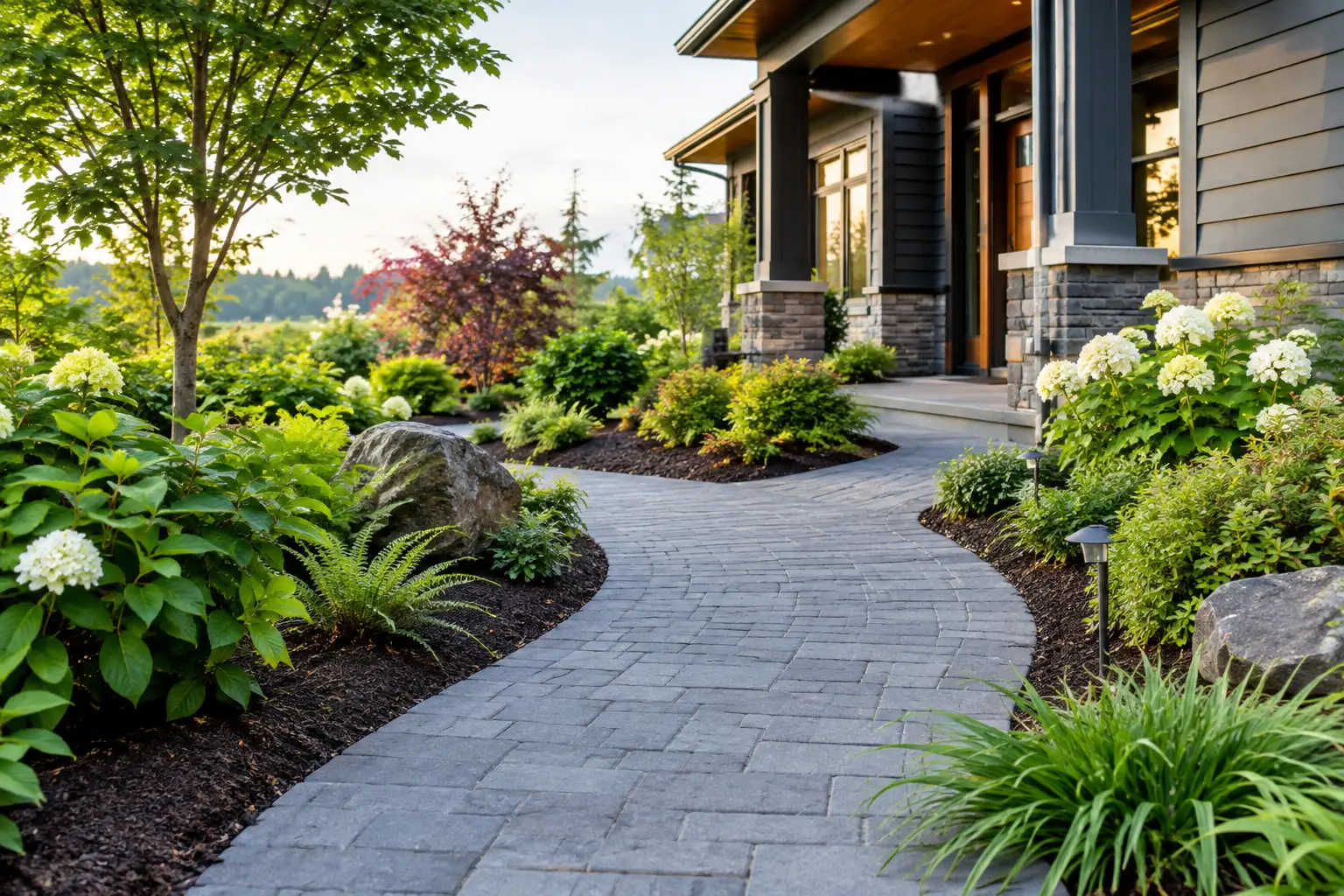
A front walkway should do more than connect the sidewalk to your door. It should make arriving home easier in the rain, guide guests safely, and give the landscape a finished, intentional look. The best walkway design ideas balance those everyday needs with materials and construction details that hold up to Portland-area weather.
For many homeowners, a worn concrete strip, uneven pavers, or muddy route through the yard is also a sign that the property needs more than a cosmetic update. A professionally planned walkway can address drainage, grading, planting beds, lighting, gates, steps, and patio connections as part of one coordinated exterior project.
Start With How the Walkway Will Be Used
A walkway should follow the way people actually move through the property. The front path may need to handle daily arrivals, deliveries, guests, and access from the driveway. A side-yard path may need to make garbage bins, utility equipment, or a backyard gate easier to reach. A garden path can be narrower and more relaxed, while a route from a patio to a detached structure may need a firmer, wider surface.
Width makes a real difference. A narrow path can feel cramped, particularly when two people pass each other or someone is carrying groceries. A primary front walkway is often most comfortable at four feet wide or more. Secondary routes can be smaller when space is limited, but they still need enough room for safe footing and routine maintenance.
The path should also respect the property’s existing layout. A direct line from driveway to entry is practical, but it does not always have to be a straight line. A gentle curve can soften a large front yard, work around mature trees, or create room for planting beds. The key is avoiding curves that feel forced or inconvenient. If visitors naturally cut across the lawn to shorten the route, the path likely needs a different layout.
Walkway Design Ideas That Fit the Home
The material should complement the architecture, surrounding hardscape, and level of maintenance the homeowner expects. It should also be chosen with installation requirements in mind. Appearance matters, but a durable base, stable edges, and proper water management are what keep a walkway looking good after years of use.
Concrete for clean, dependable access
Concrete is a practical choice for front entries, side yards, and modern homes where a clean, simple surface fits the design. A standard broom finish provides traction, while decorative options such as exposed aggregate, colored concrete, or stamped concrete can add more character.
Concrete works well when homeowners want a continuous, low-maintenance surface. However, it needs correctly placed control joints, sound subgrade preparation, and appropriate slopes to reduce the risk of cracking and standing water. Decorative finishes can elevate curb appeal, but they should still suit the home rather than compete with it.
Pavers for flexible design and repairability
Concrete pavers offer a wide range of colors, patterns, and border options. They can create a formal entry path, connect a paver patio to the house, or define a more traditional landscape design. A contrasting border is a simple way to make the walkway stand out without making the entire surface overly busy.
Pavers are especially useful on properties where a future repair may be needed, since individual units can be lifted and reset. That benefit depends on proper installation. Without excavation, compacted aggregate base, edge restraints, and correctly graded bedding material, even quality pavers can shift or settle over time.
Natural stone for a more tailored look
Flagstone, bluestone, and other natural stone materials bring variation in color and texture that manufactured materials cannot exactly duplicate. Stone can work beautifully for garden walks, homes with masonry features, and outdoor spaces designed around a more organic Northwest feel.
The trade-off is that natural stone requires careful selection and placement. Irregular pieces need to be set so walking surfaces remain stable and transitions do not create trip hazards. Some stone finishes can also become slick when wet, so the material’s texture and intended location should be considered before installation.
Gravel and permeable paths for informal areas
Gravel can be a cost-conscious choice for informal garden paths, large side yards, or low-traffic areas. It drains well when built over the right base and can create a softer visual transition between lawn, planting beds, and wooded portions of a property.
It is not the right answer for every entry. Loose gravel can migrate into lawns and beds, become difficult for wheeled equipment, and feel less stable for guests. Defined edging and periodic maintenance are necessary to keep the path tidy.
Plan Drainage Before Selecting Finishes
In the Portland metro area, drainage should be part of the walkway conversation from the beginning. Water that runs toward the house, collects at the bottom of steps, or flows across a path can create slippery conditions and contribute to larger site problems. A beautiful walkway that sends water to the wrong place is not a successful installation.
The finished surface needs a planned slope that moves water away from structures while remaining comfortable to walk on. Depending on the property, the project may also call for a trench drain, catch basin, French drain, downspout connection, swale, or regrading around the walkway. These decisions are best made before pavers, concrete, or stone are installed.
Base preparation is equally important. Portland-area soils can hold moisture, and poorly prepared ground can settle beneath a hardscape surface. Excavation depth, compacted base material, geotextile where appropriate, and edge support should be determined by the site conditions and chosen material. This is the construction work homeowners rarely see after completion, but it has a major effect on how the walkway performs.
Use Transitions to Make the Property Feel Connected
A walkway should not look like an isolated strip added to the yard. It can tie together the driveway, front porch, patio, retaining wall, gate, or landscape beds. Repeating a paver color from the patio, using a stone cap that matches a retaining wall, or extending a concrete finish from the entry steps can make separate improvements feel like one complete project.
Elevation changes deserve special attention. One or two poorly defined steps can be more hazardous than a longer set of clearly planned stairs. Where the grade changes, the walkway may need masonry steps, concrete steps, retaining walls, handrails, or landings. These elements should be sized and placed for a natural walking rhythm, not added as an afterthought once the path is already built.
At the front entry, consider where the walkway meets the porch. A generous landing gives guests room to stand without blocking the door swing. It also creates a better transition for seasonal planters, lighting, and house numbers. On a side or backyard route, a solid connection to a gate or patio prevents the common problem of stepping off a finished path into mud.
Add Lighting and Landscape Details With Purpose
Walkway lighting is most useful when it improves visibility without making the yard feel overlit. Low path lights can define the route, while step lights and carefully positioned downlighting can make changes in elevation easier to see. The goal is safe movement from the driveway or street to the door, especially during dark, wet winter evenings.
Planting should frame the walkway, not crowd it. Shrubs and perennials that spill too far into the path can reduce usable width and hold moisture against hardscape edges. Choosing plants with mature size in mind keeps the entry welcoming and reduces future pruning. Mulch beds, clean edging, and appropriately scaled plants often make a new walkway look established much sooner.
For homeowners considering a larger exterior renovation, this is also the time to coordinate irrigation, drainage, fencing, or a front-yard retaining wall. Completing underground work before installing the finished walking surface avoids unnecessary removal and patching later.
Build for the Property You Have
The right walkway is not always the most elaborate one. A compact home may benefit from a simple concrete path with well-designed planting beds. A larger property with a paver driveway and stone veneer may call for a wider paver entry with masonry steps and integrated lighting. The best choice depends on the home’s style, the grade of the yard, drainage conditions, daily use, and the surrounding improvements.
Four Seasons Landscape & Construction helps Portland-area homeowners plan and build walkways as part of complete landscape and hardscape projects. From excavation and drainage to concrete, pavers, masonry, and finishing details, a coordinated approach helps prevent gaps between trades and keeps the work moving from initial site review through completion.
A well-built walkway is a small route with a large daily impact. If your current path is uneven, poorly drained, or disconnected from the rest of the yard, start by evaluating how you use the space and what needs to happen below the surface before choosing the finish on top.