

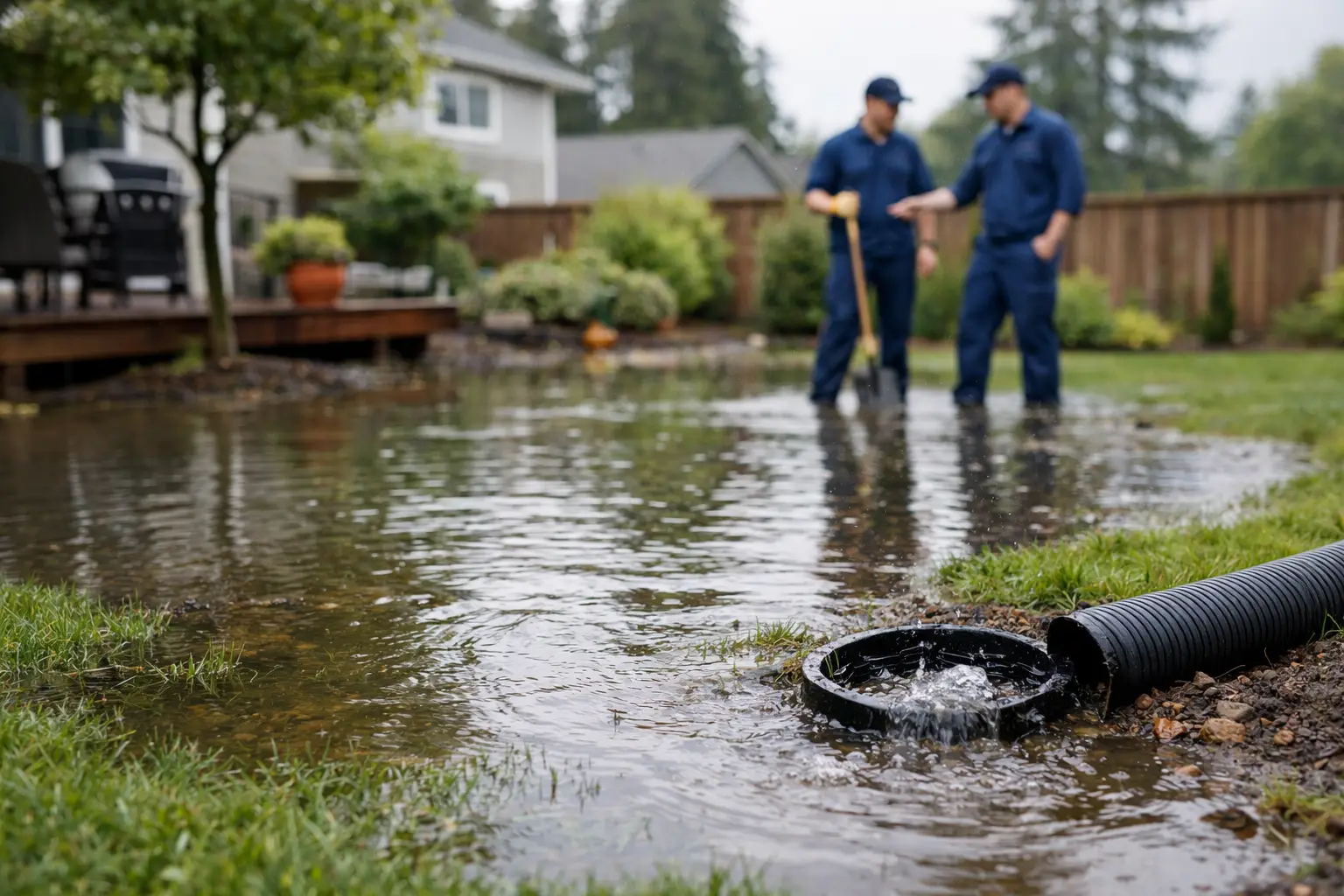
A yard should not become a shallow pond every time a Portland rainstorm moves through. If you are asking, “why is my yard flooding,” the answer is usually not simply that it rains often here. Rain exposes a grading, soil, drainage, or runoff problem that has been building over time. The right repair starts with identifying where the water begins, where it collects, and where it can safely go.
Standing water can damage lawns, soften planting beds, undermine patios and walkways, and place unnecessary moisture against your foundation. A practical drainage plan protects the structure first, then improves how the entire outdoor space performs through the wet season.
Why Is My Yard Flooding After It Rains?
Flooding happens when water reaches your yard faster than the soil and drainage system can move it away. In the Portland metro area, long periods of steady rain can saturate even well-maintained lawns. Clay-heavy soils common in many neighborhoods make the issue worse because they hold water rather than allowing it to soak down quickly.
The visible puddle is not always the source of the problem. Water may be running from a roof, driveway, neighboring property, raised landscape bed, or slope before it reaches the low point in your yard. That is why a lasting solution requires looking at the full site, not just adding gravel or planting water-tolerant plants around the wet spot.
Poor Yard Grading
Improper grading is one of the most common reasons residential yards flood. Ideally, the finished ground slopes away from the home so surface water moves toward a safe drainage area. When a lawn, patio edge, or planting bed slopes toward the house, water can settle near the foundation or enter a crawl space or basement.
Grading problems are not always obvious. A yard may look generally level but still have subtle low areas that collect runoff. They can also develop after years of soil settling, repeated landscaping changes, tree-root growth, or the installation of a patio, retaining wall, or fence without a coordinated drainage plan.
Correcting grade may involve reshaping the landscape, adding soil in selected areas, or rebuilding portions of hardscape so water follows a planned path. The goal is not to force water onto a neighbor’s property or into a public sidewalk. It is to direct it to an appropriate approved outlet or drainage feature on your own site.
Downspouts Discharging Too Close to the House
Your roof collects a surprising amount of water during a typical Oregon storm. If downspouts release that water directly beside the foundation, it can saturate the adjacent soil and create a muddy, flooded perimeter. A downspout that ends near a walkway can also send water across paving and into a low section of the yard.
Extensions can help in some situations, but they are not always a finished solution. A long surface extension can be inconvenient, easily damaged, and still leave water pooling at the discharge point. Buried downspout drainage is often a cleaner option when it is properly sloped, connected, and discharged to a suitable location. It should be planned alongside the rest of the yard drainage so one improvement does not shift the problem elsewhere.
Compacted or Clay-Heavy Soil
A healthy lawn can absorb rainfall, but compacted soil loses much of that ability. Construction traffic, frequent foot traffic, heavy equipment, and years of settling can compress the ground. Water then remains near the surface instead of infiltrating through the soil profile.
Clay soil creates a similar challenge. It can become slick and dense during wet months, then harden during dry weather. Aeration and soil amendments may improve a lawn with mild drainage issues, but they will not resolve water that is flowing downhill from another area or collecting in a true basin. Where the water is persistent, regrading and drainage installation are usually more reliable than treating the lawn alone.
Blocked, Broken, or Undersized Drainage
Existing drainage systems need occasional inspection. Catch basins can fill with leaves and sediment. Underground drain lines can become clogged, crushed, disconnected, or invaded by roots. A system that worked when the home was built may no longer have enough capacity after a driveway expansion, patio installation, or landscaping renovation added more hard surfaces.
Look for slow-draining catch basins, water backing up from a drain, sinkholes near a buried line, or puddles that form in the same location despite having visible drains nearby. These are signs the system may need cleaning, repair, or redesign rather than a simple surface fix.
Runoff From Slopes, Driveways, and Neighboring Areas
Water follows gravity, and homes on or below a slope need careful site planning. A hillside can deliver runoff to a lower yard long after rain has stopped. Driveways are another frequent source because paved surfaces shed water quickly and can channel it directly toward a garage, walkway, or lawn.
Retaining walls can also affect water movement. A well-built retaining wall needs drainage behind it so hydrostatic pressure does not build up in the soil. Without proper gravel, drain rock, outlet piping, and grading at the top of the wall, water may seep through the wall, erode nearby soil, or emerge at its base.
How to Find the Source of Yard Flooding
Start observing your property during a normal rain, not only after the storm has passed. Watch downspout outlets, driveway edges, patio joints, and the areas where your yard meets neighboring lots. Note whether water is flowing across the surface, bubbling up from the ground, or collecting in one low area.
It also helps to check after several dry days. Soft soil, mossy patches, persistent mud, and unusually green turf can point to a buried leak or a drainage line that is constantly holding water. If flooding is close to your home, take photos and note how high the water gets. This information makes it easier to diagnose the issue and determine whether the foundation needs immediate protection.
Do not assume every wet area needs a French drain. A French drain can be effective when groundwater or subsurface water needs to be intercepted, but it must be installed at the right depth and with a proper outlet. For surface runoff, a catch basin, trench drain, swale, regrading, or buried downspout system may be the better answer. In many yards, the best results come from combining these elements into one coordinated plan.
Drainage Solutions That Fit the Problem
A professional drainage assessment considers soil conditions, property elevations, roof runoff, existing utilities, hardscape, and the final use of the space. The repair should support the yard you want to have, whether that includes a new paver patio, lawn, garden beds, retaining walls, or an outdoor living area.
For a low lawn area, regrading may be enough if there is a clear place for water to move. Where runoff crosses a driveway or enters a garage approach, a trench drain can capture it before it reaches the structure. Catch basins work well at targeted collection points, while solid drain pipe can carry water away underground. Perforated pipe and drain rock are commonly used to intercept water in the soil around retaining walls or persistently wet areas.
Sometimes the solution requires excavation and reconstruction rather than adding one drain line. For example, an older patio that slopes toward the home may need to be removed and rebuilt with correct pitch, drainage access, and a stable base. This is the kind of project where landscape construction, concrete, masonry, and drainage work need to be coordinated from the start.
Protecting Your Foundation and Hardscape
Water near the foundation deserves prompt attention. Watch for water that remains against exterior walls, damp crawl spaces, musty odors, peeling paint near lower walls, or soil erosion around the home. These conditions do not automatically mean major structural damage has occurred, but waiting through multiple wet seasons can make repairs more complicated.
The same applies to patios, walkways, and retaining walls. Standing water can wash out joint sand, shift pavers, create slippery surfaces, and weaken the base below concrete or stone. Addressing drainage before installing new hardscape is usually less expensive and more durable than trying to correct water problems after the finished surface begins to settle.
When to Call a Drainage Contractor
A homeowner can clear leaves from gutters, inspect downspout outlets, and improve minor surface drainage. Professional help is appropriate when water reaches the foundation, regularly floods a lawn or patio, crosses a driveway, comes from a slope, or persists for days after rain. It is also wise to bring in an experienced contractor before starting a major landscape or hardscape project on a wet property.
Four Seasons Landscape & Construction evaluates drainage as part of the whole outdoor environment. That means looking beyond the puddle to plan grading, excavation, drainage, retaining work, and finished landscaping that function together. Clear site planning helps protect your investment and creates an outdoor space you can use through more of the year.
A dry, usable yard is not created by hiding water. It comes from giving every source of runoff a deliberate path, protecting the home along the way, and building the landscape around the realities of your property.