

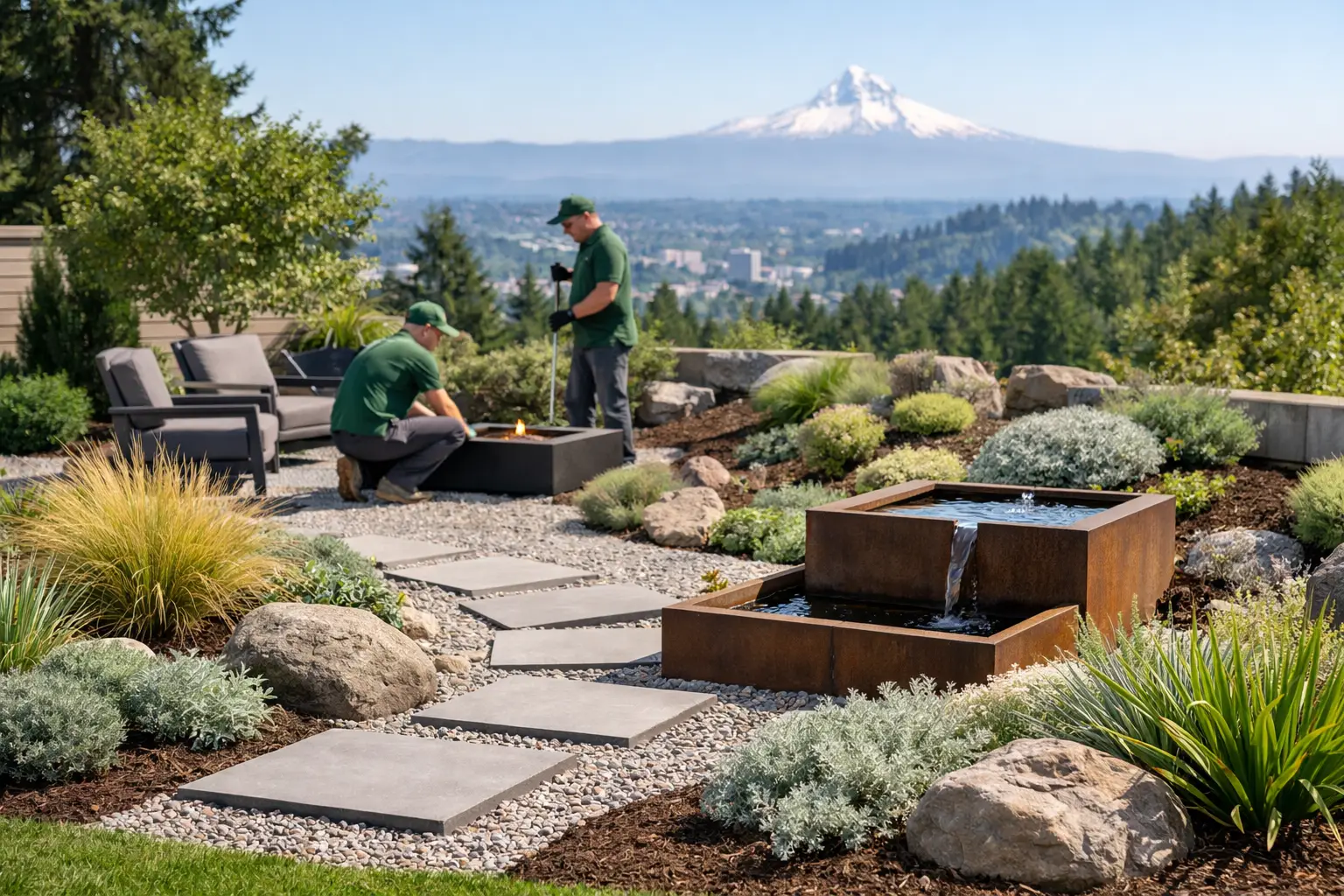
A Portland yard can look polished in April and become a source of constant work by July. Heavy winter rain, compacted soil, moss, falling needles, and dry summer stretches all affect what will hold up over time. The best low maintenance landscape trends are not about eliminating every chore. They are about choosing materials, drainage solutions, and planting plans that fit the site so homeowners spend less time repairing, weeding, and managing water.
For established homes in Tigard, Beaverton, Lake Oswego, and across the Portland metro area, that often means putting the structural work first. A new patio may need grading and drainage before it needs furniture. A simple planting bed may need clean edging and healthy soil before it needs more plants. When those fundamentals are handled correctly, the finished yard stays usable and looks intentional with far less ongoing effort.
Low Maintenance Landscape Trends Start With the Site
The most durable landscape plans are increasingly built around how water moves through the property. Portland’s wet season makes drainage a central part of low-maintenance design, not an afterthought. Water that pools beside a foundation, settles on a patio, or runs down a sloped lawn can lead to muddy areas, shifting pavers, damaged plants, and repeated repair work.
Modern upgrades often combine subtle regrading with practical drainage components such as French drains, catch basins, channel drains, and downspout connections. These features can be installed beneath or alongside finished landscape elements, helping the yard shed water without turning every rainy day into a maintenance problem.
Permeable pavers are another option for certain patios, walkways, and driveway areas. Their joint system allows water to move through the surface and into a prepared base below. They are not the right choice for every property, especially where soil conditions, slopes, or traffic loads call for a different approach. Still, when properly designed and installed, they can be a smart way to reduce runoff while maintaining a clean, high-end appearance.
Durable Hardscapes Are Replacing High-Work Lawn Areas
Large lawns require regular mowing, edging, fertilizing, watering, and moss control. That does not mean every lawn should disappear, but many homeowners are reducing turf where it does not serve a real purpose. A narrow side yard, a steep slope, or an unused patch behind the house may be better used as a walkway, patio extension, gravel area, or planted bed.
Paver patios remain a strong choice because they create usable outdoor space while offering flexibility in color, pattern, and layout. A properly installed paver system includes excavation, a compacted base, edge restraint, drainage consideration, and accurate final grading. Those details are what keep a patio from settling unevenly or collecting water after a Portland storm.
Stamped concrete and standard concrete patios can also be low-maintenance options when the project is planned for drainage and movement. Concrete provides a clean, continuous surface that works well for dining areas, fire features, and access paths. Pavers may be preferable where future repairs or access below the surface are likely, since individual units can often be lifted and reset. The better choice depends on the yard, the desired look, and how the space will be used.
Retaining walls are another practical trend for sloped properties. A well-built wall can turn an awkward grade into level planting space, a seating area, or a more manageable lawn. It must be engineered around soil pressure, drainage, and proper base preparation. A decorative wall without those structural details can become one of the most expensive maintenance issues in a yard.
Planting Plans With Less Pruning and More Staying Power
Low-maintenance planting is less about filling beds with a single trendy plant and more about selecting varieties that can handle the exposure, soil, and moisture conditions of the property. A sunny south-facing bed and a shaded area beneath mature fir trees need very different strategies.
Many Portland homeowners are moving toward layered planting plans with evergreen structure, dependable perennials, ornamental grasses, and groundcovers that suppress weeds once established. Native and climate-adapted plants can be valuable choices because they are suited to local weather patterns, but they still need correct spacing, soil preparation, and watering during establishment.
Overplanting is a common mistake. Small nursery plants can look sparse at first, tempting homeowners to pack them tightly together. Within a few seasons, crowded plants compete for light and water, require frequent pruning, and can trap moisture against each other. Giving plants room to reach their mature size creates a cleaner landscape that needs less intervention later.
Mulch remains one of the simplest tools for reducing upkeep. A properly installed mulch layer helps retain summer moisture, moderate soil temperature, and slow weed growth. It should not be piled against tree trunks or plant stems, where excess moisture can create problems. Clean metal, concrete, stone, or paver edging also helps keep mulch contained and gives planting beds a crisp boundary against lawn or hardscape.
Water-Smart Irrigation Is Becoming Standard
A low-maintenance yard still needs water during dry Oregon summers, especially during the first year after installation. The trend is toward irrigation systems that deliver water where it is needed instead of relying on frequent hand watering or inefficient spray coverage.
Drip irrigation works especially well in shrub and perennial beds because it places water near the root zone and avoids soaking patios, fences, and foliage. Zoned systems allow lawn, planting beds, and containers to receive different amounts of water. Smart controllers can adjust schedules based on seasonal conditions, though they still need periodic checks to make sure sensors, heads, and lines are working as intended.
Artificial turf is sometimes considered for low-maintenance landscapes, particularly in small areas where natural grass struggles. It removes mowing and watering, but it is not maintenance-free. Leaves and debris still need to be cleared, infill may need attention, and the surface can become hot in direct sun. For many properties, reducing turf strategically and improving the remaining lawn with proper irrigation and drainage provides a more balanced result.
Outdoor Living Spaces Need Fewer Decorative Features
The strongest low-maintenance designs are often the simplest. Instead of multiple small garden features that need separate care, homeowners are investing in a few well-built elements that improve daily use: a paver patio, a direct walkway from the house, integrated seating, a pergola, or a covered area for year-round outdoor time.
Outdoor structures can make a yard more functional without adding a demanding maintenance burden, provided the materials and construction details are appropriate. Wood pergolas need periodic care, while certain composite or metal components may reduce finishing work over time. The right choice depends on the home’s architecture, sun exposure, budget, and the level of maintenance the homeowner is comfortable taking on.
Lighting is also becoming more purposeful. Rather than placing fixtures throughout every bed, a focused plan can improve safety on steps and walkways while highlighting key features such as a retaining wall, tree, or patio edge. Quality fixtures and thoughtfully routed wiring are worth the investment because replacing poorly installed landscape lighting can require disturbing finished surfaces.
Plan the Whole Yard Before Building in Phases
Many homeowners complete landscape work in stages, and that can be a sensible approach. The key is having a complete plan before the first phase begins. Installing a patio before addressing drainage, or planting beds before running irrigation and electrical lines, can create unnecessary demolition and added cost later.
A professional consultation should examine existing grades, drainage patterns, access for equipment, material options, and how the household uses the space. From there, the work can be prioritized. Structural items such as excavation, retaining walls, drainage, and concrete typically come before finish elements such as sod, planting, and decorative stone.
Four Seasons Landscape & Construction helps Portland-area homeowners coordinate those connected pieces under one project plan, from site preparation and hardscape construction to irrigation, planting, and final cleanup. Clear scope, durable materials, and skilled installation are what make a lower-maintenance yard possible in the first place.
A yard should support the way you live, not create a longer weekend task list. Start by identifying the areas that stay wet, go unused, or require repeated repairs, then build the solution around lasting drainage, durable surfaces, and planting that suits the property.