

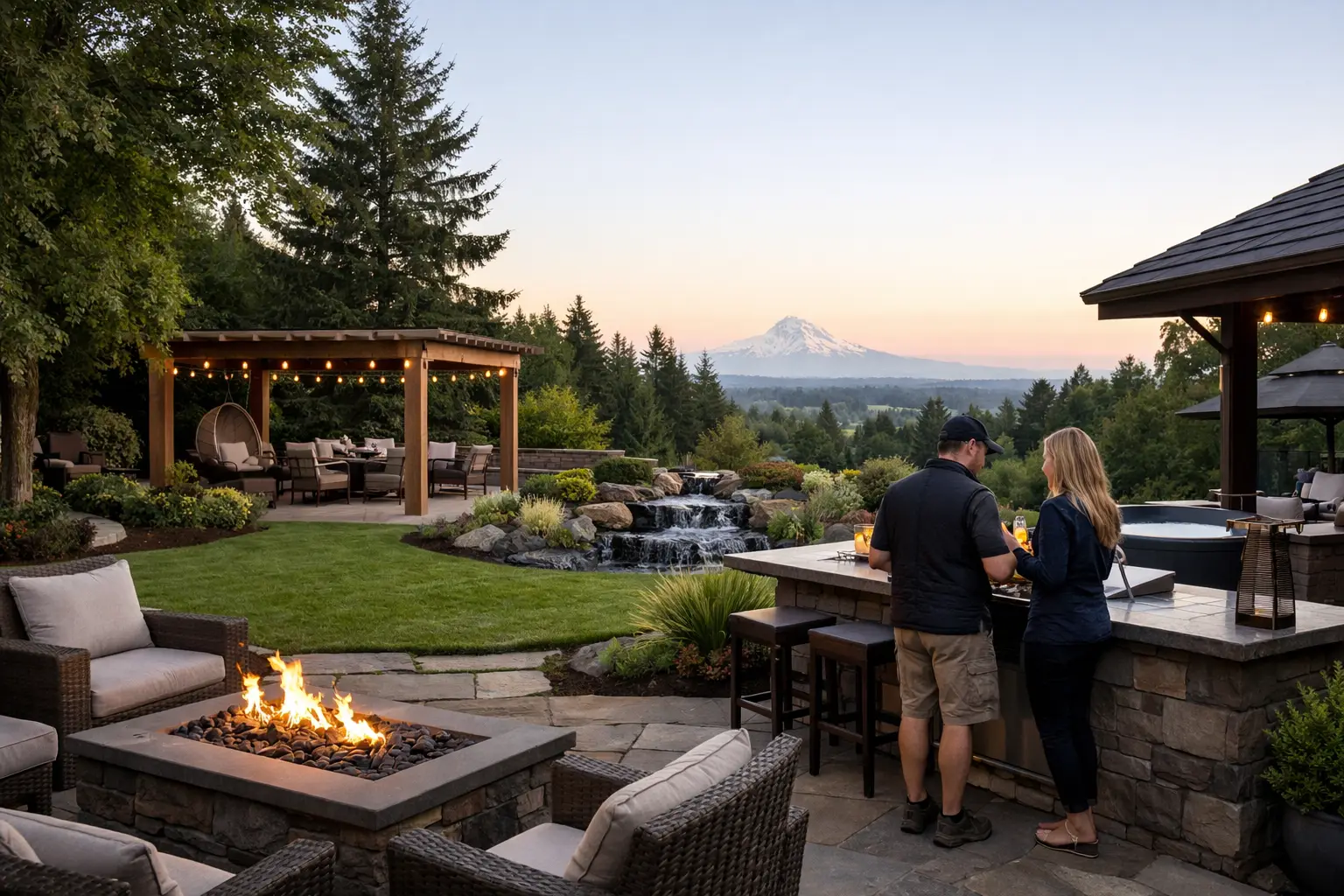
A Portland yard has to work through wet winters, shifting temperatures, summer entertaining, and the everyday traffic of family life. The most useful outdoor living design trends are not about copying a magazine photo. They are about building a space that feels intentional, drains correctly, holds up to the climate, and gives homeowners more reasons to use their property.
For many local homeowners, the goal is no longer simply adding a patio or replacing a lawn. It is creating connected outdoor areas for cooking, relaxing, gathering, gardening, and moving safely around the home. The strongest projects combine attractive materials with the site preparation, drainage, grading, and construction details that make those improvements last.
Outdoor Living Design Trends Built for Real Use
Defined zones instead of one large patio
Large, open hardscape areas still have a place, especially for homeowners who host bigger gatherings. But many of the best outdoor spaces now use distinct zones with a clear purpose. A dining area may sit close to the home for easy access to the kitchen, while a lower seating area, fire feature, or garden edge creates a more relaxed destination farther into the yard.
This approach makes even a modest backyard feel more useful. Changes in paver pattern, elevation, wall placement, lighting, or planting can separate spaces without making the yard feel boxed in. It also gives the construction plan more direction. Rather than installing a patio and deciding how to use it later, the layout is designed around the way the household actually lives.
The trade-off is that defined zones require careful planning. Paths must remain comfortable, furniture needs adequate clearance, and different elevations need to be handled with properly built steps or retaining walls. A good design should feel natural from the door to the farthest corner of the yard.
Covered outdoor spaces with flexible shelter
Portland-area homeowners want more opportunities to be outside without waiting for perfect weather. Pergolas, covered patios, patio covers, and outdoor structures continue to be a practical investment because they extend the usable season. A structure can provide shade in summer, shelter during light rain, and a framework for lighting, heaters, fans, or privacy screening.
The right option depends on how the space will be used. An open pergola can define a patio beautifully and provide filtered shade, but it will not provide the weather protection of a solid roof cover. A covered structure offers greater comfort in wet weather, though it may involve more permitting, structural planning, and coordination with the existing home.
The best result is one that looks like it belongs on the property. Proportions, post placement, roofline connections, and material choices all matter. An outdoor structure should complement the house while creating a comfortable place to gather beneath it.
Durable pavers and natural-looking hardscapes
Homeowners are moving toward hardscape materials that offer both visual character and serviceability. Paver patios, stone accents, concrete walkways, and masonry walls can create a finished look while handling the moisture and soil movement common in the Pacific Northwest.
Pavers remain popular because they offer design flexibility. Different shapes, colors, borders, and laying patterns can suit a traditional home, a contemporary remodel, or something in between. When installed over a properly prepared base with correct grading, they create a durable surface for patios, walkways, and outdoor kitchens. Individual pavers can also be repaired more easily than a large cracked concrete slab if future work is needed.
Stamped concrete can be a good fit for homeowners who want a continuous surface with decorative texture and color. It is often well suited to larger entertaining areas, provided the site is prepared correctly and control joints are thoughtfully placed. Natural stone brings a more organic appearance, especially for steps, seat walls, and garden transitions, but material cost and installation complexity can be higher.
There is no universal best material. The right choice comes down to the architecture of the home, expected use, budget, maintenance preference, and conditions beneath the surface.
Drainage Is Part of the Design
A beautiful patio that sends water toward the foundation is not an upgrade. In the Portland metro area, drainage planning should be part of the conversation from the beginning, not a correction after installation.
Proper slope directs surface water away from structures and toward suitable drainage areas. Depending on the property, a project may need French drains, channel drains, catch basins, downspout extensions, swales, or regrading. Retaining walls also need drainage behind them to relieve hydrostatic pressure and protect the structure over time.
This work is easy to overlook because much of it is below grade. It is also where experienced installation makes a meaningful difference. Base preparation, compaction, drain rock, fabric, wall reinforcement, and outlet locations must work together. A contractor who can manage excavation, drainage, concrete, masonry, and landscape installation under one plan helps avoid the gaps that can occur when several separate trades are involved.
Retaining walls that create usable ground
Sloped yards are common throughout Portland, Tigard, Lake Oswego, Beaverton, and surrounding communities. Rather than treating a slope as unusable space, homeowners are using retaining walls to establish level terraces for patios, lawns, planting beds, or play areas.
A well-designed wall can do more than hold back soil. It can create a seating edge around a patio, frame stairs, improve access, and give a backyard stronger visual structure. Segmental block, natural stone, concrete, and masonry each offer different looks and performance characteristics.
The key is matching the wall design to the site. Wall height, soil conditions, water management, surcharge loads, and local requirements may affect the needed construction method. For taller or more complex walls, engineering and permits may be required. Cutting corners on the base or drainage is rarely visible on day one, but it can lead to movement and failure later.
Low-Maintenance Planting With Purpose
Outdoor living spaces feel more complete when planting softens the hardscape and provides privacy, seasonal interest, or a buffer from neighboring properties. The current preference is for planted areas that are attractive without demanding constant work.
This often means choosing plants suited to local conditions, grouping them by water needs, and installing irrigation that supports efficient maintenance. Evergreen screening, ornamental grasses, flowering shrubs, small trees, and layered perennials can create a more established feel than a large expanse of lawn alone.
Lawn still serves a purpose for many families, particularly where children, pets, or outdoor games are part of daily life. The question is where turf delivers value. Reducing lawn in shaded, soggy, or hard-to-mow areas can free up room for a planting bed, path, patio extension, or drainage solution. Keeping lawn where it will be used helps the overall landscape work harder.
Privacy without closing in the yard
Privacy is a major priority as homes are built closer together and homeowners spend more time outdoors. Fencing, screens, hedges, trellises, and pergola curtains can each help create separation. The best choice depends on sightlines, sun exposure, wind, maintenance expectations, and local rules.
A solid fence offers immediate screening but can make a compact yard feel enclosed if every boundary is treated the same way. Layering a fence with planting, a decorative screen, or a partial structure often creates a softer result. In some cases, a strategically placed screen near a seating area does more than enclosing the entire property line.
Lighting, Fire Features, and the Details That Extend the Evening
Outdoor lighting has shifted from a purely functional addition to a central part of the living-space plan. Low-voltage path lights, step lights, wall lighting, and subtle uplighting improve safety while helping patios and planting beds remain inviting after sunset. The goal is useful illumination, not a yard that feels overlit.
Fire features remain popular for the same reason: they make the space comfortable for longer. A built-in fire pit can become a gathering point, while a fireplace creates a stronger architectural focal point in a covered area. Fuel type, location, clearance requirements, and local regulations should be considered early, particularly when a structure, seating wall, or planting plan surrounds the feature.
Outdoor kitchens and grilling stations also work best when they are designed around traffic flow. Enough counter space, durable surfaces, nearby seating, and a practical connection to the house matter more than adding every possible appliance. For some households, a well-built grill island is exactly right. For others, a larger kitchen is worth the investment because outdoor cooking is a regular part of entertaining.
Plan the Whole Property Before Building in Pieces
Many outdoor projects happen in phases, and that can be a smart way to manage budget. The important step is creating a complete plan first. A future pergola may need footings placed before a patio is finished. Irrigation sleeves, electrical conduit, drainage lines, and lighting wire are far easier to install before hardscape surfaces are complete.
At Four Seasons Landscape & Construction, projects are approached with both the finished appearance and the work beneath it in mind. That includes understanding how water moves through the property, how grades connect, and how each patio, wall, walkway, fence, or planted area supports the next.
The right trend is the one that makes your yard more comfortable, durable, and useful for your home. Start with how you want to spend time outside, then build the surfaces and structures that will support that use for years to come.