

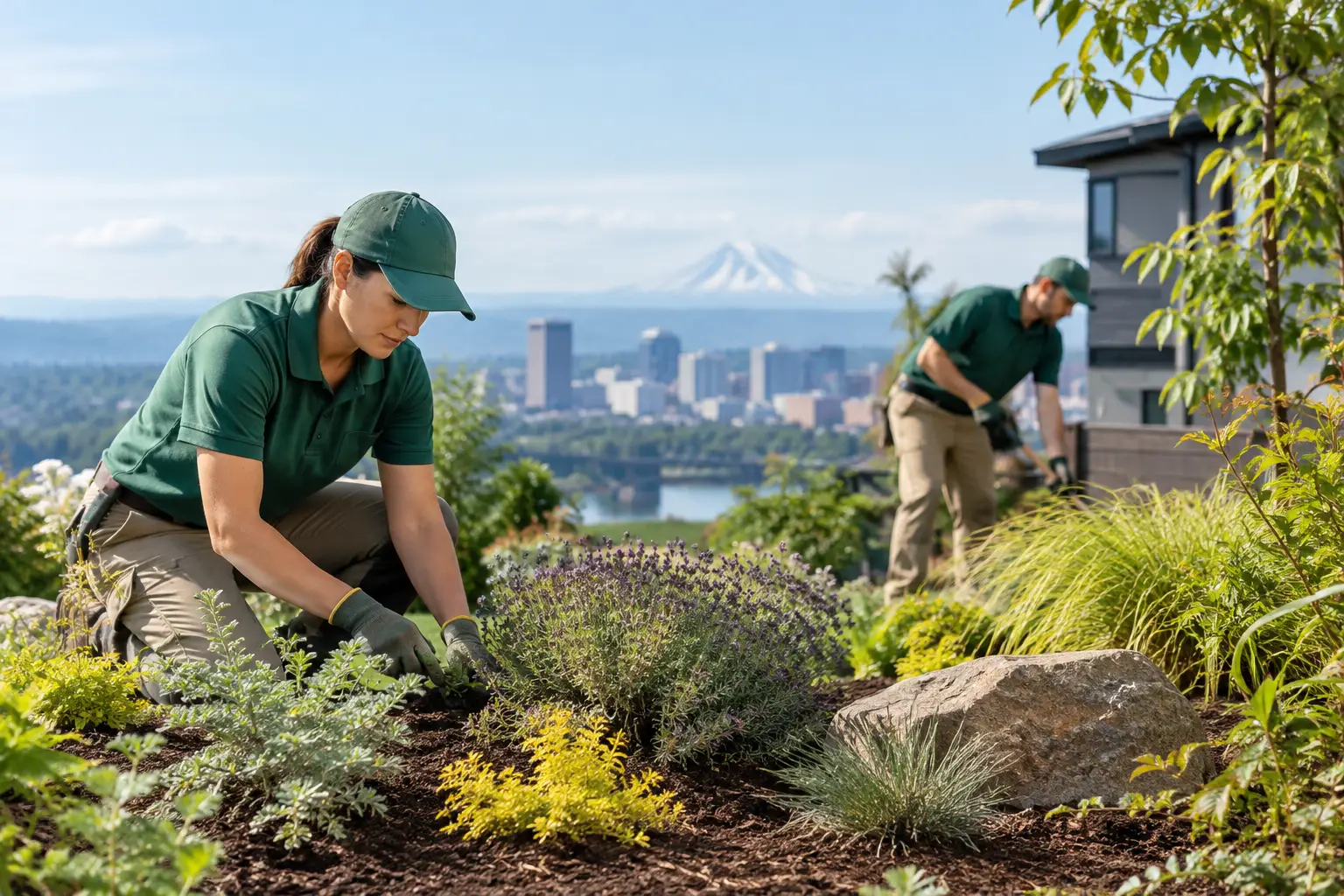
Portland-area yards have to handle more than one weather pattern. Months of steady rain can expose poor drainage and unstable grades, while dry summer stretches can stress lawns, planting beds, and irrigation systems. Climate resilient landscaping addresses both conditions by building a yard that manages water well, uses durable materials, and remains functional through changing seasons.
For homeowners, this is not simply a matter of choosing drought-tolerant plants. A resilient landscape begins below the surface with grading, drainage, base preparation, and the right construction methods. It continues with practical decisions about patios, retaining walls, planting areas, irrigation, and how water moves across the property.
What Climate Resilient Landscaping Means for Your Property
A climate-resilient yard is designed around the conditions your property actually faces. In the Portland metro area, that often means wet winter soils, compacted clay, sloped lots, shaded areas, and periods of summer heat with limited rainfall. The goal is not to make a yard maintenance-free. It is to reduce preventable problems and create an outdoor space that performs reliably over time.
The strongest projects balance appearance with site function. A paver patio should provide a comfortable place to gather, but it also needs a properly compacted base and a drainage plan. A retaining wall can add usable level space, yet it must manage soil pressure and water behind the wall. Planting beds can improve curb appeal, but they should not direct runoff against a foundation or require excessive watering to survive.
This approach is especially valuable when a yard renovation includes several connected improvements. Rather than treating drainage, hardscaping, irrigation, and landscaping as separate projects, they should be planned together from the start.
Start With Water: Drainage and Grading Come First
Water management is often the foundation of a successful landscape project in Oregon. Standing water, muddy lawn areas, soil erosion, and water collecting near the home are signs that the existing grade or drainage system may need attention.
Proper grading directs surface water away from structures and toward appropriate collection or discharge areas. Depending on the property, that may involve reshaping a portion of the yard, installing drains, extending downspouts, creating swales, or preparing a gravel drainage zone behind a wall. The right solution depends on the slope, soil conditions, existing utilities, and where water can legally and safely go.
Drainage should be addressed before new sod, decorative rock, patios, or planting beds are installed. Covering a wet area with attractive materials without correcting the cause can leave homeowners with the same issue underneath and an expensive repair later.
Retaining Walls Need More Than a Finished Face
Retaining walls are common on Portland-area properties where slopes limit usable yard space. They can create room for patios, gardens, play areas, and walkways. However, a wall that holds back soil also holds back moisture unless it is built with proper drainage and base preparation.
A quality retaining wall installation considers excavation depth, compacted aggregate, drainage rock, drain pipe, wall reinforcement where required, and how the finished grade meets the wall. Material selection matters, but the work behind the wall is what helps protect its long-term performance. A beautiful wall without a sound base or drainage plan can shift, bow, or settle over time.
Choose Hardscaping That Handles Wet Winters
Hardscaping gives a landscape structure, but surfaces must be built for year-round use. In a wet climate, poorly installed patios and walkways can settle, pond water, or become slippery. The solution is not one material for every property. It is proper preparation and a design suited to the space.
Pavers are a practical choice for patios, walkways, and gathering areas because they can be installed with controlled slope and a well-built aggregate base. If repairs are needed in the future, individual pavers can often be lifted and reset more easily than a damaged continuous slab. Concrete can also be an excellent option for driveways, patios, steps, and larger usable surfaces when the subgrade, reinforcement, joints, and drainage are handled correctly.
Natural stone, masonry, and textured concrete can add character while improving the way a space functions. The trade-off is that every material has different maintenance needs, installation costs, and surface characteristics. A smooth finish may look clean but may not be the best choice for a frequently wet walkway. A contractor should help homeowners compare appearance, drainage, durability, and budget before construction begins.
Build Outdoor Spaces With Purpose
A resilient landscape is more likely to be used when circulation is clear and surfaces are built for the way a household lives. A patio near the home can support outdoor dining. A covered pergola can provide shade during summer and make the space more comfortable in light rain. Defined walkways help protect lawn and planting areas from repeated foot traffic.
These features also reduce the need to constantly repair worn paths or muddy access points. In smaller yards, a carefully planned patio and planting layout may be more practical than trying to maintain a large lawn that struggles with shade or drainage. In larger properties, retaining walls and paths can make slopes safer and more usable.
Use Plants and Irrigation as Part of the System
Plant selection still matters, but plants should support the overall design rather than carry the full burden of climate resilience. Native and climate-adapted plants can be good options for areas that receive seasonal rain and summer dryness. Grouping plants with similar water needs makes irrigation more efficient and makes ongoing care easier.
A healthy planting plan should consider sun exposure, mature plant size, root behavior, soil quality, and access for maintenance. Plants placed too close to foundations, fences, or walkways may create problems as they grow. Dense plantings can look finished quickly, but they need enough room for air circulation and mature growth.
Irrigation should be designed around zones, not simply added as an afterthought. Lawn, shrubs, and planting beds often require different watering schedules. Drip irrigation can be especially effective in beds because it directs water closer to plant roots and reduces unnecessary overspray. Smart controllers and seasonal adjustments can help avoid watering during rainy periods while keeping new plantings established during dry weather.
A lawn can still have a place in a climate-resilient property. The question is whether it is located where it can realistically thrive. A smaller, well-drained lawn area may be a better long-term choice than turf installed across a heavily shaded, wet, or steep part of the yard.
Plan Construction in the Right Order
The order of work has a direct effect on both quality and cost. Installing new landscaping before excavation, drainage, wall construction, or patio base work can result in damaged plants, disturbed soil, and duplicated labor. A full-service project is generally more efficient when structural work is handled first and finish details follow.
A typical sequence begins with a site evaluation and a clear plan for drainage, grade changes, access, and utilities. Excavation, drainage components, retaining walls, and hardscape bases come next. Patios, walkways, concrete, fencing, and outdoor structures can then be built around the finished grades. Irrigation, planting, sod, mulch, and final cleanup are usually completed near the end.
This process also helps homeowners make better budget decisions. If funds need to be phased, it is usually wiser to complete the foundational work first. A finished patio can wait longer than a drainage correction that protects the home, prevents erosion, or keeps a wall from failing.
Work With a Contractor Who Sees the Whole Site
Climate-resilient landscaping often crosses several trades. It may involve drainage, excavation, concrete, pavers, masonry, irrigation, fencing, and planting in one coordinated project. Hiring separate providers for each phase can work, but it also creates more handoffs and more opportunities for details to be missed.
Four Seasons Landscape & Construction helps Portland metro homeowners plan and build complete outdoor improvements with the site conditions in mind. A clear scope, realistic material choices, and proper installation standards matter more than adding features that do not solve the underlying problems.
Before committing to a project, ask how water will move after construction, what base materials will be used under hardscaping, how walls will drain, and how the new landscape will be maintained. Those answers reveal whether the plan is designed for lasting performance or only for a good first impression.
A well-built yard should make daily life easier in every season. When drainage, structure, and planting work together, homeowners can spend less time reacting to muddy spots, erosion, and failing surfaces and more time enjoying an outdoor space built for the Pacific Northwest.