

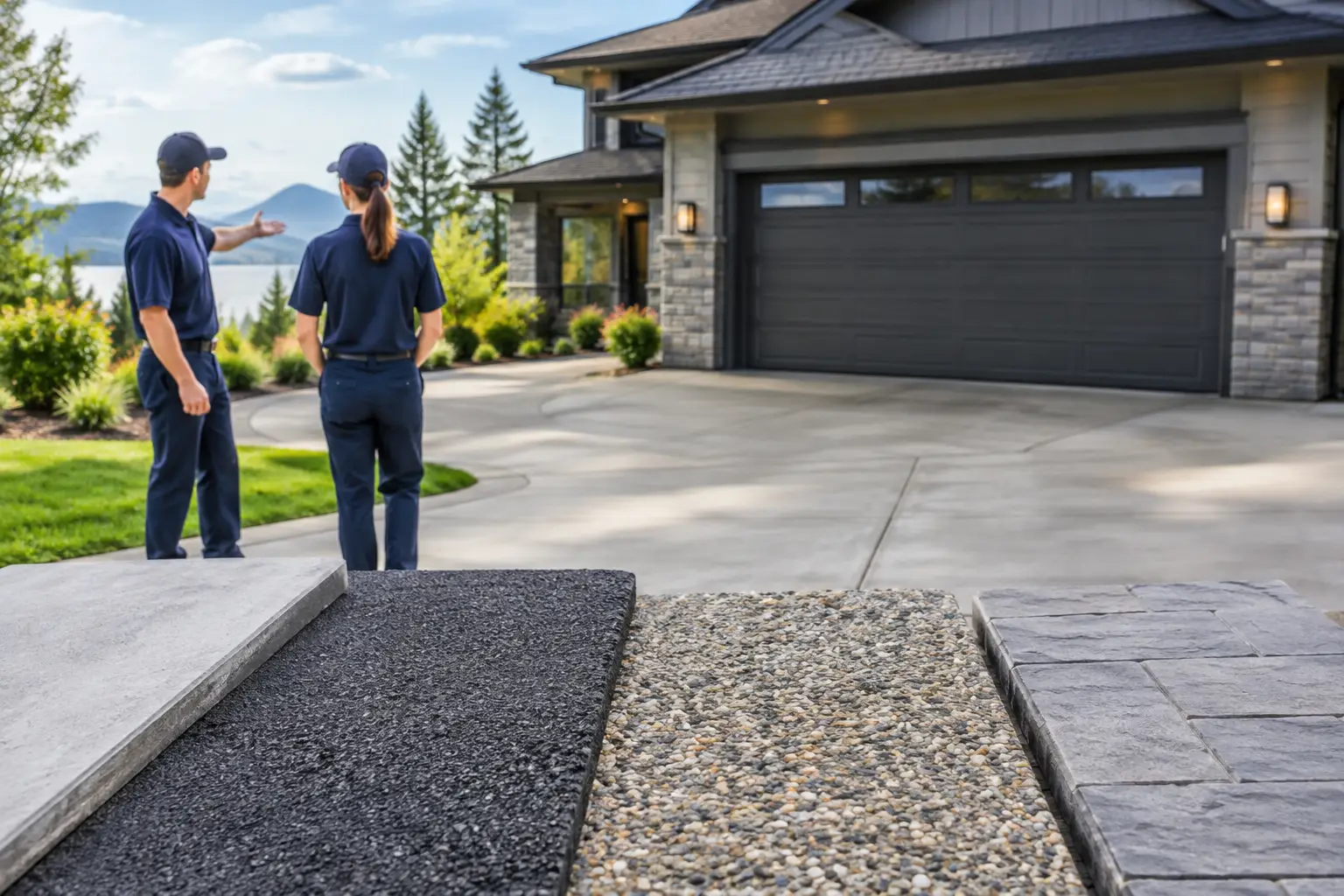
A driveway has to do more than lead to the garage. In the Portland metro area, driveway materials must stand up to frequent rain, saturated soil, vehicle weight, and the daily wear that comes with an active home. The right choice should fit your property’s style, budget, drainage needs, and long-term maintenance expectations.
A good driveway begins below the surface. Whether the finished material is concrete, pavers, asphalt, gravel, or natural stone, the base preparation, grading, and drainage plan will have as much impact on performance as the visible finish. Homeowners who focus only on surface appearance can end up with settling, standing water, cracking, or edges that break down sooner than expected.
Choosing Driveway Materials Starts With the Site
Before selecting a color, pattern, or finish, evaluate how the driveway needs to work. A steep approach, a narrow side yard, poor drainage, or a property with clay-heavy soil may call for a different construction approach than a flat suburban lot with well-draining ground.
Vehicle use matters as well. A driveway serving two passenger cars has different requirements than one supporting a work truck, RV, trailer, or frequent guest parking. Turning movements are especially hard on surfaces, so areas near the street, garage, and turnaround should be designed with adequate support.
Water is another major consideration for Portland-area properties. Rainwater should move away from the home, garage, and neighboring properties without washing out the base or collecting along the driveway edge. In some cases, this means adjusting the grade, installing a trench drain, using catch basins, or selecting a permeable surface that allows water to pass through rather than sheet across the property.
Concrete Driveways: Clean, Durable, and Versatile
Concrete remains one of the most common choices for residential driveways because it provides a clean appearance, reliable load-bearing strength, and a wide range of finish options. A standard broom finish works well for many homes, while exposed aggregate, colored concrete, and stamped concrete can add more character.
When properly installed over a compacted base with correct control joints, concrete provides a durable surface for everyday vehicle traffic. It is particularly practical for homeowners who want a low-maintenance driveway with defined edges and a finished look that complements walkways, patios, or front-entry concrete.
Concrete does have trade-offs. Cracks can occur over time as the ground moves and materials expand or contract. Proper joint placement helps control where cracking happens, but it does not make concrete entirely crack-proof. Repairs can also be visible, especially on colored or decorative concrete. For this reason, careful site preparation and drainage planning are essential from the start.
Paver Driveways: Flexible Design With Repairable Sections
Interlocking concrete pavers are a strong choice for homeowners looking for a more tailored, high-end driveway. They are available in many shapes, colors, and laying patterns, making it possible to coordinate the driveway with a paver patio, walkway, retaining wall, or front landscape design.
Pavers are installed as individual units over a carefully prepared aggregate base. That construction method offers a practical advantage: if a small area settles or is damaged, the affected pavers can often be lifted, the base corrected, and the same pavers reset. This is especially useful where utility access, tree roots, or localized ground movement may be a concern.
The finished result depends heavily on craftsmanship. The excavation depth, compacted base, edge restraint, bedding layer, slope, and joint sand all need to work together. A paver driveway is not simply a patio extended to the street. It needs to be built for vehicle loads, with extra attention paid to the edges and areas where tires turn.
Paver driveways typically require a higher initial investment than basic concrete or asphalt, but they offer design flexibility and long-term serviceability. They are often a good fit for homes where curb appeal and integration with other hardscape features are priorities.
Asphalt Driveways: Practical and Budget-Conscious
Asphalt offers a smooth, dark surface and is often chosen for its efficient installation and lower upfront cost compared with many decorative options. It can work well on larger driveways, rural-style properties, and homes where function takes priority over custom detail.
A properly built asphalt driveway still needs a stable crushed-rock base and correct drainage. If water reaches and weakens the base, the asphalt above can develop depressions, cracks, or alligator-style deterioration. Edges can also be vulnerable when cars regularly drive too close to the side of the pavement.
Asphalt needs more regular maintenance than concrete or pavers. Sealing, crack filling, and occasional patching help protect the surface and extend its usable life. It may be the right material when budget and speed are central concerns, but homeowners should plan for that ongoing care.
Gravel Driveways: Natural Appearance, Ongoing Attention
Gravel can be an attractive option for longer driveways, rural properties, and homes that benefit from a softer, more natural landscape style. It is generally less expensive to install than hard surfaces and allows for straightforward future adjustments or extensions.
However, gravel is not maintenance-free. Traffic moves the stone, rain can create ruts, and loose material may migrate into planting beds, sidewalks, or the street. A well-built gravel driveway needs an excavated and compacted base, durable edging where appropriate, and gravel sized for the intended use. Simply spreading rock over soil rarely produces lasting results.
For homeowners who prefer gravel, periodic regrading and adding material are part of ownership. It can be a sensible solution where drainage, lot size, or budget makes a paved driveway less practical, but it requires realistic expectations.
Permeable Options for Drainage-Sensitive Properties
Properties with recurring runoff issues may benefit from permeable driveway systems. Permeable pavers, open-joint pavers, and reinforced gravel systems are designed to let water move through the surface and into a carefully constructed stone base below.
These systems are not a substitute for a complete drainage plan. Soil conditions, slope, runoff volume, and local requirements all need to be reviewed. On the right site, however, permeable driveway materials can reduce surface ponding and help manage stormwater while still providing a finished parking surface.
Maintenance matters here, too. The joints or open areas must remain clear enough to drain. Fine sediment, leaves, and neglected landscaping can reduce performance over time.
The Installation Details That Protect Your Investment
No driveway material can overcome poor preparation. A dependable installation begins with excavation to the proper depth, removal of unsuitable soil where necessary, and placement of a compacted aggregate base suited to the driveway’s expected load.
The driveway should also have a deliberate slope. Water should not run toward the garage, foundation, or low spots in the yard. Depending on the site, a contractor may recommend swales, drainage rock, channel drains, catch basins, or other measures to direct water responsibly.
Transitions deserve attention as well. The connection between a driveway and sidewalk, garage slab, street, gate, or retaining wall is where settling and water issues often become visible first. Building those details correctly creates a cleaner appearance and helps prevent premature repairs.
How to Make the Right Choice for Your Home
The best material is rarely the one with the lowest initial price or the most decorative sample. It is the one that matches your home, use pattern, site conditions, and willingness to maintain it. Concrete is often a dependable all-around solution. Pavers offer greater design flexibility and repairability. Asphalt is practical for cost-conscious projects, while gravel can suit larger or more informal properties. Permeable systems may be worth considering where drainage drives the project.
A professional site evaluation can clarify what your property actually needs before construction begins. Four Seasons Landscape & Construction helps Portland-area homeowners plan driveway and hardscape projects with the grading, drainage, excavation, and finish work considered together. That approach helps create a driveway that looks right on day one and continues to serve the property well through many Oregon rainy seasons.