

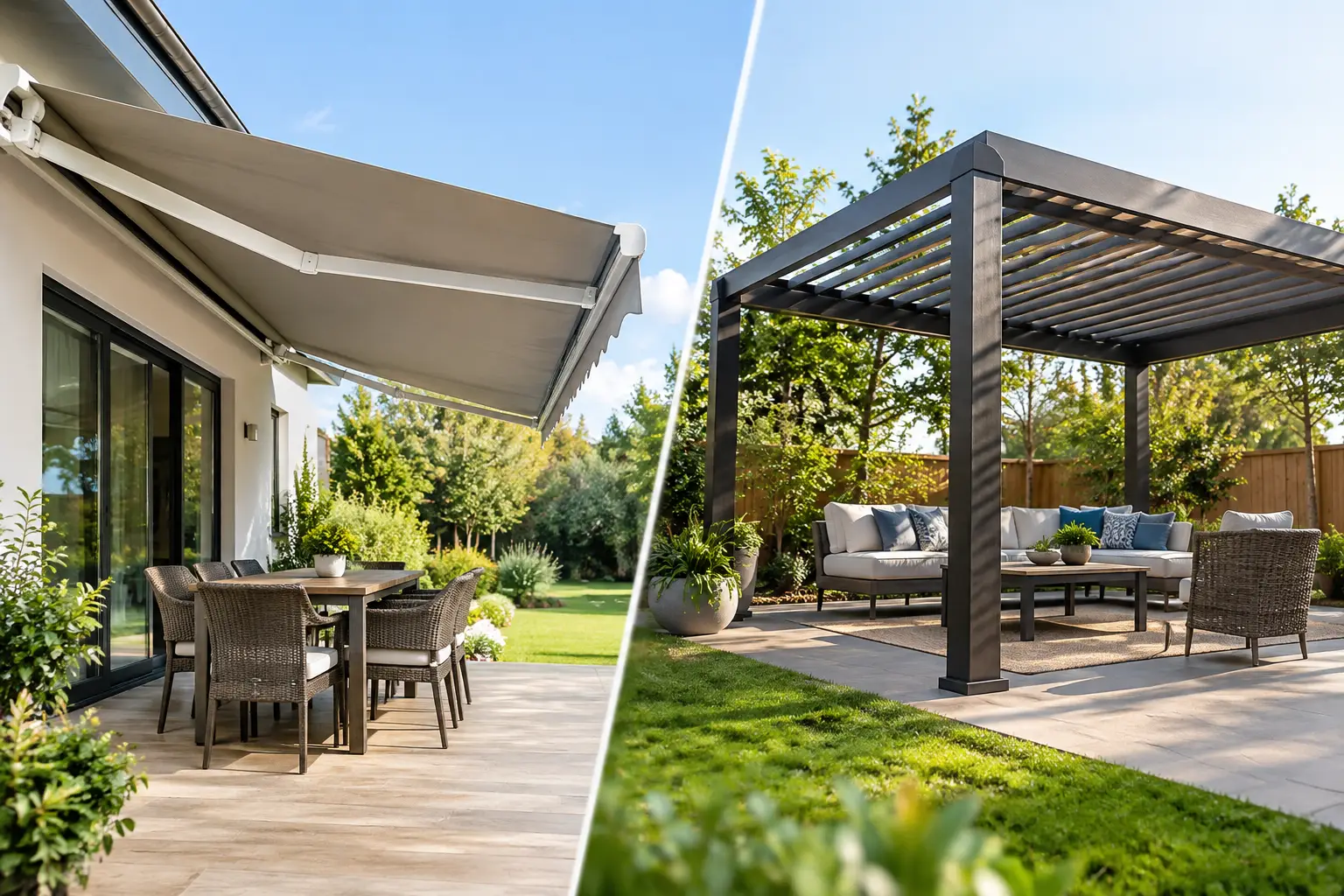
A patio that sits empty for nine months of the year is usually missing one thing: dependable cover. When Portland-area homeowners compare awnings versus pergolas, the right answer comes down to how they want to use the space in rain, summer sun, and changing Northwest weather. Both can improve comfort and extend time outdoors, but they solve different problems and require different levels of construction planning.
An awning is typically the faster, more targeted shade solution. A pergola is a permanent outdoor structure that can become the framework for a more complete living area. Before choosing either, consider the patio below it, how water moves across the property, the condition of the house connection, and whether the project may eventually include lighting, privacy screening, a fireplace, or an outdoor kitchen.
Awnings Versus Pergolas: The Core Difference
Awnings attach to the home and extend over a patio, deck, or doorway. They may be retractable, fixed, fabric-covered, or made from more rigid materials. Their primary purpose is overhead shade and, depending on the product, limited to substantial rain protection. Retractable awnings are especially useful for homeowners who want open sunlight when the weather is pleasant and shade when it is not.
Pergolas are freestanding or attached structures supported by posts and beams. Traditional pergolas have open slats across the top, which create filtered shade rather than a fully waterproof roof. They make a patio feel more defined and architectural, but an open-top pergola alone will not keep a seating area dry during an Oregon rainstorm.
That distinction matters. If the goal is to step outside during a drizzle with a cup of coffee, a covered patio roof or a pergola designed with a proper waterproof cover may be more practical than either a standard fabric awning or an open pergola. If the goal is to make a sunny west-facing patio comfortable in July and August, either option may work well.
When an Awning Makes More Sense
An awning is often the right fit when the existing patio is in good condition and the homeowner needs shade without a major construction project. It can cover a smaller footprint effectively, preserve an open view of the yard, and create a more flexible transition between indoor and outdoor space.
Retractable awnings are popular because they offer control. Extend the awning during strong afternoon sun, then retract it when you want more daylight inside the home or want to avoid leaving it exposed during high winds. This flexibility is valuable in the Portland metro area, where a calm morning can turn wet or windy later in the day.
Awnings also have limits. Fabric can require periodic cleaning and eventual replacement, and wind ratings vary significantly by product and installation method. The wall connection must be sound, particularly on older homes with aging siding, trim, or framing concerns. An awning also does not add the same sense of permanence or structural value as a professionally built pergola.
For a compact patio, a simple dining area, or a space where budget and speed are the main priorities, an awning can be a sensible choice. It is generally less disruptive than building footings, installing posts, and integrating a new structure with hardscape and landscaping.
When a Pergola Is Worth the Investment
A pergola makes sense when the patio itself is becoming a true outdoor room. It adds vertical definition, supports a larger design vision, and can be built to complement the home’s architecture, fence lines, retaining walls, and surrounding landscape.
Unlike an awning, a pergola can stand independently in the yard. That makes it useful for creating a destination away from the house, such as a seating area beside a paver patio, a fire feature, or a garden. Attached pergolas also work well over patios where homeowners want a more substantial, custom-built appearance than a fabric shade system provides.
The trade-off is that a pergola requires more site preparation. Posts need properly sized footings, materials need to withstand moisture exposure, and the structure must be laid out carefully so it does not interfere with drainage, gates, utilities, or circulation through the yard. If the pergola is attached to the home, the ledger connection, flashing, and siding details need the same level of care as other exterior structural work.
A basic open-top design provides partial shade, especially when paired with climbing plants or shade fabric. For reliable rain coverage, homeowners can consider a fixed roof panel system, a louvered roof, or a clear covering designed to handle water runoff. Each option changes the cost, maintenance needs, appearance, and permitting considerations.
Portland Weather Changes the Decision
Homeowners in Tigard, Beaverton, Lake Oswego, Hillsboro, and nearby communities need to plan for more than direct sun. Rain, falling leaves, moss, wind, and prolonged moisture all affect how an outdoor cover performs over time.
An awning should be selected with wind exposure in mind. Homes on open lots, elevated properties, and areas that receive strong gusts may need a more conservative approach than a sheltered backyard. Retractable systems should be operated according to manufacturer guidance rather than left extended through every storm.
A wood pergola needs durable materials and a maintenance plan. Cedar, pressure-treated lumber, composite components, metal hardware, and properly protected fasteners all have a role in building a structure that holds up in the Northwest. Water should not collect on top of a covered pergola or drain toward the house foundation. Gutters, downspouts, patio slopes, and drainage routes should be considered before construction starts, not after water becomes a problem.
Consider the Entire Outdoor Space, Not Just the Cover
The best choice is often determined by what sits beneath the structure. A cracked concrete pad, poorly sloped patio, or muddy lawn area may need attention before adding shade overhead. Building a new pergola over an outdated surface can limit future improvement options and make the finished space feel incomplete.
For larger yard upgrades, it is often more efficient to coordinate the pergola with a new paver patio, concrete work, retaining wall, walkway, irrigation adjustments, or landscape planting. This allows post locations, drainage, lighting conduits, and elevation changes to be addressed in one organized project. It also helps create a finished result that feels intentional rather than added in stages.
Awnings typically involve less sitework, but they still deserve a careful look at the patio layout. Make sure the coverage reaches the area where people actually sit, allow room for doors to operate, and consider whether a grill or fire feature should remain outside the covered zone for safety and ventilation.
Cost, Maintenance, and Long-Term Value
Awnings generally cost less upfront than a custom pergola, particularly when installed over an existing patio. The final price depends on size, operation type, fabric or frame material, mounting conditions, and electrical needs for motorized controls.
Pergolas are a larger investment because they involve structural materials, footings, labor, and often related landscape or hardscape work. However, a well-designed pergola can add a lasting architectural feature to the property and create a more usable outdoor living space. The value is strongest when its scale and materials match the home and the rest of the yard.
Maintenance should be part of the decision. Fabric awnings need cleaning and inspection for tears, fading, and hardware wear. Wood pergolas need periodic sealing or staining, while metal and composite options reduce some maintenance but may have a higher initial cost. Covered pergolas require seasonal attention to debris, drainage channels, and roof panels.
Permits and Professional Installation
Permit requirements can vary based on the structure’s size, height, location, attachment to the home, and local jurisdiction. Property setbacks and utility locations can also affect where a freestanding pergola can be built. An awning may be simpler, but electrical work for motorized systems or structural attachment details can still require professional evaluation.
For a permanent pergola, experienced installation protects the investment. Proper footings, square layout, secure connections, flashing, and drainage details are what keep a structure looking good and performing well after years of wet weather. Four Seasons Landscape & Construction can help homeowners evaluate the patio, surrounding grades, and construction requirements before work begins.
A well-planned cover should make your backyard easier to use, not create new maintenance or drainage concerns. Start with how you want to spend time outside, then choose the structure that supports that vision for the long term.