

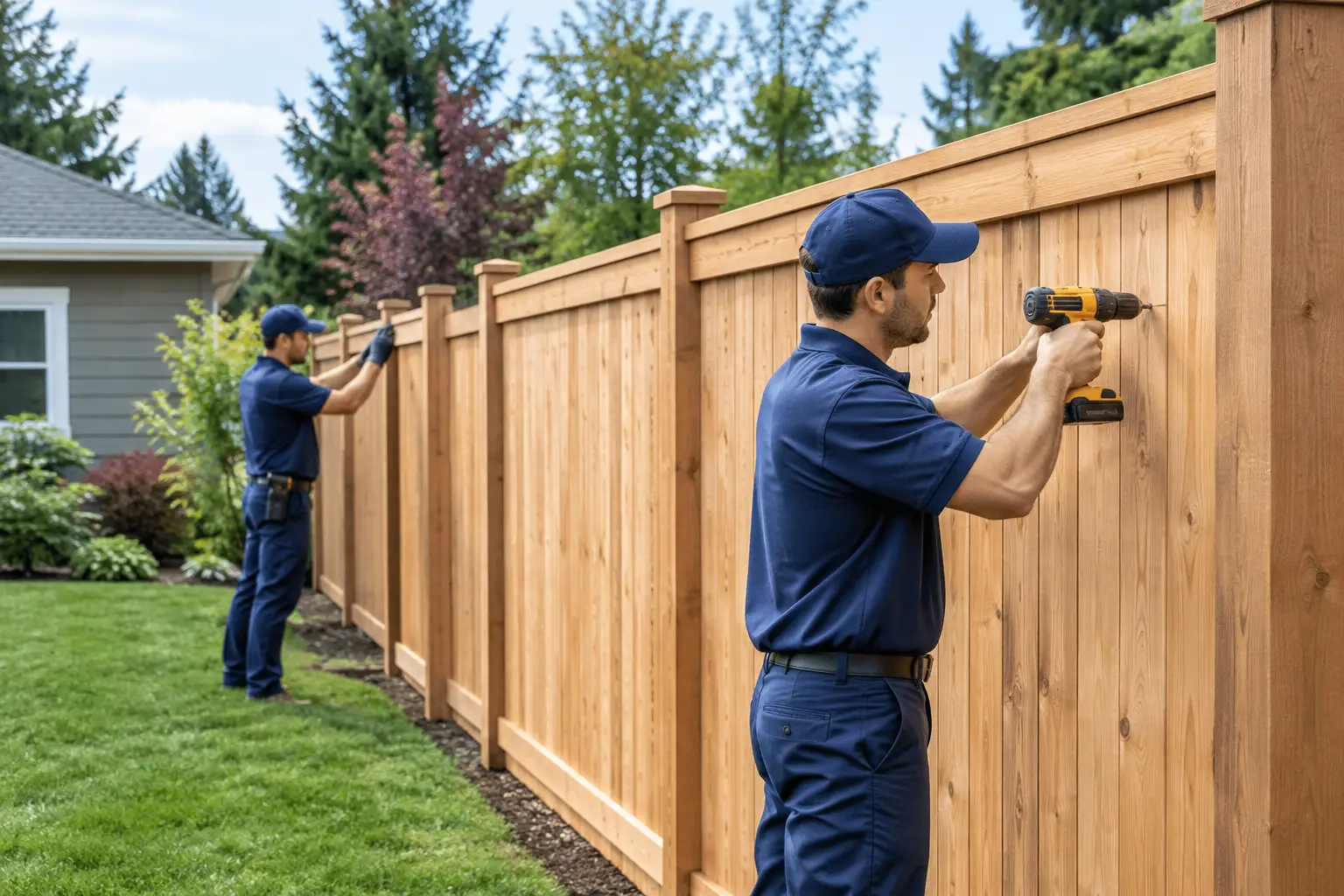
A new fence can solve a very specific problem: a dog that needs a secure yard, a patio that feels too exposed, a side yard with no clear boundary, or an aging fence that no longer stands straight through a Portland winter. A successful residential fence installation guide starts with more than choosing a style. It starts with understanding the property, the soil, the local rules, and how the fence needs to perform over time.
For homeowners in Tigard, Beaverton, Lake Oswego, Portland, and surrounding communities, fence projects often share the same challenges: wet-season drainage, sloped lots, established landscaping, utility lines, and adjoining neighbors. Planning these details before installation protects the finished result and helps avoid expensive changes once construction begins.
Start With the Fence’s Job
Privacy is a common reason to build a fence, but it should not be the only decision-making factor. A backyard privacy fence, a decorative front-yard boundary, a pool enclosure, and a pet fence have different height, visibility, gate, and material requirements. The right design follows the job the fence needs to do.
Consider how the yard is used throughout the year. If a gate will be used to move lawn equipment, garbage bins, or patio furniture, its width and swing direction matter. If a fence will meet a retaining wall, patio, driveway, or future pergola, those connections should be planned together rather than treated as separate projects.
A fence can also shape the way a property feels. Horizontal cedar boards may suit a modern outdoor living area, while a board-on-board wood fence offers privacy without looking flat from either side. Vinyl and composite options can reduce routine maintenance, and ornamental metal fencing can preserve views while defining a boundary. No single material is best for every home.
Confirm Property Lines Before Setting Posts
Fence posts are permanent work. Installing them based on an assumed property line can create a difficult and costly dispute, especially when an older fence sits near the boundary but is not actually on it.
Review your property documents and locate known survey markers when available. If the line is uncertain, a professional survey is the clearest way to establish it. Do not rely on a neighbor’s fence, a row of shrubs, or a map app as final proof of where a new fence belongs.
Talk with adjacent neighbors early, even when the fence will be entirely on your side of the line. A straightforward conversation about the layout, height, appearance, and construction timing can prevent misunderstandings. It also gives both households time to address access needs before crews begin work.
Check Local Rules and Utility Locations
Fence regulations vary by city, county, neighborhood, and homeowners association. Height limits may differ between front yards, side yards, backyards, corner lots, and areas near driveways or intersections. Some projects require permits, while others do not, depending on the fence design and local jurisdiction.
Before construction, verify the requirements that apply to your address. This is particularly important for corner properties, homes near easements, and sites with drainage features or protected areas. If the property is part of an HOA, review its material, color, and design rules as well.
Utility locating is another essential step. Underground gas, electric, water, communications, irrigation, and drainage lines can all be affected by post holes. Request utility marking before digging, and identify private lines that may not be included in a standard public utility locate. A contractor should also look for sprinkler systems, landscape lighting, and low-voltage wiring that may cross the fence route.
Choose Materials for Portland Conditions
The Portland metro area’s wet fall and winter seasons put fence materials and installation methods to the test. Moisture around posts, poor drainage, and repeated expansion and contraction can shorten a fence’s life when details are overlooked.
Wood Fencing
Cedar remains a popular choice because it has a natural appearance and stands up well to the Pacific Northwest climate when properly installed and maintained. It can be built in many configurations, from simple solid-board privacy fencing to custom horizontal designs. Wood does require periodic cleaning, staining, or sealing if homeowners want to maintain a consistent color and extend its service life.
Pressure-treated lumber is commonly used for structural components such as posts and rails. Quality fasteners matter. Exterior-rated, corrosion-resistant hardware helps prevent staining, weakening, and premature failure in wet conditions.
Vinyl, Composite, and Metal Options
Vinyl fencing provides a clean, uniform look with limited upkeep, though it can be a less natural fit for some older homes and may need careful installation on uneven terrain. Composite fencing offers a durable alternative with a more substantial appearance, but material costs can be higher.
Ornamental metal fencing is often a strong choice where visibility matters, such as along a front yard, garden edge, or view-facing section of a property. It does not provide privacy on its own, but it can pair well with landscaping for a more open, layered result.
Material selection should account for budget, maintenance expectations, desired privacy, exposure to weather, and the architecture of the home. The lowest initial price is not always the best value if the fence needs frequent repair or does not complement the planned yard improvements.
Build the Layout Around Grade and Drainage
A straight fence line on paper can become more complicated on a sloped Portland-area lot. The fence may need to follow the ground, step down in sections, or use a combination of approaches. Each option affects privacy, appearance, and the gaps beneath the fence.
Following the grade can create a smooth upper line but may leave larger gaps at the bottom on steeper slopes. Stepped panels maintain level sections but create visible transitions. The best approach depends on the amount of slope, the fence style, and whether containment for pets or children is a priority.
Drainage deserves equal attention. Posts placed in persistently wet soil are more likely to move, rot, or lean over time. Water should not be trapped against a fence line by poor grading, clogged drains, or a patio that sheds runoff directly toward the posts. When a fence is part of a larger landscape renovation, it is often more efficient to address grading, drainage, retaining walls, and hardscape elevations in one coordinated plan.
Understand What Quality Installation Looks Like
A fence is only as dependable as its layout, posts, framing, and gate construction. Quality work begins with consistent measurements and a clearly marked line. Posts must be set at appropriate spacing and depth for the fence height, soil conditions, wind exposure, and design. Corners, ends, and gates usually require stronger support than a standard line post.
Concrete footings are common, but they must be installed with attention to drainage and finish height. The post should not become a basin that holds water at ground level. Properly positioned and braced posts create the structure that keeps rails straight and boards aligned after seasons of weather.
Gates deserve special care because they are moving components under daily use. A gate that is too wide, lightly framed, or poorly supported can sag quickly. Good gate planning includes adequate framing, reliable hinges and latches, proper clearance from the ground, and a post system designed to carry the load.
Plan for Existing Landscaping and Future Work
Fence installation can affect trees, shrubs, garden beds, irrigation, and existing outdoor structures. Mature roots may limit where posts can be placed. In some cases, shifting a fence line slightly within the property or adjusting a panel layout is better than cutting major roots and compromising a tree’s health.
Think ahead to projects that may follow. A fence installed before a new paver patio, retaining wall, shed, or drainage system should leave room for construction access and correct finished elevations. Coordinating these improvements avoids removing a new fence later to bring in equipment or rebuild a section around completed hardscape work.
For a full yard renovation, one contractor who understands fencing alongside excavation, drainage, concrete, masonry, and landscaping can help sequence the work efficiently. Four Seasons Landscape & Construction approaches fence projects with those surrounding site conditions in mind, not as an isolated line of posts and boards.
Budget for the Whole Project, Not Just the Panels
Fence estimates should clearly identify the material, linear footage, height, post and footing work, gates, removal of old fencing, disposal, and any site-specific conditions. Slopes, access limitations, roots, rock, utility conflicts, custom details, and retaining-wall connections can affect the final scope.
Ask how the contractor will handle changes discovered after work begins. Clear communication matters when an old post is set in unexpected concrete, a property line needs clarification, or wet soil calls for an adjusted installation approach. A transparent quote is not simply a number. It is a practical description of what will be built and how the work will be managed.
A well-built fence should feel settled into the property from the first day: straight lines, secure gates, thoughtful transitions, and materials selected for the home and climate. Taking the time to plan those details gives you a boundary that supports the way you use your yard for years to come.