

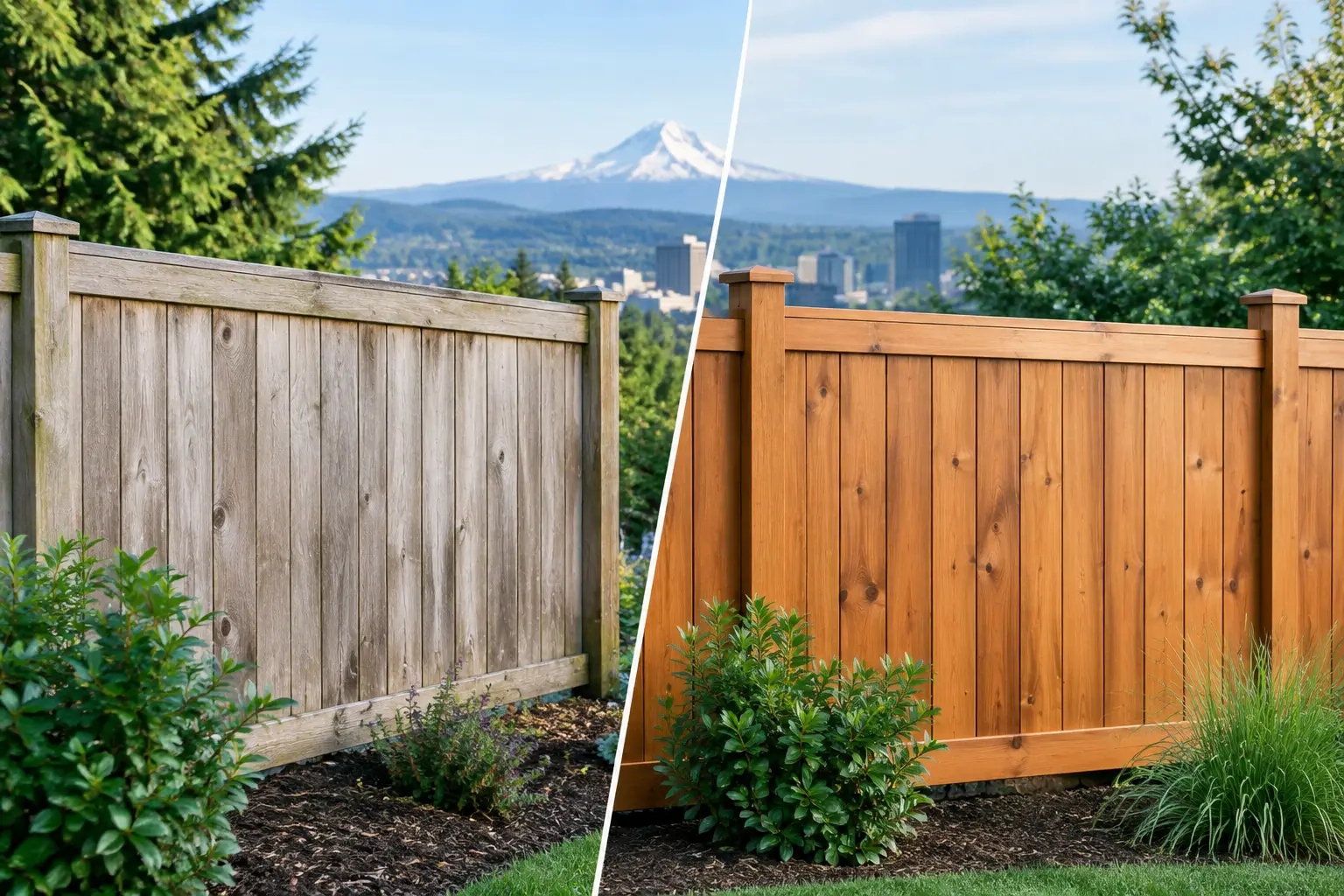
A new fence has to do more than mark a property line. In the Portland area, it needs to handle long wet seasons, changing temperatures, moss-prone shade, and regular use from kids, pets, and neighbors. When homeowners ask about a wood fence vs cedar fence, the comparison often needs one clarification: cedar is wood. In most cases, the real choice is cedar versus a more economical pressure-treated lumber fence, typically pine or fir.
Both can create privacy, improve curb appeal, and define an outdoor living space. The better material depends on where the fence sits, how long you plan to stay in the home, the finish you want, and how much ongoing maintenance you are willing to take on.
Wood Fence vs Cedar: The Key Difference
Cedar is a premium wood fencing material valued for its natural durability, warm color, and resistance to decay. It contains natural oils that help it hold up better against moisture and insects than many untreated wood species. Western red cedar is a common choice for Portland-area residential fences because it performs well in our damp climate when it is properly installed and maintained.
Pressure-treated lumber is commonly used when homeowners say they want a standard wood fence. The wood is treated with preservatives to resist fungal decay and insect damage. It is often less expensive than cedar and can be a practical option for structural components, especially posts and rails.
A well-built fence may use both materials. Pressure-treated posts set in proper footings can provide durable ground contact performance, while cedar boards and trim deliver the finished appearance above grade. That combination can balance budget, longevity, and appearance without compromising the construction details that matter most.
How Portland Weather Affects Fence Materials
Portland’s rainy season is the central issue in nearly every fence material decision. Wood does not fail simply because it gets wet. Problems begin when it stays wet, has poor air circulation, touches soil, or allows water to collect at posts, rails, and board edges.
Cedar has a natural advantage in this environment. It is less likely to rot quickly than untreated pine or fir, and it tends to remain more stable as it absorbs and releases moisture. That does not make cedar maintenance-free. In a shaded yard, especially near mature trees or dense landscaping, cedar can still develop mildew, algae, and surface discoloration without regular care.
Pressure-treated lumber is designed to resist decay, but it can be more prone to checking, twisting, and shrinking as it dries. Those changes are especially noticeable on wide fence boards. A contractor can reduce movement with proper board selection, spacing, fasteners, and framing, but no natural wood fence will remain perfectly unchanged through years of seasonal weather.
Installation is just as important as species. Fence boards should be held above soil level, drainage should move water away from posts, and landscaping should not trap moisture against the fence. A beautiful cedar fence installed too close to a soggy planting bed will not perform as well as a simpler fence built with sound site preparation.
Appearance and Design Flexibility
Cedar is usually the first choice for homeowners who want a refined natural-wood appearance. Fresh cedar has varied tones ranging from pale honey to reddish brown, and its grain works well with both traditional and contemporary homes. It can be left to weather naturally to a soft gray or protected with a semi-transparent stain that preserves more of its original color.
For yards with paver patios, pergolas, retaining walls, or carefully designed planting areas, cedar often creates a more cohesive finished look. It can be used for horizontal fences, board-on-board privacy fencing, framed panels, lattice accents, gates, and custom screen walls. Its lighter weight and workability also make it a strong material for detailed trim work.
Pressure-treated fences generally start with a greenish or brown cast from the treatment process and have a more utilitarian appearance. Once the lumber is sufficiently dry, it can be stained or painted. A painted pressure-treated fence can look clean and polished, but it requires more upkeep than a quality stain because paint can peel as the boards expand and contract.
If your priority is a natural finish that complements high-end landscape improvements, cedar is usually worth the added material cost. If your main goal is dependable privacy along a long side yard or rental property boundary, pressure-treated lumber may be a sensible fit.
Upfront Cost and Long-Term Value
Cedar typically costs more than standard pressure-treated fencing. The price difference comes from material availability, grade, board quality, and the desired fence design. A six-foot privacy fence with clear cedar boards, trim, and a custom gate will cost more than a basic treated-lumber fence with standard dog-ear boards.
The lowest initial price is not always the lowest cost over the life of the fence. Lower-grade boards may have more knots, more visible defects, and more movement over time. Thin rails, undersized posts, poor fasteners, or rushed post installation can shorten the useful life of any fence, regardless of the boards selected.
A cedar fence can deliver strong value when it is part of a long-term property improvement plan. It supports curb appeal, provides a more finished backdrop for landscaping, and can make outdoor areas feel private and intentional. For homeowners preparing to sell soon, a clean, straight, well-finished fence may also improve the overall impression of the yard.
Still, cedar is not automatically the right investment for every project. If a fence line is very long, mostly hidden, or likely to be affected by future grading and construction work, allocating more of the budget to drainage, retaining, or hardscape work may be the smarter decision. The right choice should reflect the entire property plan, not just the fence material.
Maintenance Requirements
Every wood fence benefits from periodic inspection. In Portland, that means looking for moss and mildew buildup, checking that sprinkler heads are not soaking the boards, clearing leaves from the base, and keeping climbing plants from holding moisture against the fence.
Cedar should be cleaned as needed and re-stained or sealed on a schedule based on exposure and the product used. Sunny fence sections may fade faster, while shaded sections may need more frequent cleaning. A penetrating oil-based or water-based stain can protect the wood while allowing moisture vapor to move through it. The goal is not to make wood impermeable. It is to limit water absorption and UV damage while keeping the material able to dry.
Pressure-treated wood also benefits from staining once it has dried appropriately after installation. Many homeowners make the mistake of applying stain too soon, before the lumber is ready to accept it. That can lead to an uneven finish and poor adhesion. A professional can recommend the proper timing based on the material and site conditions.
For both materials, use corrosion-resistant fasteners. Galvanized or stainless-steel nails and screws are especially important in damp conditions. Incompatible fasteners can stain wood and weaken over time.
Construction Details That Matter More Than Board Choice
A fence is only as dependable as its posts, framing, and connection points. This is where experienced installation makes a meaningful difference. Posts need proper depth and spacing for the fence height and soil conditions. Gates need heavier framing, adequate clearance, and hardware that will not sag after a season of use.
Drainage deserves attention before the first post hole is dug. Low areas, downspout discharge, and irrigation runoff can create persistent moisture around fence posts. If the property has retaining walls, slopes, or grading concerns, the fence plan should work with those conditions rather than ignore them.
Property lines and local requirements also need to be addressed early. Homeowners should confirm boundaries, review HOA requirements if applicable, and understand any local height or setback rules before committing to a design. A fence built in the wrong location is an expensive problem, even if the craftsmanship is excellent.
Choosing the Right Fence for Your Property
Choose cedar when appearance, natural durability, and long-term curb appeal are leading priorities. It is especially well suited to visible backyard spaces, front-yard screens, patio enclosures, and homes where the fence will be part of a broader landscape renovation.
Choose pressure-treated lumber when budget is the primary concern, when the fence line is extensive, or when you need a practical privacy solution with a finish you can paint or stain later. Consider a mixed-material approach when you want cedar’s finished appearance with pressure-treated components where ground-contact durability is most useful.
For Portland-area homeowners, the best fence decision is rarely just cedar versus another wood species. It is a decision about material grade, drainage, exposure, structural design, maintenance expectations, and the quality of installation. Four Seasons Landscape & Construction can evaluate those details as part of a complete outdoor improvement plan, so your fence fits the yard you have now and the one you want to enjoy for years to come.