

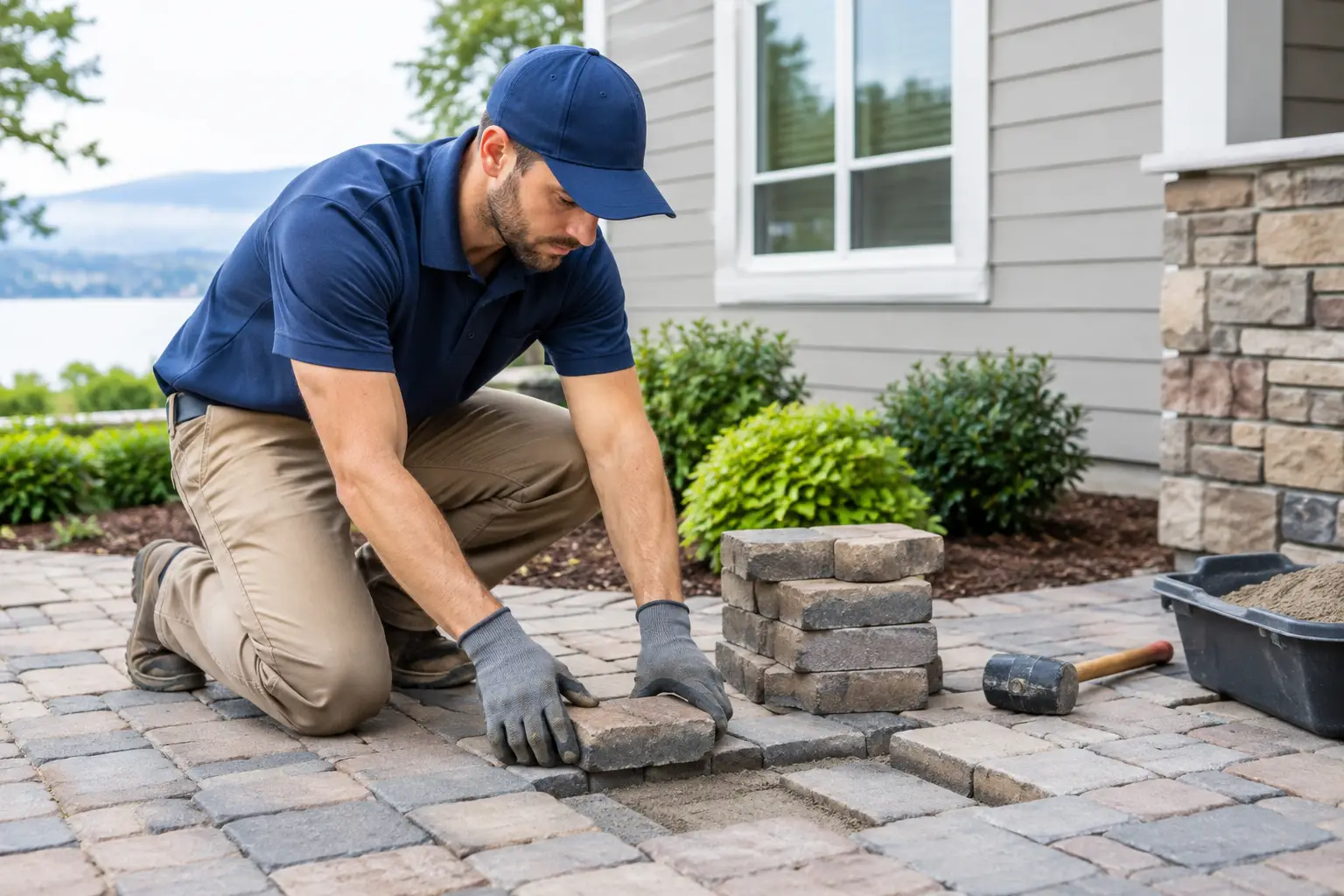
A paver patio or walkway rarely fails all at once. More often, a few stones begin to settle, joints wash out, edges spread apart, or water starts collecting where it should drain away. Portland’s long wet season can expose small installation problems quickly. Understanding your paver repair options helps you address the real cause, protect the surrounding landscape, and avoid paying for work that only hides the problem.
Start With the Cause of the Damage
Pavers are durable because individual units can be removed and reset. That does not mean every uneven patio or driveway needs the same repair. A proper assessment looks below the surface at the base material, edge restraint, drainage pattern, and condition of the joint sand.
A localized low spot may be caused by a compacted area of base settling over time. In that case, lifting and resetting the affected pavers may be enough. If several areas are sinking, the surface has widespread movement, or water is consistently running beneath the pavers, the issue is usually more extensive. Repairing only the visible low spots without correcting drainage or rebuilding the base can lead to the same problem next winter.
Tree roots, poor original compaction, failing edging, and downspout discharge are also common causes of paver movement. On driveways, vehicle loads add another consideration. The base beneath a driveway must be designed and compacted for much heavier use than the base beneath a garden path.
Paver Repair Options for Common Problems
The right approach depends on the location, severity, and underlying construction. A skilled contractor can often preserve sound existing pavers while rebuilding the parts of the system that have failed.
Resetting sunken or uneven pavers
For small sections of a patio, walkway, or landing, the repair may involve carefully removing the pavers, excavating loose or contaminated material, and restoring a properly compacted aggregate base. The bedding layer is then screeded to the correct elevation before the pavers are reinstalled and joints are refilled.
This is a practical solution when the surrounding field of pavers is stable and the drainage plan is working. It is also a good opportunity to correct trip hazards near steps, gates, and entry doors. The key is matching the repaired area to the existing slope so surface water continues moving away from the home.
Replacing cracked, chipped, or stained pavers
Individual pavers can be replaced when damage is limited. Cracking may occur from impact, freeze-thaw movement, heavy loads, or a paver that was not adequately supported. Oil stains on driveways and discoloration near outdoor kitchens may also make replacement more worthwhile than repeated cleaning.
Matching older materials can be the challenge. Color naturally changes with sun exposure, weather, and age, and some paver styles are discontinued. A contractor may be able to use pavers from a less visible area, such as behind a shed or along an edge, to create a better visual match. When exact matching is not possible, a planned border or accent course can make the transition look intentional.
Restoring joint sand and stabilizing the surface
Missing joint sand allows pavers to shift and can create openings where weeds take root. In some cases, the surface itself remains level and the repair is primarily a matter of cleaning the joints, refilling them with appropriate sand, and compacting the surface.
Polymeric sand can help resist erosion and reduce weed growth when it is installed correctly. It is not a cure for a failed base, standing water, or loose edge restraint. If joints repeatedly wash out after rain, the drainage issue needs attention before new sand is installed.
Repairing failed edges and borders
Paver systems rely on secure edge restraints to hold the field together. When edging cracks, heaves, or pulls away, pavers at the perimeter can begin spreading outward. This often shows up along driveways, curved walkways, and patio borders next to planting beds.
Repair may involve removing the outer course, rebuilding or replacing the restraint, and resetting pavers at the proper spacing. In certain cases, a concrete curb or masonry border provides a stronger long-term solution, particularly where a driveway meets landscape areas or where pavers are exposed to regular vehicle traffic.
Correcting drainage beneath and around pavers
Water is one of the most important factors in lasting paver performance. A patio that slopes toward the house, a downspout that empties onto the surface, or saturated soil beside a walkway can undermine the base over time. In Portland-area properties, addressing this early can prevent more substantial repairs later.
Drainage repairs may include adjusting paver elevations, installing a channel drain near a threshold, extending downspouts, or adding a French drain where subsurface water is affecting the area. The best choice depends on the site’s grade, soil conditions, roof runoff, and where collected water can safely discharge. Drainage should be treated as part of the paver repair, not as an unrelated add-on.
Rebuilding a patio, walkway, or driveway section
When pavers have widespread settlement, substantial root disturbance, poor base depth, or ongoing water problems, partial or full reconstruction is often the more responsible investment. Existing pavers may be salvaged and reused if they are in good condition, but the base and drainage system may need to be rebuilt from the ground up.
A rebuild gives homeowners the opportunity to improve layout and function at the same time. A narrow walkway can be widened, an awkward patio step can be corrected, or a driveway edge can be reinforced. It can also be the right time to coordinate related work such as retaining walls, irrigation adjustments, lighting conduit, landscape grading, or a new pergola foundation.
When Repair Is Better Than Replacement
Repair is usually a strong choice when damage is contained, the pavers remain structurally sound, and the existing design still works for your home. It protects your original investment and can restore safety and appearance without the cost of replacing an entire hardscape.
Replacement makes more sense when problems are widespread or when the space no longer meets your needs. If a patio stays wet, lacks usable seating space, or has multiple failing sections, repeated spot repairs may become less cost-effective than a properly planned rebuild. The same is true when a driveway has ongoing base failure under vehicle traffic.
An honest recommendation should account for both the immediate repair and the likely condition of the surrounding installation. A lower upfront cost is not always the better value if it leaves the source of movement in place.
What Professional Paver Repair Should Include
Quality paver repair is more than lifting stones and adding sand. The work should begin with a clear discussion of what is causing the damage and how far the repair needs to extend. Homeowners should understand whether the quoted work includes excavation, base material, compaction, drainage improvements, edge restraint, replacement pavers, joint sand, and cleanup.
Proper preparation matters most where you cannot see it. A stable, correctly compacted base and a deliberate drainage plan are what keep a repaired surface level through wet weather and changing seasons. Surface appearance is important, but long-term performance depends on the work below the pavers.
For projects involving patios, walkways, driveways, drainage, or surrounding landscape construction, Four Seasons Landscape & Construction can evaluate the full site rather than treating one damaged area in isolation. That coordinated approach is especially valuable when paver movement is connected to grading, runoff, retaining walls, or other exterior improvements.
If a few pavers have shifted, it is worth addressing them before the damage spreads into a larger section. A careful site evaluation can clarify whether a focused repair will solve the issue or whether the area needs a more durable rebuild designed for the way your home and yard are used.