

A backyard that stays soggy long after a Portland rainstorm is not just inconvenient. It can soften soil around patios, damage lawns, create slippery walkways, and send water toward the foundation. The best backyard drainage solutions address where the water starts, where it collects, and where it can safely go – rather than simply covering the problem with gravel or planting water-tolerant shrubs.
For many Portland metro homes, drainage issues come from a combination of steady winter rain, compacted soil, hillside runoff, older downspout layouts, and yard grades that have shifted over time. A lasting repair begins with a clear look at the entire property, including roofs, hardscapes, retaining walls, neighboring slopes, and low points in the lawn.
Start With the Source of the Water
Before selecting a drain, identify whether the problem is roof runoff, surface water, groundwater, or a mix of all three. Water pouring from downspouts may be flooding one corner of the yard. A patio or driveway may slope toward the house. In other cases, water appears in the lawn even when there has not been recent rain because the soil stays saturated below the surface.
Watch the yard during a moderate rain if possible. Note where water enters the property, where it ponds, and which areas remain wet after the rest of the yard has dried. This observation often reveals more than a quick inspection on a sunny day.
Drainage should also be planned around the finished landscape. A new paver patio, concrete walkway, retaining wall, or artificial turf area changes how water moves across the property. Handling drainage before or during those improvements is usually more efficient than tearing out finished work later.
Best Backyard Drainage Solutions for Common Problems
The right system depends on the site. Some yards need a simple grading adjustment, while others need buried pipe, collection basins, and carefully planned outlets. Often, the strongest result combines more than one solution.
Regrading for Broad, Shallow Water Problems
Regrading reshapes the surface of the yard so water moves away from the home and out of low areas. This is often the right starting point when water spreads across a large section of lawn or collects along a foundation, patio, or fence line.
A properly graded yard uses gradual, intentional slopes. The goal is not to create a noticeable hill but to eliminate flat areas and reverse slopes that trap water. Soil may need to be brought in, compacted appropriately, and finished with sod, seed, mulch, or planting beds.
Regrading is especially valuable before installing new landscaping or hardscaping. However, it has limits. It will not solve heavy roof runoff on its own, and it may not be enough where a property receives significant water from an uphill neighbor or a steep slope.
French Drains for Saturated Soil
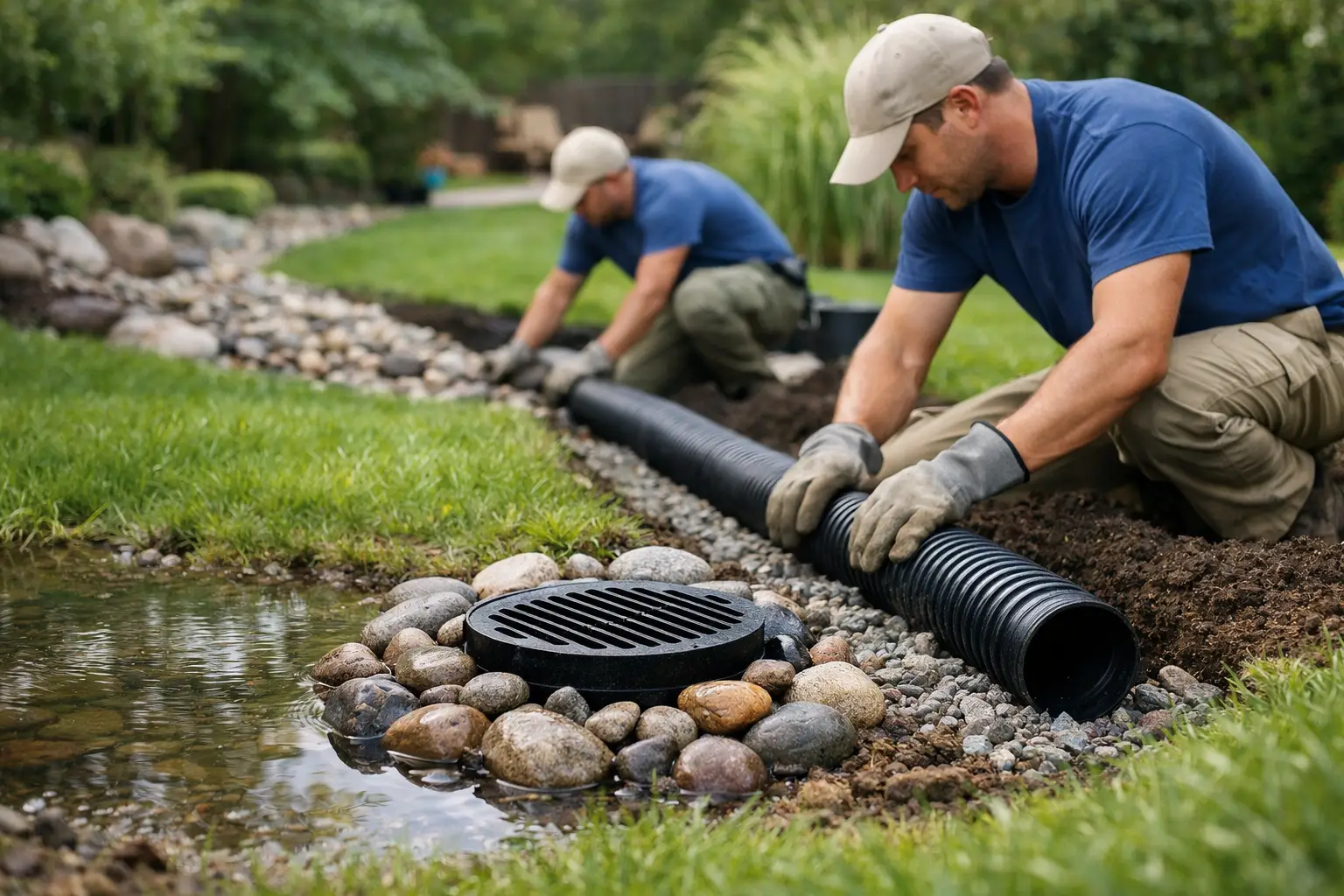
A French drain is designed to collect water moving through the soil. It typically consists of a gravel-filled trench containing perforated drain pipe, wrapped with filter fabric to help keep fine soil out of the system. Water enters through the gravel and pipe, then travels to an approved discharge point.
This solution works well for persistently wet lawns, water collecting behind retaining walls, and areas where the soil remains soft for days. It is commonly installed along the base of a slope or at the edge of a low-lying yard.
A French drain needs a reliable outlet and the correct slope to function. Installing pipe in a trench without considering elevation, fabric, gravel, cleanouts, or discharge can create a buried system that clogs or holds water. In tight Portland-area lots, outlet planning is often the most important part of the design.
Catch Basins and Solid Drain Pipe for Surface Runoff
Catch basins collect water flowing across the surface, such as runoff from a driveway, patio, landscape bed, or downspout area. A grated basin sits at a low point and connects to solid pipe that carries water away.
This is a practical option when water arrives quickly and visibly. Unlike a French drain, which collects moisture from the surrounding soil, a catch basin is intended for concentrated surface flow. It can be an effective addition beside a patio, at the bottom of a sloped walkway, or where a driveway directs water toward a lawn.
The basin must be placed at the actual low point, not just where water appears to be a problem. Even a well-built drain cannot collect runoff that is being directed around it by incorrect grading.
Downspout Drainage Extensions
Roof runoff can overwhelm a small area of yard in a single storm. Downspouts that end near the foundation or discharge onto a narrow planting bed often lead to erosion, muddy soil, and water intrusion concerns.
Buried downspout extensions move that water away from the house through solid pipe. Depending on the property, the water may be routed to a lower area of the yard, a drainage system, or another appropriate outlet. The route should be planned so it does not create a new wet spot, undermine a retaining wall, or discharge where it affects a neighboring property.
This is one of the most straightforward improvements a homeowner can make, but it should not be treated as an isolated fix. If the receiving area is already saturated, the system may need a catch basin, dry well, or larger drainage plan to manage the additional volume.
Dry Wells for Properties With Suitable Soil
A dry well is an underground structure that temporarily holds water and allows it to disperse slowly into surrounding soil. It can be useful where a direct outlet is not available and the site has soil conditions that can accept the water.
Dry wells are not right for every Portland-area property. Heavy clay soil, a high seasonal water table, or a location near foundations and retaining walls can limit their effectiveness. A dry well also needs to be sized for the amount of water it will receive. A small unit connected to several roof downspouts may fill quickly during a sustained storm.
When properly located and sized, a dry well can keep drainage components out of sight while reducing surface ponding. It should be part of a site-specific plan, not a default answer for every wet yard.
Swales and Landscape Drainage Features
A swale is a shallow, shaped channel that guides surface water through the landscape. It may look like a gentle dip in the lawn, a planted drainage corridor, or a stone-lined feature depending on the yard design.
Swales are useful when there is enough room to move water across the property gradually. They can be more natural-looking than a visible drain and may work well in larger backyards or along property edges. In smaller yards, however, a swale can take up valuable usable space and may need to be paired with underground drainage.
Thoughtful planting can support a swale, but plants alone are not a drainage system. The grade still needs to carry water intentionally, especially during the heavy rain events common in the region.
Drainage Around Patios, Retaining Walls, and Walkways
Hardscape projects need drainage built into the construction plan. Water behind a retaining wall creates pressure that can contribute to movement, staining, and premature failure. A properly built wall typically includes drainage rock, perforated pipe, and an outlet so water does not remain trapped behind it.
Patios and walkways should be pitched to shed water away from the home. Where a surface must meet another structure or where slopes are limited, a channel drain or catch basin may be needed. The drainage system should be installed before final pavers, concrete, edging, and landscaping are completed.
This coordination matters because drainage, excavation, masonry, and landscape finishing affect one another. Working with one experienced contractor can help prevent mismatched elevations or drainage components that are hidden beneath finished work without a clear service path.
Avoid Quick Fixes That Create Bigger Problems
Adding gravel to a muddy area may make it easier to walk on temporarily, but it does not remove the water causing the mud. Likewise, spreading topsoil over a low spot without establishing a drainage route can simply raise the wet area until water finds another place to collect.
Avoid routing water toward a neighbor’s property, directly against a fence, or into a retaining wall. Drainage changes should respect property lines, site conditions, and applicable local requirements. A professional assessment is particularly worthwhile when water is reaching the foundation, a wall is showing signs of movement, or a yard renovation is already planned.
For Portland metro homeowners, the most reliable drainage work balances practical water management with the way the yard will be used. Four Seasons Landscape & Construction can evaluate grades, runoff paths, and existing site features before building a drainage plan that supports the long-term use of your outdoor space.
A dry backyard does not have to mean a plain one. With the right grading and drainage infrastructure in place, your lawn, patio, planting beds, and walkways can stay functional through the wet season and be ready to enjoy when the weather clears.